

The Surprising Ingredient In Plywood That May Be Harming Your Air Quality
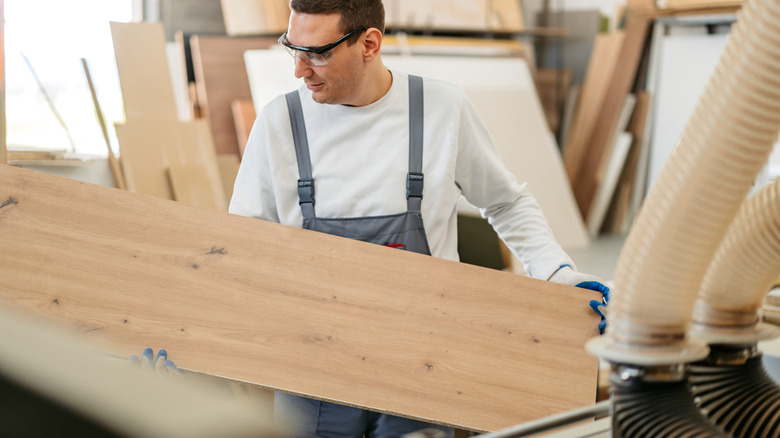
Plywood is ubiquitous in our homes today, used for everything from walls and siding to furniture. This wood composite is common because it's inexpensive, easy to manufacture, and incredibly versatile. If you've ever bought build-it-yourself furniture from a place like IKEA, there's a good chance it's at least partially made from plywood. However, as useful as it might be, there's an ingredient in plywood that could be reducing your home's air quality: formaldehyde.
Formaldehyde is commonly used to make wood-based composite materials like plywood, medium-density fiberboard (MDF), and particle board. More specifically, it's a component of the adhesive resins used to fuse the pressed material together to form the wood composites. The problem is that formaldehyde is both a volatile organic compound (VOC) and a known carcinogen. Worse still, materials made with formaldehyde — such as the furniture or siding in your home — can release this VOC into the air through off-gassing. But how dangerous is the formaldehyde in plywood?
Don't toss your plywood furniture just yet

It might sound alarming to hear that your plywood furniture could be releasing carcinogens into the air, but it's important to be realistic about the actual risks. As with most things, "the dose makes the poison." And while it's always good to be aware of potential dangers lurking around your home, off-gassing is usually minimal, as most wood materials typically release formaldehyde most heavily immediately after manufacture. Furthermore, plywood uses less formaldehyde in its construction.
By the time plywood is in your home, any carcinogen present will have fallen to within the limit levels set by the EPA. These regulations limit the formaldehyde emissions from consumer-grade plywood to 0.05 parts per million. For comparison, that's roughly half the limit for particleboard and MDF, which require more formaldehyde during their production. The takeaway here is that, unless you're experiencing respiratory symptoms associated with formaldehyde exposure, you shouldn't need to worry about off-gassing from plywood.
Symptoms of formaldehyde exposure (and what to do about it)
Although unlikely, formaldehyde levels in your home could rise above safe thresholds. If so, you may experience respiratory irritation such as a persistent runny nose, coughing, an itchy throat, or watering eyes. These symptoms are similar to those of common ailments such as allergies and colds, and don't necessarily indicate formaldehyde exposure. However, formaldehyde does have a distinct, pungent odor (this could be why your hardwood floor smells like pickles) that's often detectable even at low levels.
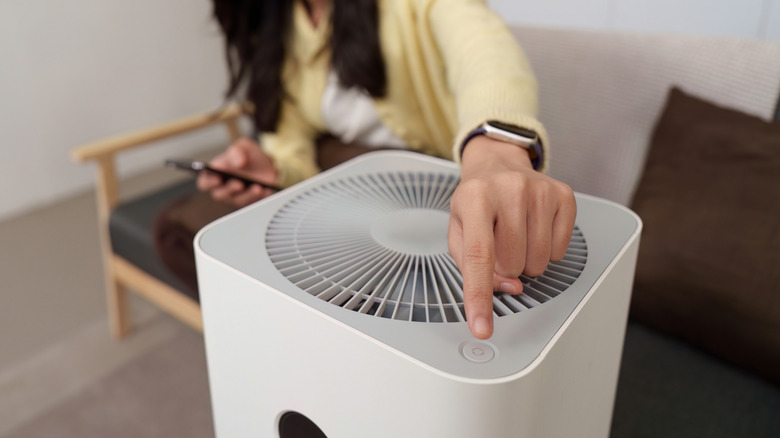
If you suspect you smell formaldehyde off-gassing and are experiencing symptoms of exposure, ventilate the area and consider relocating any new plywood to a safer location. You can also take precautions to limit your exposure, which is much more viable than replacing every piece of furniture you own that might contain plywood. First, allow any new plywood to air out for a few days before installing it. Second, pay attention to your home's air quality. Consider getting a good air purifier if you don't have one, and make sure your rooms are well-ventilated with good airflow. Additionally, a dehumidifier can help to reduce off-gassing, as plywood is more likely to release formaldehyde gas in humid air.
Finally, know that not all plywood is made the same way. With growing awareness of formaldehyde off-gassing and environmental concerns, some manufacturers are gravitating towards potentially safer materials. When shopping around, keep an eye out for plywood made with low-emission materials such as soy-based adhesives or MDI resins, which contain little to no formaldehyde.