

Do Metal Roofs Attract Lightning? What To Know Before Installing
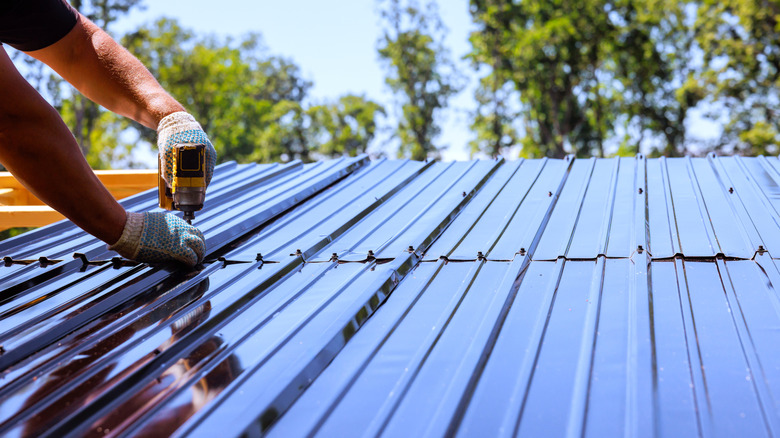
Metal roofing has several advantages. It's durable, weather-resistant, can last for decades, and offers a rustic aesthetic that a shingled roof can't always match. But if you're considering a metal roof for your home or shed, it's natural to wonder if it might pose an increased risk for lightning strikes. You might also assume that you need to install a lightning rod on a metal roof. However, while it might seem to defy basic logic, metal isn't more likely to attract lightning than other types of roofing.
Metal roofs are actually one of the safer choices for preventing fires in the unlikely event of a strike. This is because a metal roof with a grounding system can absorb and dissipate the voltage of a lightning strike. Even more importantly, metal has a Class A fire resistance rating, meaning it's virtually non-combustible. Contrast this with other roofing materials, such as wood or asphalt shingles, which can catch fire. If you're weighing roof options and live in an area prone to lightning, metal is one of the best choices.
Why lightning isn't more likely to strike a metal roof
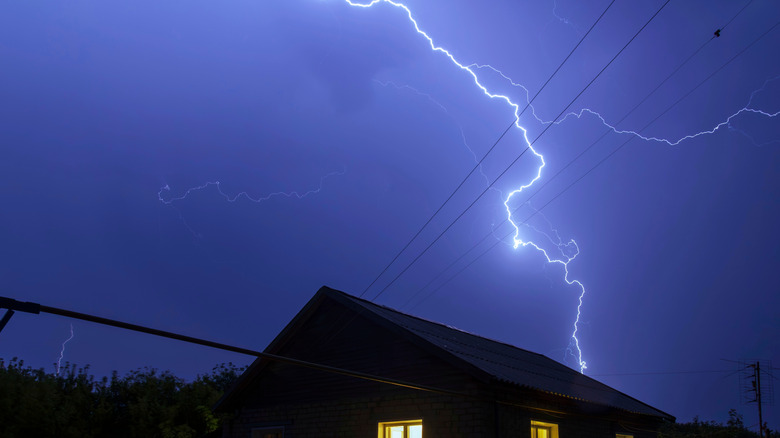
The idea that a metal roof attracts lightning is a common myth. The likelihood of lightning striking an object, be it a building or something else, has more to do with its height, shape, and surroundings. Objects taller than your house, such as nearby trees, are more likely to attract lightning than your roof. Vertically shaped objects like antennae and chimneys are also more prone to lightning strikes than a flat metal roof, which explains why lightning rods (designed to attract and intercept lightning) are shaped that way.
Although metal is more conductive than other common roofing materials like asphalt shingles, this doesn't mean the material itself will attract lightning. Furthermore, in the unlikely event your metal roof is hit by lightning, it will only travel harmlessly through your home's grounding system. The takeaway: Metal is a safe, strong, fire-resistant choice for roofs, and arguably the best roofing material for homes and outbuildings in lightning-prone environments.