

Is It Okay To Wash Wall Paint Brushes In The Sink?
We may receive a commission on purchases made from links.
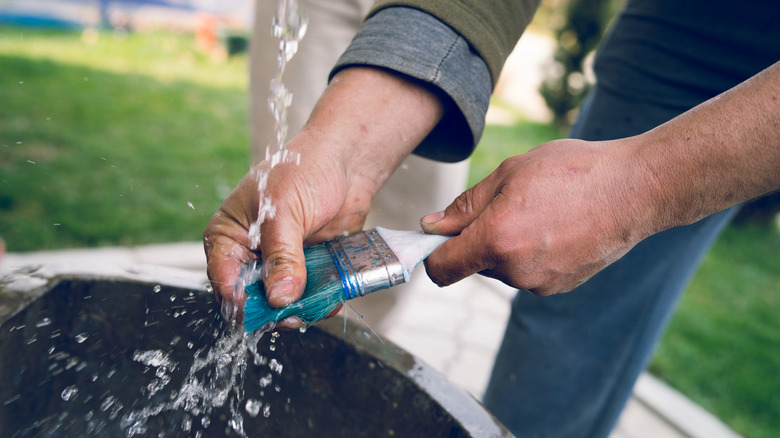
Though you don't necessarily have to wash your brushes between coats (just wrap them well so they don't dry out), you must clean them once you're done painting the walls in your house. Otherwise, you'll have to deal with clumped or frayed bristles the next time you bring out your paint brushes for home painting. Now, to get this over with quickly, you might think of giving them a quick rinse down the sink. However, this can be an expensive mistake since paint can spell trouble for your plumbing. This happens because all the residue doesn't get washed away at once; the remainder will solidify over time and lead to blocked pipes. It could also clog your septic line.
Also, the pigments and additives that do get washed away will likely spell trouble for the good bacteria in your septic tank. This, in turn, will interfere with their ability to break down waste particles. It'll not only leave you with an expensive repair bill but may also expose your family to harmful pathogens. Worse, any property damage caused by a failing septic system will likely not be covered by your insurance provider. That's not all. All kinds of paint (especially non-water based) contain synthetic binders, such as vinyl, acrylics, and polymerized additives. So, when you wash brushes dipped in such paint, they give way to microplastics. And while your municipal wastewater treatment facility might filter out a good chunk, it'll still not be enough to trap every bit of microplastic. Eventually, they'll make their way to nearby water bodies and pollute surrounding soil as well as harm aquatic life. As such, you shouldn't wash your paint brushes in the yard or outside drains, either.
How to wash paint brushes without causing environmental or plumbing damage
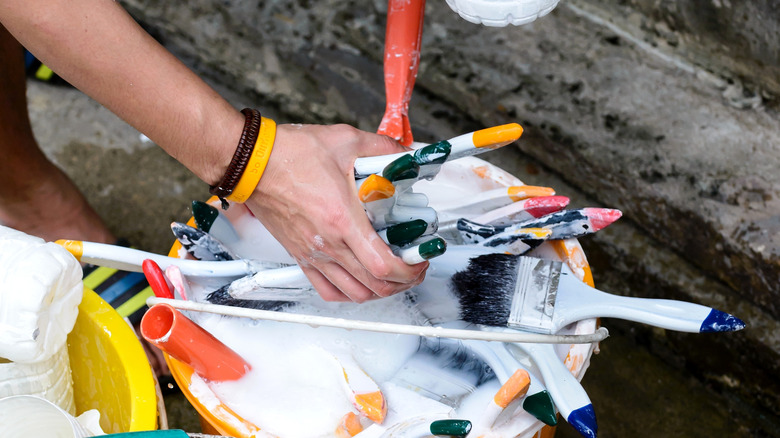
First off, dab your brush against a paint can, then use a putty knife to free your bristles of as much excess as possible. Once done, get an old rag, some paper towels, or old cardboard to wipe away the rest. Do this while the paint is still wet to clean the bristles without much effort. But don't throw away the rags yet; let the paint harden before thrashing them with your regular garbage.
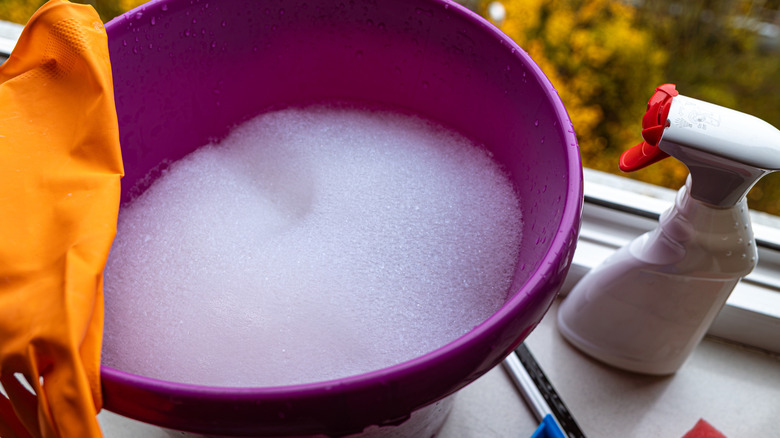
Now, if you've been using a latex or water-based paint, fill an old bucket two-thirds of the way with warm water. Then, add in a few drops of dish soap to the bucket to easily clean and renew your paint brushes. Stir the two, then dip your brushes in the soapy solution and clean it thoroughly. You may have to use your fingers to manually pluck out all the paint. When you're sure there's no paint left, dip your brushes in another bucket filled with clean water to rinse it off. Allow them to dry completely before packaging and storing the paint brushes.
However, if you're cleaning brushes dipped in oil-based paint (or latex paint that has dried off completely), the soapy water solution won't yield satisfactory results. You'll have to use a dedicated solvent, such as the U.S. Art Supply Brush Cleaner and Restorer Solution, instead. Pour a little into an old metal or glass bowl or cup before cleaning your brushes as directed by the manufacturer.
How to safely dispose of the water or solvent used to clean paint brushes
After cleaning paint brushes dipped in water or latex-based paint, don't dump the water down the drain as-is. Or, the paint residue will still make its way through your plumbing, undoing all your hard work. To avoid this, leave the water undisturbed for a couple of hours or a day. This will allow the heavy paint sediment to settle down, leaving plain gray water on top. Separate it in another bucket and pour it down the drain, or take it to your nearest water treatment facility — check your local laws to be 100% sure about its disposal. In certain cases, you could even use the water in your garden. Regarding the settled paint, let it dry completely. Since this may take a few days, you can speed up the process by mixing it with saw dust, sand, kitty litter (clay-based is better at absorption), or paper towels. Once it's dry, dispose of the hardened waste in your garbage can.
But if you used a solvent, give it a few hours, too, for the debris to settle down. Now, you have two options. You can either decant the solvent in another metal or glass container and seal it properly for future use. Give the settled sediment a similar treatment as above. Another option is to take it to a hazardous waste center. Either way, no solvent should be dumped down the drain.