

The All-Natural Fertilizer You'll Always Find On An Amish Farm
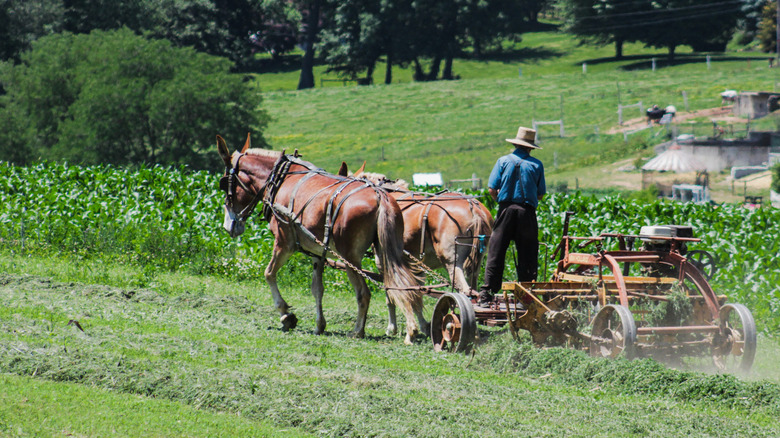
Walk into a garden center and you will find its shelves full of different types of fertilizers that all claim to help you grow healthier and bigger plants. Some of these fertilizers can be quite expensive, too. However, you do not really need to spend a fortune just to fertilize your plants. There are some cheaper all-natural fertilizer options, too. Take, for instance, animal manure. If you own an animal farm, you may regularly throw it out, but visit any Amish farm and you will probably see a pile of animal manure in a corner waiting to be put to good use as an all-natural fertilizer.
On Amish farms, crop production and raising livestock go hand in hand as crops grown are used to feed animals and the animal manure is used to fertilize crops. In fact, according to a study published in the journal Sustainability in 2020, nearly 85% of the Amish horse owners use the manure as fertilizer on their fields. It is also a farming tradition that goes back generations in the Amish community and signifies caring for land and self-sustainability.
But is animal manure a good fertilizer? Well, yes! It contains many macro- and micro-nutrients that plants need to grow including nitrogen, phosphorus, and potassium. Better yet? Unlike many commercially sold fertilizers, they also add organic matter to the soil which not only feeds the plants but also helps revive the garden soil. That's not all. Animal manure also has one more thing going for it: it releases its nutrients slowly. This reduces the risk of fertilizer burn and feeds plants for a long time.
Consider this when using animal manure as a fertilizer
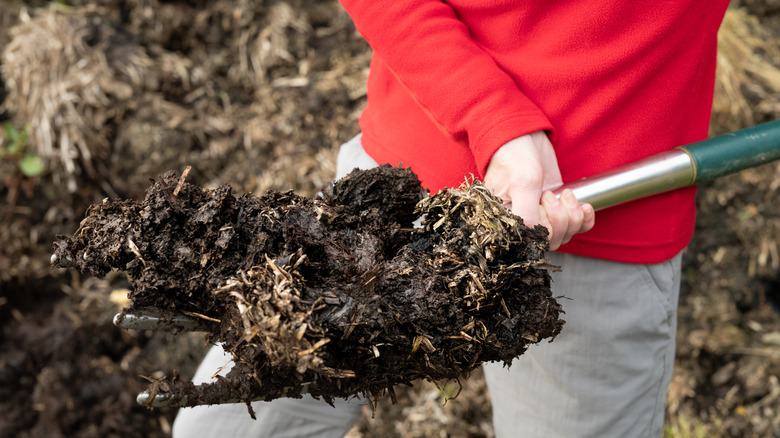
Before you head to your nearest Amish farm to get some animal manure, there are a few things you should consider. Even though cow, horse, sheep and chicken manure are all very good options when it comes to boosting the health and productivity of your garden soil, they vary slightly in their composition. Chicken manure, for example, has a higher quantity of nitrogen than cattle manure, and if your soil already has sufficient nitrogen, using it is not really recommended. The point is that you should test your soil before adding any type of soil amendment or fertilizer. Too much of a single nutrient or many nutrients can also harm the plants.
Another thing you should avoid is adding fresh animal manure when fertilizing. Fresh animal manure can contain a lot of bacteria and weed seeds. Plus, it is also often rich in ammonia which can burn the plants. Instead, use composted animal manure. Also, make sure that you do not confuse aged manure with composted manure. If, however, you do have to use raw manure, make sure that you apply it at least 120 days before harvesting crops that touch the soil and 90 days for the other types of crops.
When adding animal manure as a fertilizer, make sure that you work it properly into the first few inches of the soil. It is not going to do much good if it is just going to sit on top of the soil. Lastly, avoid fertilizing your garden during a heat wave. It is one of those things you should never do when fertilizing your lawn or garden as it is stressful for the plants and can end up doing more harm than good.