

Not Hydrangea: Prune This Shrub In Late Winter For A Prettier Spring Garden
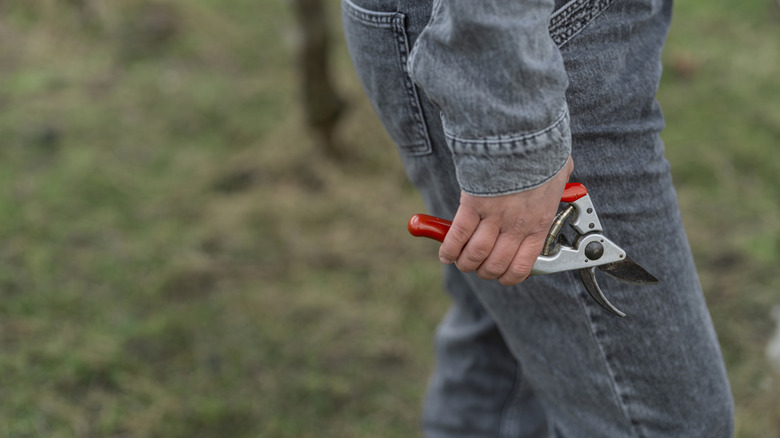
Once you've finished preparing your garden for winter, it may seem like the perfect time to retire your tools. However, depending on which perennials are growing in your garden, you may need your pruners at the ready for some late-season trimming. If you've ever grown hydrangeas, you may know that several species require pruning in the late winter. But hydrangeas aren't the only shrub you need to prune at that time for a prettier spring garden. You'll also want to give this eye-catching shrub some TLC during the coldest months: the chaste tree.
Also known as Texas lilac, the chaste tree (Vitex agnus-castus) is a flowering shrub that thrives in USDA Plant Hardiness Zones 7 and 8. It blooms in spring and summer, showing off fragrant flowers that range in color from pink to purple to white. These flowers are a big hit with bees and butterflies, making the shrub a good choice when starting a pollinator garden. The chaste tree also produces fruit and attracts songbirds, so it's perfect for anyone looking to boost the visual appeal of their garden while also creating a wildlife-friendly outdoor environment.
Late winter pruning is a big part of keeping a chaste tree attractive, healthy, and under control. Chaste trees bloom on new wood, so the right timing is vital; prune your shrub before it begins growing again in spring. Because of its rapid growth and relatively large size, pruning in late winter can also stop your chaste tree from overwhelming your yard. Finally, this shrub has the potential to become invasive in certain parts of the U.S. It's best avoided in Texas, Alabama, California, Arizona, Louisiana, Georgia, and possibly Florida. Even where it's not considered invasive, chaste trees can get weedy without pruning. They're in the mint family, after all.
How to prune a chaste tree for maximum blooms
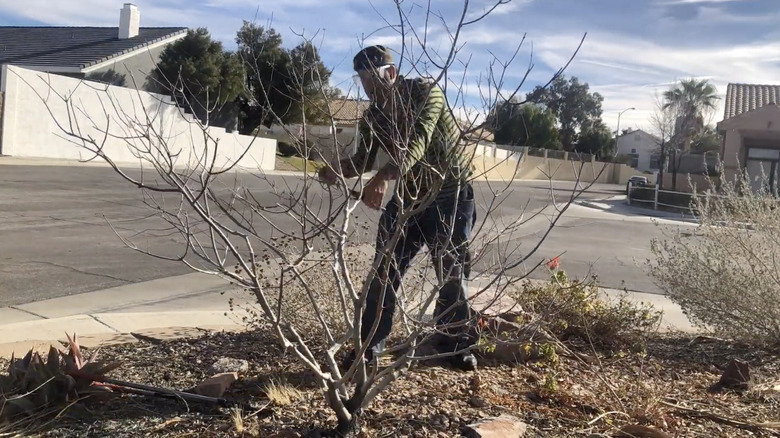
Because many people grow chaste trees specifically for their flowers, flower production is one of the most important things to consider when pruning them. As mentioned, chaste trees produce buds on the current season's growth, and you don't want to accidentally prune away all that new growth, along with the future flowers. Late winter is ideal, but early spring can also work. You also need to consider which branches to target and how many you remove. To prune your chaste tree, start by removing any unwanted, leggy growth from the center of the shrub. This helps keep the plant tidy, encourages new growth, and improves airflow throughout the shrub. Take this opportunity to remove any low-hanging limbs that interfere with yard maintenance, such as mowing or weed-eating.
There are also some general rules to follow when taking your pruners or loppers to a chaste tree in late winter. The first is the one-third rule of pruning — understanding what it is can make trimming shrubs easier. When you start pruning your chaste tree, you may be tempted to remove as many branches as possible, thinking this will help it have a better growing season. In fact, you should remove no more than one-third of a shrub's total growth during a pruning session. After all, pruning damages plant tissues, and overpruning can lead to shock or excessive growth. You also need to remember the three D rule to properly prune your plants, including chaste trees. Remove diseased, dead, or damaged branches first.