

What Happens If You Put Salt On Your Driveway Before It Snows?
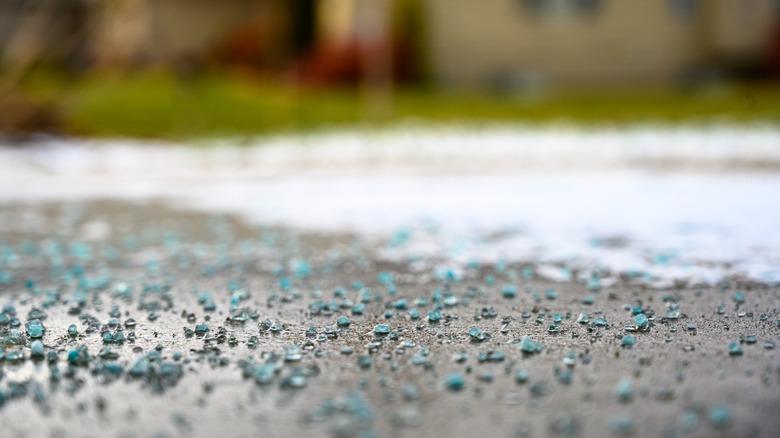
If you're trying to get ahead on learning how to prep your home for cold weather, familiarizing the right time to salt your driveway is essential. After all, de-icing salt can sport a hefty price tag depending on how much ground you need to cover, and using it incorrectly can lead to waste or even excess salt on the ground that can affect the environment later on. There are two times that salting your driveway is effective: before the snow falls, and afterwards. Both times serve their own purpose. Pre-salting can help make driveway snow removal a bit easier, so long as there isn't too much rain to wash away the salt before snow arrives. Post-salting, meanwhile, can help prevent refreezing while cleaning up.
Have you ever gone to shovel your driveway after a snowstorm, just to find that the snow and ice are too stuck for easy removal? When you put down salt on your driveway before it snows, it helps lower the freezing temperature of water, which then works to control the conditions that allow snow and ice to bond to your driveway's surface. Because of this, if you've been wondering about shoveling versus salting your driveway this snowstorm, the best answer is often a combination of both.
Of course, there are different types of salt-based deicers you can use, from rock salt to brine. They can vary in effectiveness based on your driveway and the weather you're experiencing and expecting.
How early is too early for salting your driveway before snow?
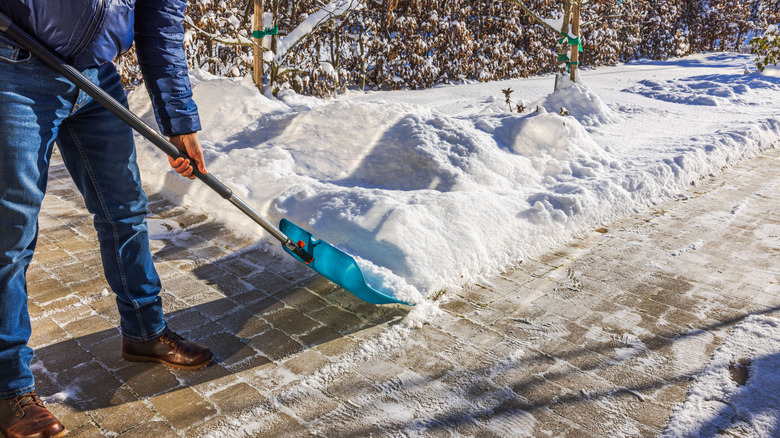
Although pre-salting can be beneficial when it comes to making the cleanup after snow easier, there is such a thing as salting too early. Doing so can result in excess, wasted salt. This is good for neither your wallet nor any greenery nearby. Too much salt can blow away, into storm drains, groundwater, or even just your lawn, killing any plants by sucking moisture out of the roots. You'll also likely need to reapply the salt that's blown away to reap the advantages of pre-salting.
Another key to salting is understanding that it can be diluted, reducing its effectiveness. This is where pre-snow rain can cause particular trouble, washing away your work. As a result, if you're experiencing any sort of non-sticking or non-freezing precipitation, it may be too early to salt your driveway. Ultimately, you'd have to reapply the salt, wasting your time, effort, and money.
The key to putting salt on your driveway before it snows is to do so as close to snowfall as possible. This allows your deicer salt to help prevent snow and ice from bonding to the pavement while also reducing the likelihood of it being washed away. When possible, and depending on the type of salt deicer you're using, you may wish to aim for an hour before the snow begins if you're looking to pre-salt your driveway rather than rely on post-salting alone.