

Do This With Your Daylilies In November For A Head Start On Your Spring Garden
We may receive a commission on purchases made from links.
Daylilies (Hemerocallis sp.) are the type of perennial flower that you can plant in your garden and then almost forget about afterward. But while they can thrive with minimal oversight, it's important to know how to really care for your daylilies so they succeed long-term. Cutting back these flowers in November is an essential maintenance task, especially if you want to hit the ground running in the spring. If you remove the dead leaves from your daylilies in November, they will be ready to bloom afresh without any hindrance once warm weather returns.
Just as there's a best time to prune your daylilies for long-lasting blooms, there is a right time to cut them back and clean up rotted or damaged foliage from your clumps. You want to make sure that you complete this task by late autumn. Your daylilies will even give you a heads up because their foliage will start to turn yellow and begin to dry out. Typically, this occurs around the time of the first frost of the season. Depending on the climate and local weather in your area, you might be enjoying your daylily blooms well into the fall. So don't feel like you need to cut back the foliage too soon in November.
How to cut back daylilies to prepare for spring
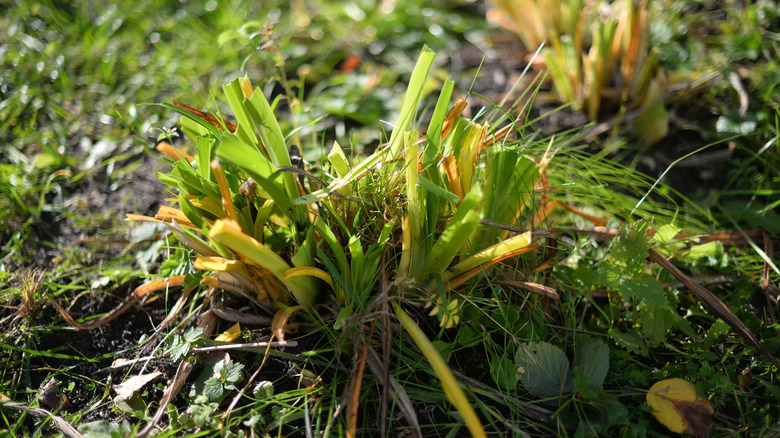
Before cutting back your daylilies, prepare yourself with the right tool for the task. A pair of hedge trimmers, like these Fiskars 20 Inch Hedge Shears for $23.84 from Amazon, works well to cut into the thick leaves that grow around your flowers. Ensure they are sharp and sterile, and cut into the foliage. Try to leave about 4 inches of foliage at the base of each plant. This can serve as a marker for later on in fall or spring if you decide to plant other specimens. Remove the old foliage immediately, especially if you notice signs of disease.
One gardening mistake that can hinder the growth of daylilies is leaving behind foliage marked with sclerotia, which indicates a fungus infestation. Remove it completely to keep the fungus that causes leaf streak from reproducing in the spring. And, although November is a good time to get your garden prepared for springtime, don't be worried if you neglect to cut back all your daylilies. Some gardeners wait until the first signs of new growth to remove the old leaves from their daylily plants in spring. However, the dead leaves of daylilies do not provide any benefit for animals or beauty for the gardener in winter, so it's just as well to cut them back in November.