

Ditch Retaining Walls: The Popular Herb That Prevents Soil Erosion
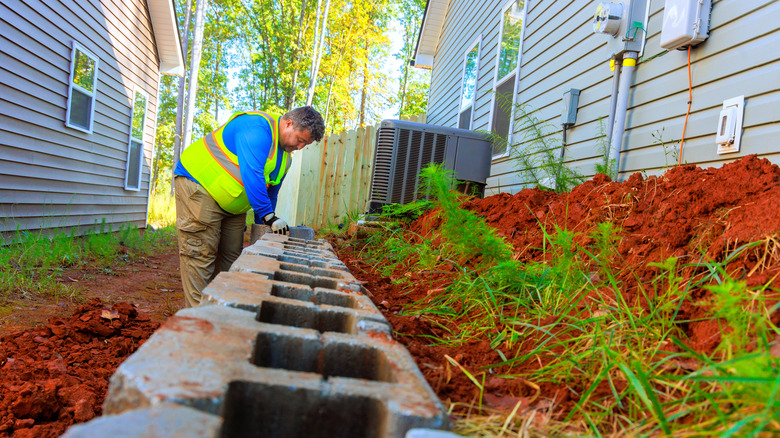
Properly building a retaining wall is expensive even if you do the work yourself. You don't actually always need a retaining wall just because your yard slopes and you've noticed you have soil washing away. If surface erosion on an otherwise stable slope is an issue, you can forego a retaining wall and try planting something like catmint (Nepeta) instead. As a master gardener and permaculture specialist, I'm a big believer in using plants to solve landscaping problems wherever practical. It saves money and helps to maintain and support native plants and wildlife. Hardscaping most definitely has its place, but not everything requires such drastic measures.
Catmint is a pretty, low-maintenance perennial that's particularly well-suited to the job of holding soil together to prevent erosion. Obviously catmint is a plant, so it won't stabilize a collapsing bank, nor will it replace a wall that's holding back a substantial amount of soil. But if what you're dealing with is gradual erosion on a sunny slope, then it's an inexpensive and effective alternative to costly hard landscaping.
Why catmint is a good choice for preventing soil erosion
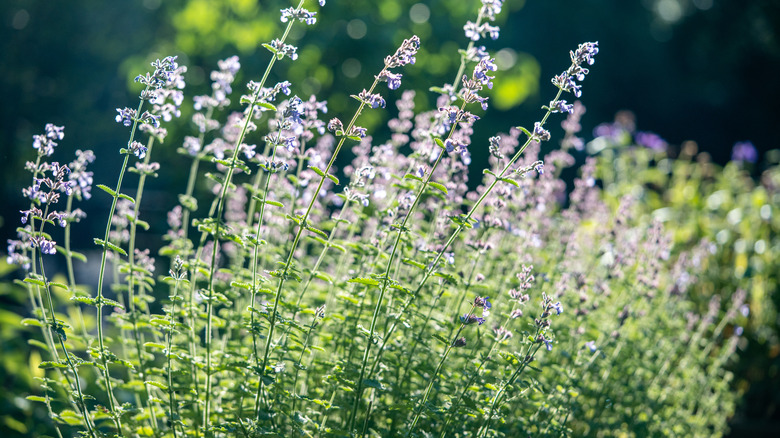
I love catmint because it's such a hardworking little plant that doesn't need any coddling from you. It's very self-sufficient, which does mean that it spreads. While this can be a problem in open flower beds, where it can quickly take over if you don't keep on top of it, when we're talking about soil erosion, that's a definite benefit. The catmint spreads and creates mounds of aromatic foliage that's a pretty gray-green color and then it flowers, producing masses of little blue-purple blossoms that pollinators can't resist. And just as it spreads above ground, the roots spread below. They create a fine web of roots that helps to hold the surface soil together, stabilizing a sloping yard, while the foliage above provides ground cover, rapidly reducing the amount of bare earth that's exposed to the elements.
While my primary recommendation for capping is to use it on shallower gradients, it's also widely recommended for stabilizing steep slopes. Catmint is a fantastic little plant and does best in sunny relatively dry spots where grass struggles or where mowing is a nuisance. It can tolerate poor soil and doesn't really require feeding. Once it's established it copes very well with drought but it doesn't like being permanently wet.
As well as stabilizing a slope and negating the need for constant mowing, catmint is also one of the best ground covers to suppress unwanted weeds. If you want something hardy and compact, go with a cultivar like 'Cat's Pajamas catmint', which is a hybrid that's hardy in USDA zones 3 to 8. It only grows to about 14 inches tall and 20 inches wide, but they'll knit together beautifully once mature.
How to plant catmint on a slope for effective erosion control
If you've already got grass or any other vegetation that's currently holding the bank together, avoid the temptation to strip everything away before planting. Yes, this is a conventional method of planting a new area, but it's a bad idea on a slope. This is where permaculture practices shine. If you were to just rip up everything that's already there, you'd expose the soil to even more erosion while your catmint plants try to get established. Instead, all you need to do is remove small sections of turf to make little planting pockets. This is your best option for gardening on a slope to limit erosion.
If you've decided to go for 'Cat's pajamas', space them 20 inches apart and stagger them across the slope so that their mature mounds provide lots of coverage and will eventually knit together. Instead of just digging straight into the incline, make a small level planting shelf, so you make each plant a mini terrace. This helps the water soak down to the root zone instead of just running downhill.
Yes, caring for catmint is ridiculously easy and the plants are drought-tolerant once they're established. But for their first growing season you'll need to keep an eye on them and provide water when necessary so that the roots develop properly. If the bank is particularly exposed, it's worth adding biodegradable coir matting over the slope to protect the soil while the plants get established. You can leave this stuff down as the plants will just root through it. Eventually it will degrade and provide valuable organic matter for the soil.