

Can You Add Thanksgiving Scraps To Compost?
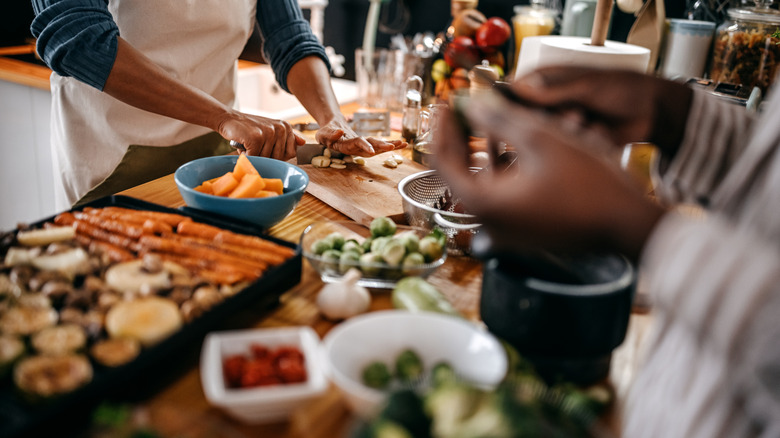
Composting food scraps is a great way to cut down on waste and give a second life to items that would otherwise wind up in a landfill. The biggest benefit of composting at home is the rich, nutrient-dense soil your scraps can magically transform into. As the Thanksgiving holiday approaches, many home chefs will find themselves generating more food waste than usual. Instead of dumping all of your leftovers into the trash can, certain Thanksgiving scraps can actually be added to the compost bin — others, however, should be disposed of normally.
Following basic composting rules still applies during and after the Thanksgiving holiday: Fruits and vegetable scraps, eggshells, even coffee grounds, and tea bags — with any plastic packaging or staples removed — can safely be reserved for your compost bin. These ingredients serve as the nitrogen in your compost pile and, when mixed with carbon (think brown leaves, brown paper bags, and straw), break down into moist soil that is ideal for gardening. You can also add your old Thanksgiving bouquet of flowers, which your compost will love.
Breads and certain starches, like oats, corn, and pasta, may also be added to the compost bin. You should, however, avoid including them if they have been slathered in sauces and oils, as these will attract pests and can lead to anaerobic conditions due to inadequate oxygenation. As far as Thanksgiving scraps that shouldn't be composted, these include many prepared and processed dishes, such as pies, leftover meat and bones, dairy products, gravy, and candy.
Best practices for composting Thanksgiving leftovers
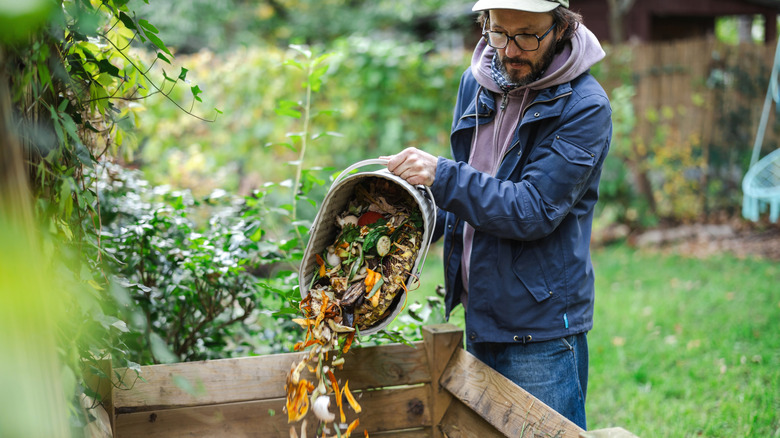
Now that you know which foods can and cannot be composted, it's time to brush up on some basics. Remember that the larger the items you're adding to your bin, the longer it will take for them to break down. For example, big pumpkins will decompose eventually, but cutting them into smaller chunks will decrease the waiting time significantly. Roughly chopping your fruit and vegetable scraps and crumbling up leftover plain bread, for example, will speed up decomposition while still allowing proper air circulation, which is a necessary component for successful composting.
While composting your scraps is well-intentioned, you don't want your kitchen stinking of eggshells and onion skins while you're cooking the turkey or biting into a piece of pumpkin pie. One clever trick is to collect scraps inside a paper lunch bag and put it in the freezer. The low temperatures and paper bag will naturally limit odors and pause the decomposition until you're ready to haul the bag out to your bin. Since plain paper bags are also composter-friendly, you can dump the entire parcel directly into your composting bin. You could also check out the five best compost bins for your kitchen if you prefer an on-the-counter option.
Since you might be adding larger quantities of nitrogen, or food scraps, to your pile after the holidays, remember to add sufficient carbon, like leaves or sticks, which should be roughly three times the amount of the food you're putting in. If your pile begins to smell badly, you need more browns to even things out. Cutting up some brown paper grocery bags or cardboard and storing them in a box by your back door will simplify the browns-to-greens matter. Or you can save some of those crunchy leaves you've raked for straightforward organic carbon material.