

Sharpen Mulching Blades Without An Angle Grinder With This Simple Tool
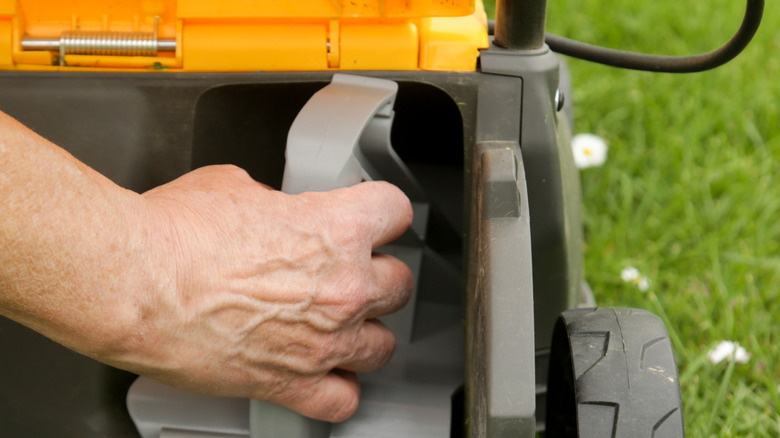
If you do not want your mowed grass to go to waste, mulching it in your mower is a great option. Mulching blades chop the grass into small pieces that break down faster when left on the lawn. However, to mulch grass properly, your blades must be sharp or they will leave behind large chunks of grass, which will not break down as quickly. One way to sharpen them is to use an angle grinder. The problem? An angle grinder is a complex power tool that not everyone owns. If you want an easier option, you can use a steel file instead.
Unlike an angle grinder, a steel file has no moving parts, so there's less that can go wrong. It's always ready to use. Plus, a steel file is relatively inexpensive. Using this simple tool to sharpen mulching blades also makes sense because they often have small curved sections and teeth — unlike standard mower blades. If you use an angle grinder on these features and are not careful, you could remove too much metal in one place.
Just keep in mind that even though a steel file is a simple tool, using it to easily sharpen your lawn mower's mulching blades requires more effort and time. It is not a powered tool, after all. You also need to know how to choose the right metal file for the job. Ideally, pick a narrower file that you can maneuver into the curved and toothed sections of the mulching blade. Lastly, keep in mind that not all the teeth or raised fins of a mulching blade need to be sharpened. Some of them move grass out of the way when mulching rather than cut it up.
Here is how to sharpen mulching blades with a steel file
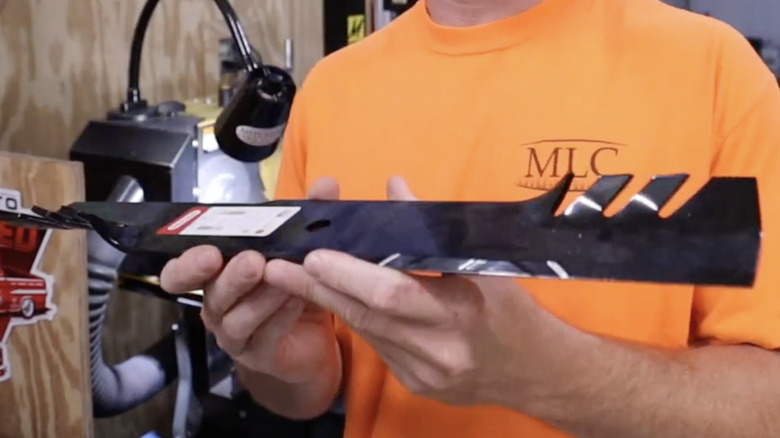
If the mulching blade (or blades, in some cases) is attached to your lawn mower, start by removing it carefully. Before removing the blade, make sure the mower is powered off and cannot start. For a gas-powered mower, disconnect the spark plug; for an electric lawn mower, unplug it or remove its battery. However, do not immediately start sharpening the mulching blade after taking it off. Instead, clean it first to remove all the dust, grass, and other debris.
When sharpening a mulching blade, push the steel file smoothly forward along the edge, then lift it up on the way back. Repeat this motion up to 10 times. Do not drag the steel file along the blade when bringing it backwards. Also, make sure that you maintain the original angle or bevel of the mulching blades when sharpening them. Changing it can affect how the mulching blade cuts. Also keep in mind that changing the bevel or angle can result in too much metal being removed. This process will likely take longer and be difficult to do with just a steel file.
You also need to make sure you sharpen both sides of the blade evenly and check the balance of the blade after sharpening. It is one of those overlooked lawn mower maintenance tasks that everyone forgets to their detriment. An unbalanced mulching blade can not only affect the performance of your lawn mower but also shorten its lifespan. Counting your strokes as you sharpen each side can help you remove an even amount of metal. Finally, keep in mind that not every mulching blade is worth sharpening. If the blade is severely nicked, cracked or bent, it is better to replace it.