

Cleaning Your Floors With Vinegar: Why It's Recommended If You Fear Pests

Mice are fairly adorable to watch in the wild, but you probably don't want them in your kitchen, enjoying late-night snacks at a little mousy party. The trouble is, mice can fit through tiny holes and even the smallest of food scraps that have escaped under the refrigerator can summon them. They are shockingly good at locating food, and once they know they've found a reliable source, they will be returning visitors or they'll nest right in your kitchen.
Regularly cleaning your floors with white vinegar, however, can make your home less inviting to these tiny rodents. The cleanup required to keep mice out of your home goes beyond just removing crumbs. That's because mice use scent marks to communicate and to navigate familiar routes. Vinegar is such a good option because it's non-toxic and disrupts those scent trails. Plus it can get rid of the lingering food odors that drew the mice in in the first place, so it makes their established routes as well as your kitchen less appealing.
Further, mice have a remarkable sense of smell and vinegar's pungent odor can provide some additional deterrent effect. However, vinegar is not a guaranteed solution for getting rid of mice that are already in your kitchen, especially if you have a significant infestation. But consistently using it as part of your regular cleaning routine can help reduce the food residue and odors that encourage rodents to come inside.
How to clean your floors with vinegar to discourage mice
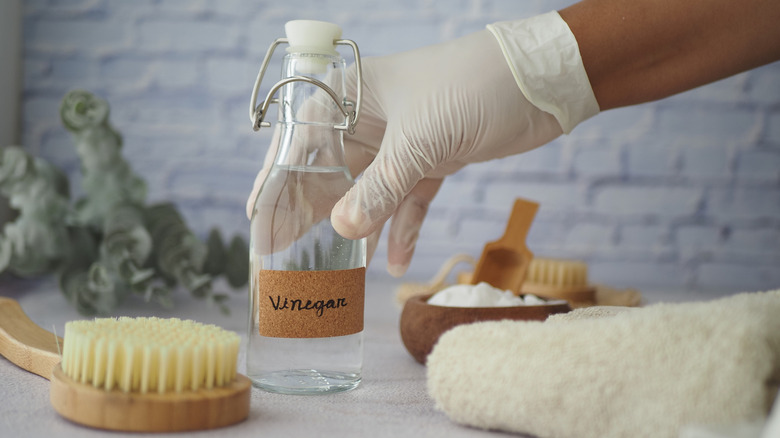
Use regular food-grade 5% distilled white vinegar, not the higher-strength product that's used for gardening and industrial purposes. Mix 1 gallon of warm water with ½ cup of vinegar. At this dilution, vinegar is safe for many types of flooring, including vinyl and ceramic. Out of an abundance of caution, make sure you check the flooring manufacturer's cleaning recommendations first, though.
Mop over the entire area, paying particular attention to the edges of kitchen floors and dining areas, and the spaces around appliances. Mice have a habit of traveling along walls, so make sure you get right into the corners and clean the baseboards too. If you can, pull movable appliances away from the wall from time to time, sweep up any crumbs and food residue that accumulate beneath them, and then mop over it with your vinegar solution. For the best results, do this on a regular basis, not just for the occasional deep clean.
What you need to know before using vinegar to prevent mice
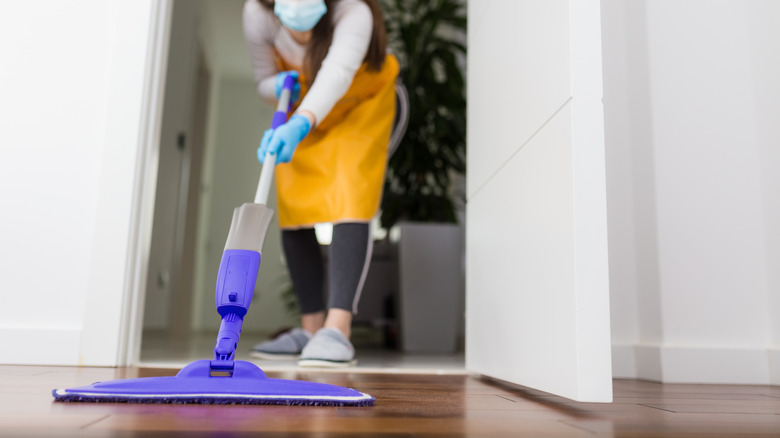
Before mopping, consider your flooring material. Vinegar is acidic, even at this diluted concentration, so not all flooring should be cleaned with vinegar, like stone floors. It can damage hardwood finishes and even etch natural stone floors, including marble and limestone. If you have these surfaces, it's not a good idea to use vinegar on them. Instead, remove all food residue and only use a manufacturer-approved cleaning agent. You can still get some of the benefits of vinegar by using the solution along your baseboards.
Alongside mopping with vinegar, keeping mice out requires other general good practices, like removing food scraps after meals and wiping up crumbs and spillages right away. Routined cleaning will eliminate the food and shelter attracting mice. While you might think a few crumbs are inconsequential, even tiny amounts of accessible food can help sustain mice, especially in colder weather when the pickings may be slim elsewhere.
However, if you find evidence that you're dealing with a significant mice infestation, including lots of droppings or urine, follow the appropriate disinfection and cleanup procedures, using protective gloves and maybe a mask as rodent waste can carry a variety of pathogens that get released into the air when you start disturbing the waste. You may need to call in a professional pest controller, too.