

All Your Sagging Couch Needs Is A Simple Piece Of Plywood
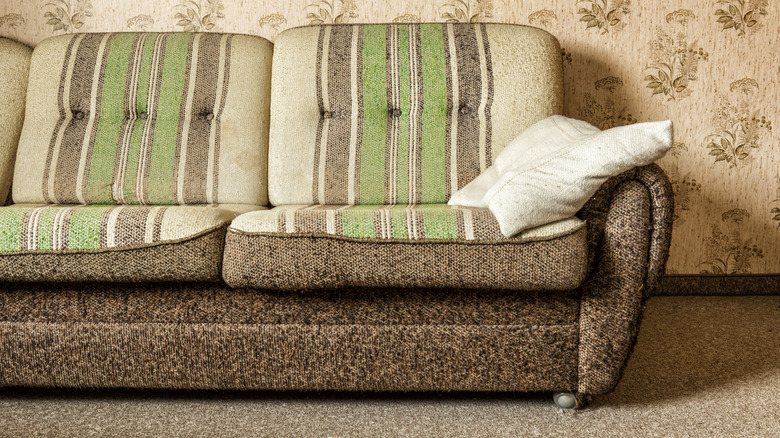
Your sofa should be a bastion of comfort in a world that is always trying to wear you down. Whether it has been transformed into a bed for visiting friends or a relaxation station for a solo sick day, a good couch should provide relief and support to our stressed-out bodies. Unfortunately, due to poor construction or the simple passage of time, even the comfiest couch can become a sore spot in your home once it starts sagging.
Anyone who has tried to find respite on a sagging sofa knows just how unpleasant it can be, and sagging may be a sign that it's time to find new furniture. Luckily, if you don't feel like spending hundreds or even thousands of dollars on a new couch, or if you've simply developed a sentimental attachment to your old sofa, there is a simple solution to deal with a sagging seat. To give your couch a bit of extra support, all you have to do is add a piece of plywood to the frame.
Sofas depend on a suspension system, such as springs, to support the cushions and create a comfortable seat. Over time, the suspension can wear out and break down, reducing the support and leading to a sagging sofa. A piece of plywood can basically replace this suspension system by providing a flat, solid base for the cushions. All you have to do is remove the couch cushions, measure out the couch base, and cut the plywood to fit. This process is even easier once you know the secret to choosing a good piece of plywood.
Plywood is a quick way to add support
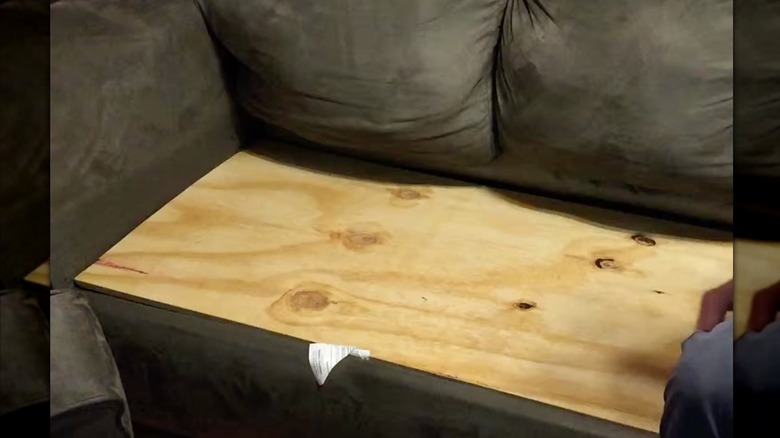
When choosing what size plywood to get, consider how much use your sofa gets. In general, 3/4-inch plywood is sturdy enough for everyday use. If your sofa has a raised edge around its suspension system, be sure to account for that when cutting the plywood to achieve a better fit; the plywood should fit snugly onto the sofa's base without jutting out past the cushions.
Ideally, the plywood should be hidden underneath the couch cushions, but if it peeks out a bit, you may want to consider covering the board in fabric that matches your couch. Also, make sure to sand down the edges of the plywood so it doesn't scratch you or the sofa — you don't want to shorten the lifespan of your couch any further.
How well and how long the new plywood support will work depends mostly on your sofa. If you chose a comfortable sofa with plush, fluffy cushions that mask the hard plywood underneath, this quick fix can last for a while. But if your couch cushions are thin, using a plywood support may not help make the couch any more comfortable even if it fixes the sagging issue. Fortunately, replacing couch cushions is much cheaper than finding a new sofa entirely, so it's not too difficult to upgrade to thicker cushions to make sitting on the plywood support much more comfortable. At the very least, adding plywood to stop a sofa from sagging is an excellent temporary solution until you can save up for a new couch, and in the best-case scenarios, the plywood can support your seat for years to come.