

Everyone Had It In The '80s — Now It's The Outdated Trend No One Wants In Their Homes
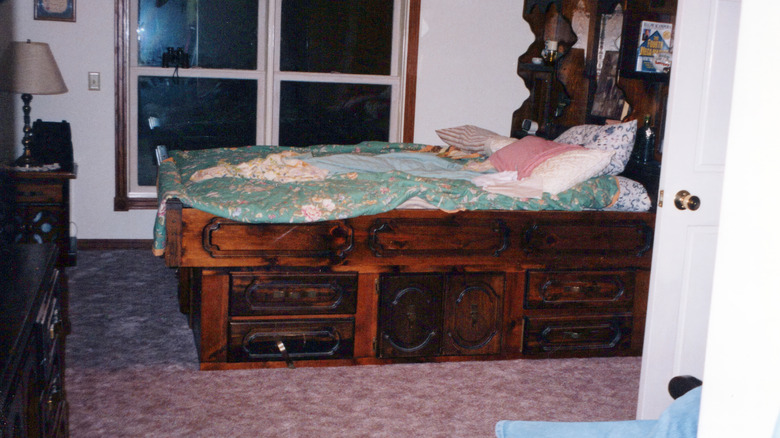
Anyone who grew up in the 1970s or '80s will probably remember something that, at the time, was the absolute height of bedroom luxury but sounds a little strange to the younger generation. We're talking about the waterbed. These mattresses were literally filled with water to give anyone who lay on them the sensation of floating. There were no springs, no foam, just water. And for anyone born later who missed their boom, it's a pretty strange concept to wrap your head around. Invented by a design student in the late 1960s as an alternative to a firm mattress, by the mid-1980s, waterbeds had become a major player in the mattress market not just in America, but around the world.
It often appeared as part of an overall bedroom theme. You might have seen a waterbed among oversized wooden frames, mirrored headboards and cassette players. It was a way of bringing more extravagance into a bedroom than just a plain mattress, and this home decor essential from the '70s and '80s became a symbol of a particular kind of luxury. However, once the initial novelty wore off, the reality of owning one became harder to ignore, and by the 1990s, they were a much less common find in the everyday bedroom.
Why people stopped buying waterbeds
People stopped buying waterbeds mostly because they were so inconvenient. If you were moving house or rearranging your bedroom, you'd have to drain and refill the entire waterbed. There was also the sound of sloshing all night, not to mention that it was seriously heavy (a full waterbed could weigh up to 2,000 pounds, which is no easy thing to move). And then there was always the risk of a leak; even a small puncture could damage your floor and furnishings.
And then there were even extra costs involved. To keep the water at a pleasant temperature, waterbeds have a built-in electric heating system underneath the mattress, so they have higher running costs than a regular mattress. The design was also an alternative to the only other mattress option at the time: firm. But as time went on, mattress manufacturers began offering softer alternatives like memory foam and latex, which many of us sleep on today, so resorting to a waterbed and all its maintenance slowly made less and less sense.
Waterbeds haven't disappeared entirely; you can still buy them, and there are still people who use them. Much like anything from the 1980s, it has a retro charm to it. Still, if you want to buy a waterbed yourself, consider that it needs regular leak checks, proper maintenance, and can cost more than the average mattress today.