

Give These Tree And Shrub Varieties A Boost With A Kitchen Staple
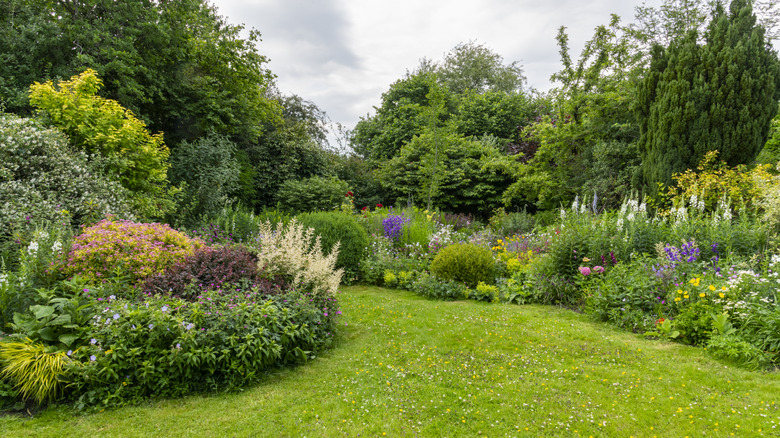
The internet is full of tricks and tips for boosting the growth and production of your plants. There are loads of common household items that can be used as natural fertilizer, and one kitchen staple that you could work with is Epsom salt. However, you shouldn't go around adding Epsom salt to every shrub and tree. Instead, it is best to consider the needs of each plant you have and the state of your soil. Epsom salt is not a miracle worker (although you have probably seen claims that adding it to your soil can get rid of blossom end rot and make all your veggies flourish). But using it when appropriate can have a positive effect on your plants. Trees and shrubs such as magnolia, dogwood, and roses may benefit from Epsom salt.
To understand when to use Epsom salt in your garden, you need to understand what it actually is. Epsom salt is a mineral salt that contains sulfur, oxygen, and magnesium. It is fairly soluble, meaning that it breaks down into sulfur and magnesium relatively easily. These nutrients are both necessary for the growth of your plants. So, if your shrubs and trees are lacking magnesium, adding Epsom salt to the soil may help them grow more vigorously. Soils that often have a magnesium deficiency tend to be sandy soils with a low pH.
Roses
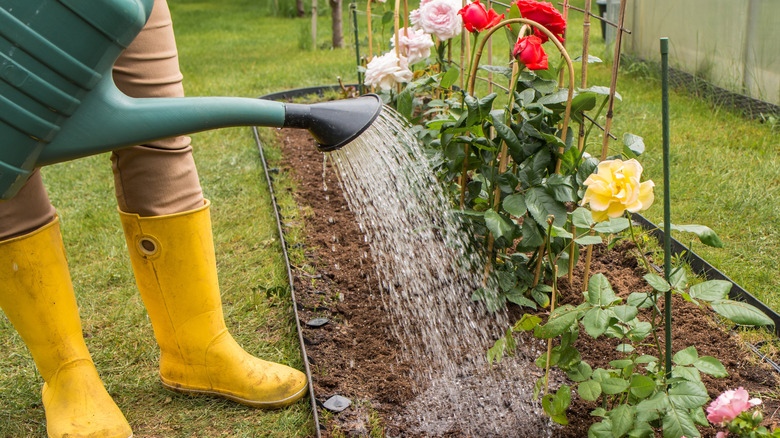
Although these shrubs can be pretty high-maintenance, there is nothing like a garden full of beautiful rose bushes (Rosa sp.) in bloom. Roses can suffer from magnesium deficiency, and you can usually tell this is an issue by looking at the older leaves of your shrub. If the leaves are turning yellow at the edges and are curling downward, your soil may not have enough magnesium. Apply a quarter of a cup of Epsom salt to the base of your rose bush two or three times a year. Don't give them any more than that, though.
Magnolia trees
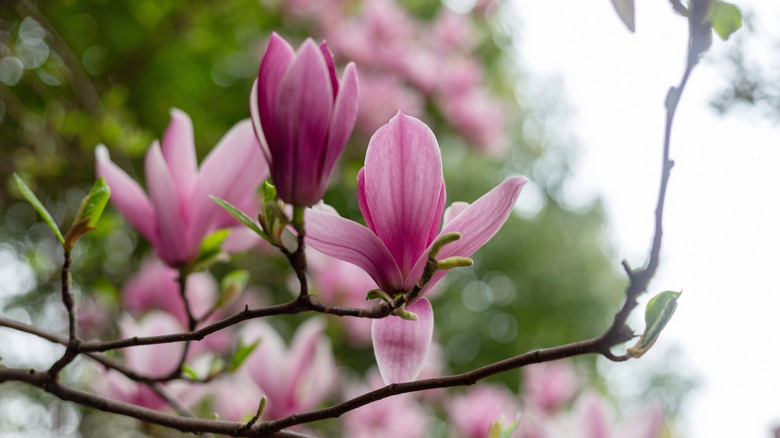
Magnolia trees (Magnolia grandiflora) are known to exhibit chlorosis, which is the yellowing of their leaves. Chlorosis is caused by a deficiency of nutrients, including magnesium, which you will see on older leaves first. New shoots and branches coming from your magnolia will be shorter, too. You can try using Epsom salt to help boost the magnesium in your tree. When giving your magnolia tree Epsom salt, apply 2 tablespoons per 9 square feet. You can do this three times a year, ensuring that you cover the root zone as you do so.
Citrus trees
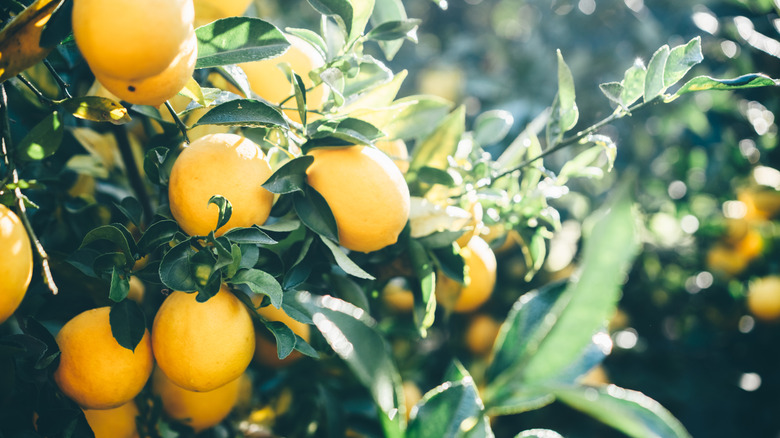
Magnesium deficiency in citrus trees may crop up in the summer months, when the fruits are growing rapidly. The trees will send all their magnesium to the fruits, leaving their foliage yellowing and blotchy. Interestingly, cultivars of citrus trees that produce fruits with seeds are more likely to suffer from a magnesium deficiency than seedless varieties. If your citrus tree is suffering from a magnesium deficiency, apply Epsom salt at its root base three times a year. Then, water the ground thoroughly to allow the Epsom salt to enter the soil.
Dogwood trees
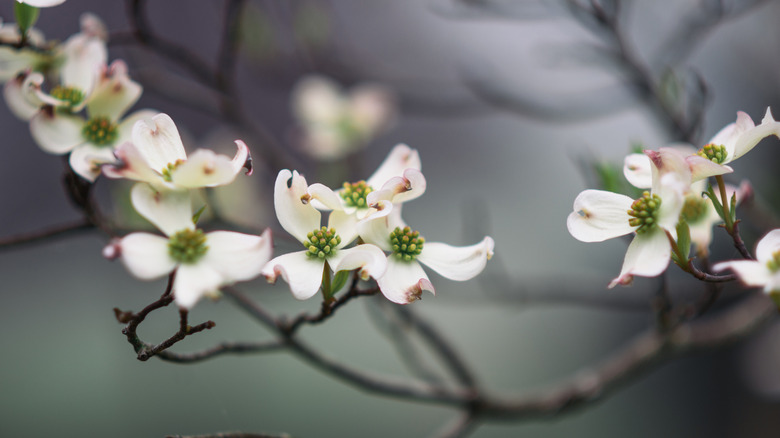
Flowering dogwood trees (Cornus florida) are beautiful trees that can be the center point of any garden. So, it is pretty sad when they don't bloom. If your dogwood tree is not flowering, take a look at its leaves to see if they display chlorosis. If the leaves of your dogwood trees are turning yellow, it may need more magnesium. You can apply a little bit of Epsom salt at the root base before giving it water. However, bear in mind that too much Epsom salt can actually be harmful to your dogwood tree.
Avocado trees
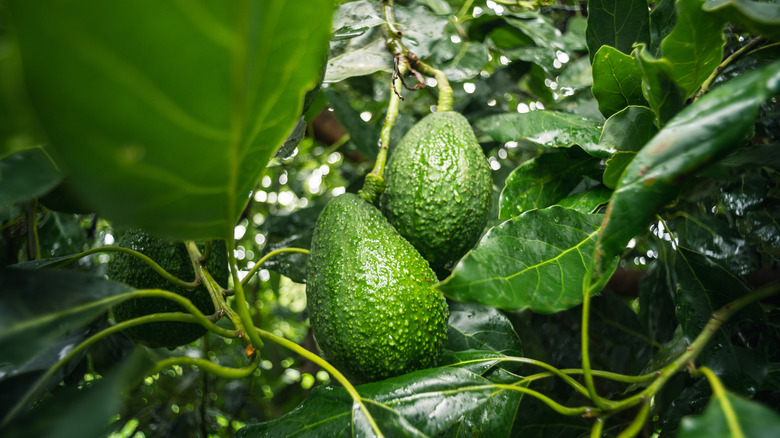
If your avocado tree (Persea americana) has yellowing leaves, using Epsom salt as a fertilizer can potentially fix the issue and promote healthy growth. However, avocado trees do need to be fertilized regularly, especially when they are young. If you aren't fertilizing your avocado tree at all, you may wish to do so before trying out Epsom salt. Furthermore, avocado trees are susceptible to iron deficiency, which can also cause chlorosis. Before adding Epsom salt to your avocado trees, test the soil to see what nutrients are missing.
What to know before using Epsom salt on shrubs and trees
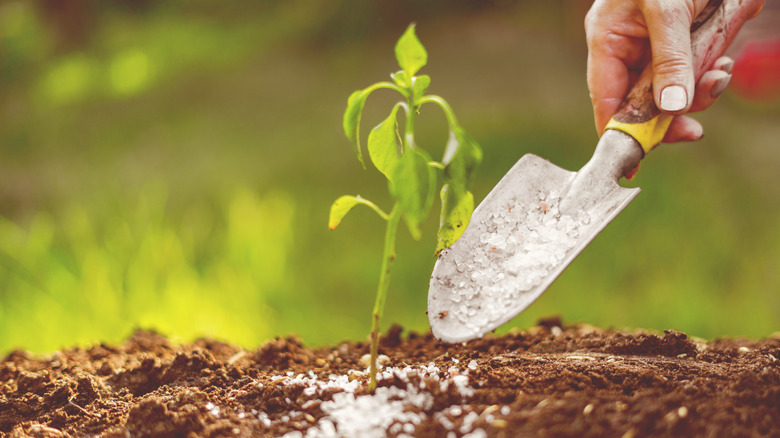
Epsom salt is a great way to add magnesium to your soil. However, if your soil already has enough magnesium in it, Epsom salt can have a detrimental effect on your garden. Adding too much magnesium can actually prevent calcium from reaching your plants, which can impact their growth and root health. It can also affect the water in the soil by increasing mineral contamination through excessive magnesium.
To figure out whether Epsom salt will benefit your shrubs and trees, test the soil to see if it needs more magnesium. You can test your soil's pH level or send away a sample to get it looked at by a lab. A pH test will only give you a general idea of the magnesium in your soil, whereas a proper test at a lab will tell you everything you need to know.
If your soil is low on magnesium, use 1 to 2 tablespoons of Epsom salt per 9 square feet of the plant's root zone and apply it to the root zone of the shrub or tree. As you water or rainfall occurs, the magnesium will become available to your plants. Because Epsom salt is soluble, you will need to apply it more often than other slow-release fertilizers, so repeat the application at least once a month. Do not spray mixtures of Epsom salt onto your trees and shrubs, as this can cause leaf scorch.