

What Does It Mean When Your Lawn Feels Spongy? Top Causes And Solutions
We may receive a commission on purchases made from links.
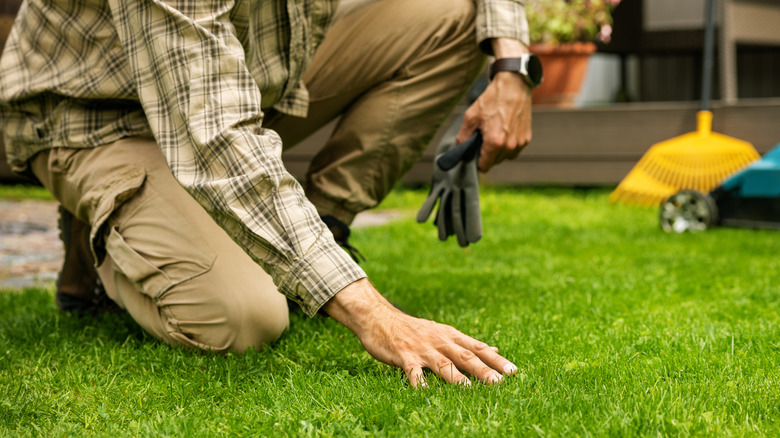
Let's say one day you're walking around your property, admiring all your progress (or getting frustrated at the half-finished projects that sit there, mocking you. Yeah, we know.) and your foot sinks slightly into the ground. You kneel down to check what could've happened and press your palm into the ground. And that's when you feel it — that spongy give that tells you something is definitely not right with your grass. But is it bad, or just something that happens once in a while?
Spoiler: it's bad, but not life-destroying. If left unchecked, spongy lawns can lead to bare patches, full-blown fungal outbreaks, or drainage problems that make your lawn go from spongy to a sopping wet mess. Luckily, spongy lawns are usually fixable once you figure out what's going on. That's why we're breaking down some of the biggest causes of that soft-soil feeling. We'll tell you the signs it could be your culprit, why it causes that feeling, and a few budget-friendly landscaping tips to fix it. Don't worry if you're already feeling overwhelmed, though; the more you understand the reasons why it's happening, the more successful you'll be solving it right away.
There's excessive amounts of thatch
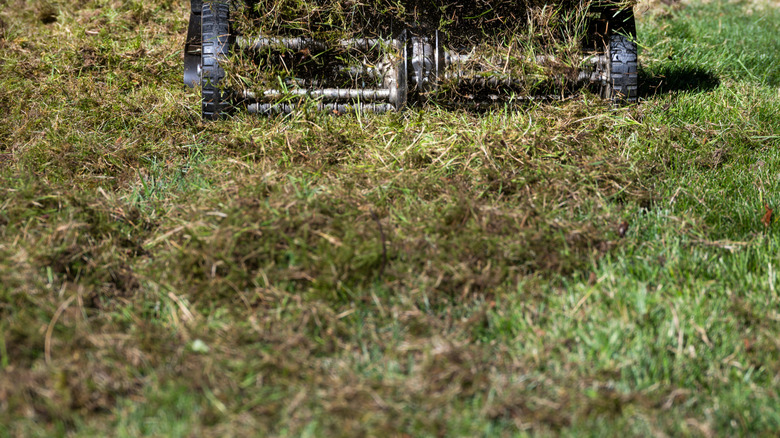
If you're unfamiliar, thatch is nothing more than a layer of dead grass and organic debris that builds up between your lawn and the soil surface. Normally, thatch is fine because it can insulate roots and help retain surface moisture. But when thatch gets thick, it starts acting like a sponge and trapping water in that dense mat instead of letting it reach the soil, creating that bouncy feeling under your feet.
If you've got a lot of thatch, you'll notice a few telltale signs besides the spongy feeling. Your grass may feel dry even after watering, since the water is getting trapped instead of going to the roots. You might see more brown patches than before or areas where your previously lush lawn looks a little patchy and sparse. Another dead giveaway is if you can easily peel back sections of your lawn, sort of like a rug, and see a thick matted layer underneath.
Clear out the clumps of thatch
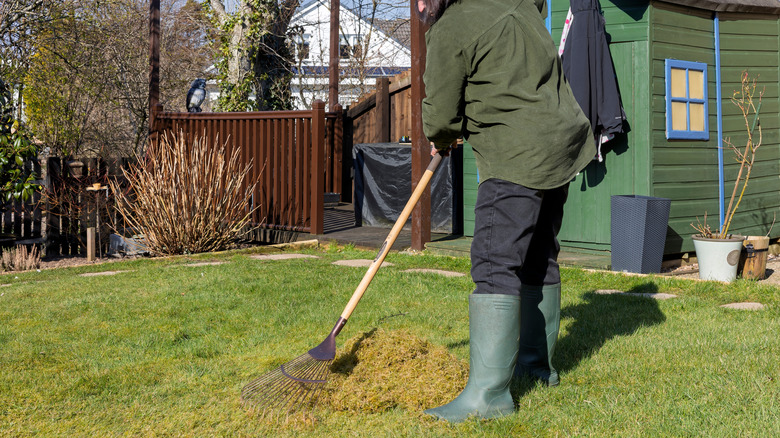
Thatch may be one of the easiest problems to overcome, as all you'll need to do is remove it. You can use your old garden rake to give it a go, but there are special tools that may be helpful if this is a chronic issue for your lawn. For smaller, occasional jobs, tools like Walensee's 15-inch thatch rake should be plenty, as it uses steel metal teeth to grab the thatch. For bigger lawns or more chronic issues, you may want to invest in an electric dethatcher, like WEN's 16-inch 15-amp 2-in-1 electric dethatcher and scarifier. These look like a push lawn mower but use a blade design that's more like a tiller than a cutting blade and pull up the thatch while aerating the lawn, too.
Removing thatch is usually best done during the early spring or fall so that your grass has time to bounce back before the high summer heat or winter chill set in. After removing the excess thatch, you may want to reseed any bare spots and keep your lawn consistently watered for a few weeks so that your new grass can establish its roots. You won't see results overnight — minus the lush-looking lawn – but within a few weeks, you should notice your lawn's soil feels firmer and looks much healthier.
Also, clean up leftover grass clippings
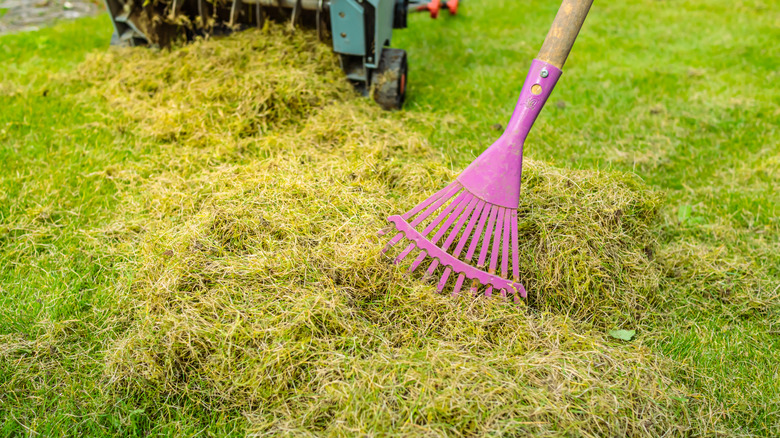
While you're tackling thatch, you may want to reconsider how you handle grass clippings. Excessive grass clippings left on the lawn can lead to thatch issues later down the line. It's especially an issue during spring and summer, when you're prone to cutting grass more often, so if you've already got a thatch problem or even just notice spongy feelings around the yard, cleaning up your grass clippings instead of letting them lie as is can be a good preventive habit to start.
However, grass clippings aren't the only reason for thatch, but go hand in hand with another cause: excessive nitrogen buildup. Nitrogen is an essential nutrient for plants that promotes growth, and too much nitrogen means faster growth. More growth means more mowing, creating more grass clippings, and then the thatch cycle begins all over again. So, while cleaning up grass clippings is a good quick fix, dialing back on the nitrogen can be a better long-term solution.
There's an infestation of mole crickets
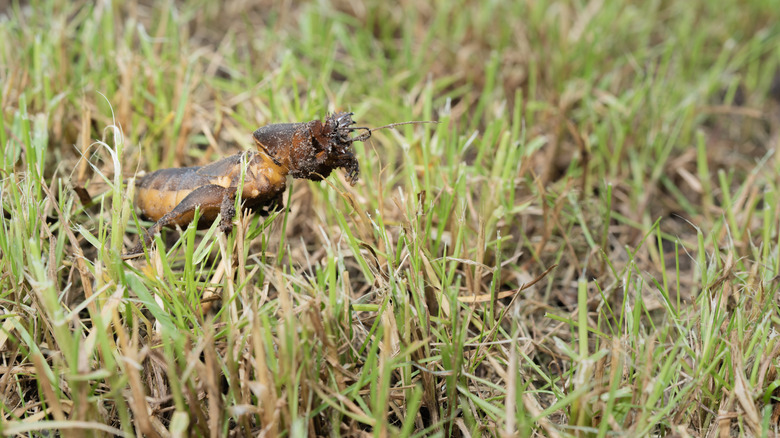
Mole crickets are small, brown insects that love to burrow thanks to their shovel-like front legs that work like mini-excavators. As they burrow, they sever a grass blade from its roots, obviously cutting off the green part from accessing the water and nutrients they need. A single mole cricket can do serious damage, burrowing up to 20 feet in a single night, so it doesn't take many of them to wreak absolute havoc on your lawn. That's what creates the spongy feeling, because you're essentially walking in a patch of grass that's been severed from its foundation.
Like thatch, mole crickets cause other symptoms besides that soft feeling underfoot that lets you know there's a problem. Their damage typically begins in the late summer or fall, though they begin to burrow more easily earlier in the season. Look for small mounds of loose soil scattered across your lawn — that's how they surface. You may also notice irregularly shaped brown patches. However, the biggest giveaway is if your grass pulls away easily from the soil when you give it a tug, thanks to it being cut off from the root system.
There's a white grub infestation
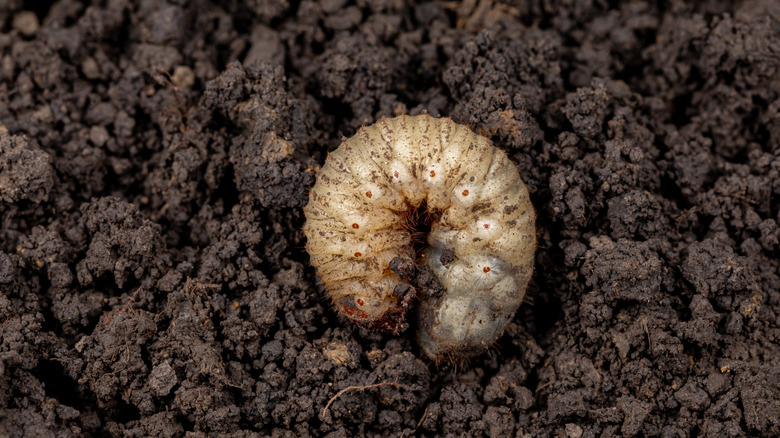
White grubs are the larval stage for a few beetles that spend their time underground feeding on grass roots. These plump, C-shaped bugs can do serious damage because they'll disconnect blades from the roots the same way mole crickets do. The grubs' feeding sessions are what cause that spongy feeling, but if the infestation becomes serious enough, you'll be able to literally roll back your turf like a rug.
White grub damage shows up in late summer and fall, though they've been hiding in the soil longer than that. You may notice brown patches showing up, which is a telltale sign. But brown patches can be caused by a few problems, so the biggest symptom of white grubs to look for is an increase in activity from predators that like to dig up grubs for lunch, like crows, raccoons, skunks, and even coyotes.
For mole crickets or grubs you may need a insecticide
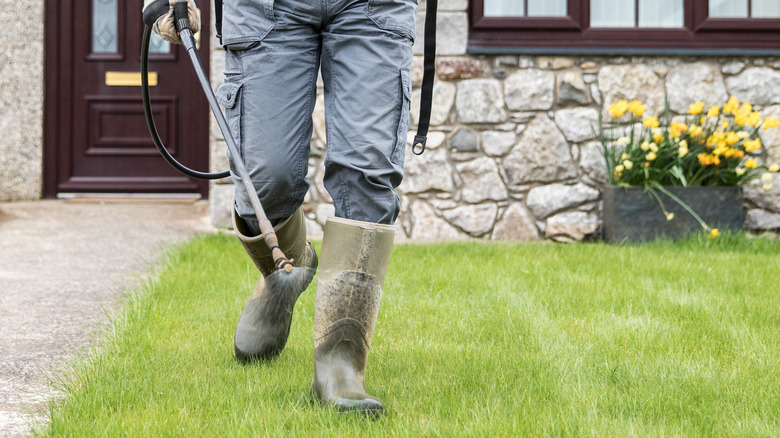
If a pest infestation is the cause of your spongy lawn, you've got a few options. You can try to introduce natural predators, like predatory wasps or nematodes, but their efficacy is hit or miss, and who wants to deal with wasps? Some grasses, like fescues, seem to be less susceptible to damage from white grubs, but we couldn't find any good data on mole cricket preferences. In the end, the simplest solution may just be to use an insecticide.
However, this is also not guaranteed and will probably take multiple sprays, particularly since the majority of the population will be underground. Remove any thatch beforehand so that the insecticide doesn't stick to the surface. Apply your insecticide in the spring or early summer for the best results, and spray every 10 days or so, as this will give you time to see who's winning — you or the pest. Insecticides that contain chlorantraniliprole or imidacloprid have worked on white grubs, but may be toxic to bees, so plan accordingly. For mole crickets, imidacloprid is also helpful, but insecticides with bifenthrin may be faster if your outbreak is primarily adult crickets instead of nymphs.
There's too much water in the soil
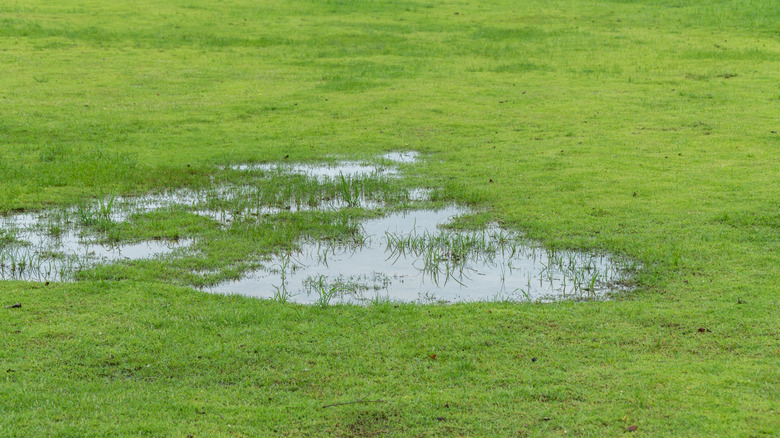
Overwatering or poor drainage will create a spongy, marshy ground that's pretty easy to spot. When your lawn's soil stays saturated, it can't drain properly, so your grass' roots won't be able to access the oxygen they need to thrive. That constant moisture will also create the perfect conditions for fungal diseases that love damp environments.
Besides the obvious sign of a standing pool of water, there are a few other symptoms that can tell you if your spongy lawn is holding too much water. Look for footprints that don't bounce back and leave lasting impressions. You might also notice mushrooms or fungi popping up, since they love moist conditions. However, even if you've determined waterlogged soil is the problem, you've still need to determine why. Most likely, you've got one of four problems: poor grading, compacted soil, or soil that's clay heavy and won't let water move through it, or a combination. Figuring out the reason for the waterlogging is key to solving it.
Change the settings on your sprinkler

If too much water is the culprit, start by checking your sprinkler's settings to see if it's something as simple as too much water. Many people like to set their sprinklers to run daily for short bursts, but that can cause shallow root development and create environments that disease-causing organisms favor. The goal, instead, should be less frequent waterings that last longer, letting the soil get properly saturated, which makes roots grow longer while still giving the soil time to dry out between waterings. Ideally, you want around one inch of water for every square foot of soil.
If adjusting the water routine doesn't solve the problem, you're likely dealing with a drainage issue due to compacted soil. Try using a core aeration tool, suh as the Yard Butler Manual Lawn Coring Aerator, as these help water, air, and nutrients penetrate deeper into the ground while breaking up clumpy soil. You can also try improving soil structure by incorporating compost or sand. For grading problems where water naturally flows toward problem areas, you may need to regrade your yard to create a gentle slope that moves water away from low spots.
You've got a mole problem
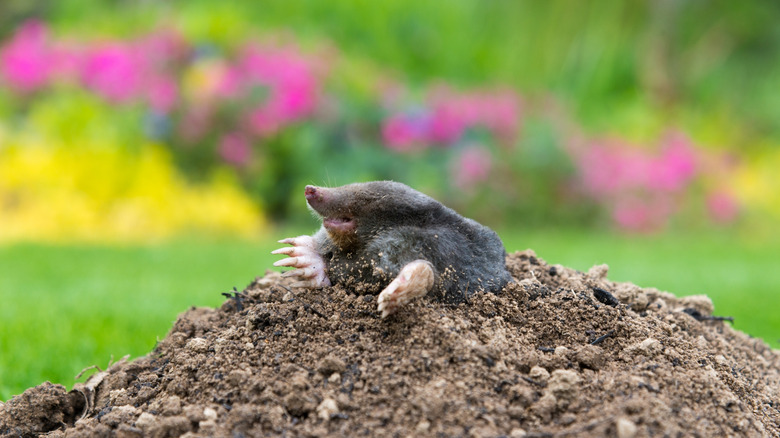
Moles are small, burrowing mammals that dig tunnel networks as they hunt for earthworms, grubs, and other underground critters. As they tunnel, they leave behind air pockets and unsettled soil below the surface, which creates that spongy feeling when you walk across them. Unlike mole crickets, moles don't actually bother with grass roots, but their tunneling activity can cause your turf to uproot and create enough problems that cause your lawn to die off anyway.
You'll know you've got moles if you notice volcano-shaped mounds of dirt scattered around your lawn. These molehills are created when moles push the dirt out of the way while they dig. Over time, you'll start to actually see the network of tunnels show up as raised lines or lines of grass that have turned brown and died off. You might also notice an uptick of other pests, like voles, that like to use mole tunnels as a highway to get around your yard.
Deterring moles requires a multi-pronged approach
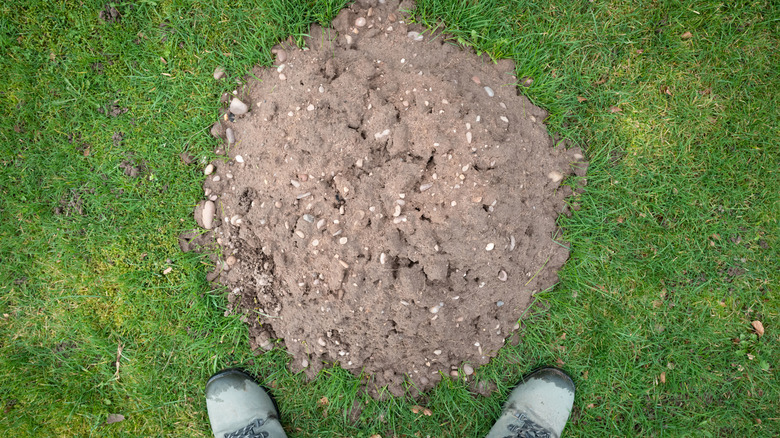
Sadly, getting rid of moles isn't simple, as a mole's primary food source is earthworms, and we need them for healthy soil. Two methods we know to work are using worm-shaped baits that contain bromethalin, which is poisonous to moles, or physically trapping and removing them. Placement matters for both options, so focus on straight tunnels that moles will use regularly instead of squiggly, curved tunnels, since the straight ones tend to be between their nests and feeding areas.
That said, lawn maintenance can be a great way to prevent moles from heading your way. Moles want to work smarter, not harder, so areas that are sparse, poorly maintained, and have low foot traffic are their preference because they're usually left alone. A thick, dense lawn with a tightly knit root system is much less appealing because it's harder to dig through. So, if your lawn is thin and patchy, you may want to reseed or hit it with fertilizer. Also, how often you mow matters, so let your lawn rest between mowings so the roots have time to dig in. These won't solve an existing mole problem overnight, but the healthier and thicker your lawn, the better long-term defense you'll have.
Your lawn has a patch of fern moss
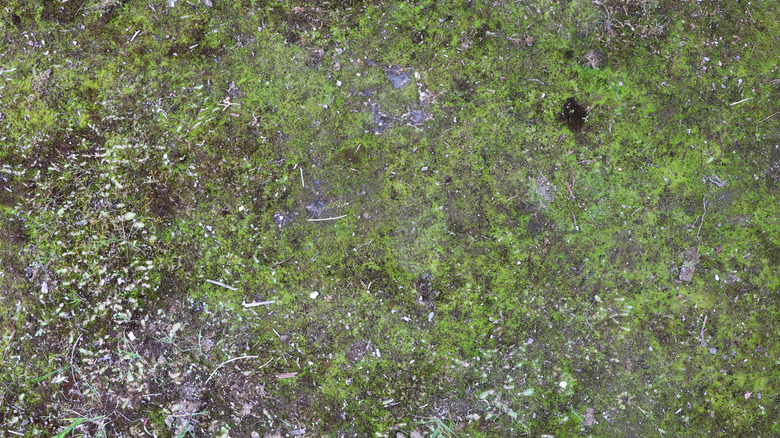
Fern moss (Thuidium spp.) is a low-growing moss that likes to spread quickly over bare patches by knitting together to form what feels like a thick, spongy rug when you walk on it. It has a texture that resembles tiny fern fronds, which is where it gets its name from. Unlike grass, which has individual blades rooted in soil, moss creates a dense mat that sits on top of the soil surface, causing the spongy feeling, since you're essentially stepping on a cushiony layer of moss instead of firm soil.
Moss shows up when conditions favor it over grass, like poor drainage, compacted soil, too much shade, or overly acidic soil. If your lawn has patches of moss, you'll notice they tend to appear in shady, damp areas where grass is thin or has died out completely. You might also notice the affected areas stay wetter longer after rain or watering compared to the rest of your lawn.
Getting rid of fern moss takes patience
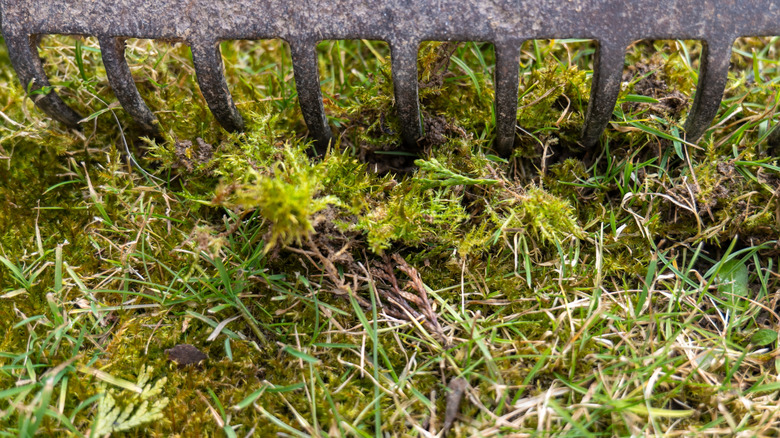
Getting fern moss out of your lawn starts by physically removing the moss itself, but there are a few ways to tackle it. For smaller patches, a steel rake should work; just use it repeatedly until the bare ground is exposed. For larger areas, power raking or scarifying with a mechanical scarifier will make the job go faster. After that, apply a moss killer that contains iron sulfate or potassium salts over any leftover patches to dehydrate them, then rake up the dead bits.
However, moss outbreaks signify there's something else going on beneath the surface you'll want to address. Moss needs consistent moisture to thrive, so you may be dealing with overly-saturated soil and should adjust your water routine or aerate your soil. They also tend to thrive best in shade, so you may need to prune back trees or bushes that cast a shadow over the area. These aren't quick fixes, but they end up making your lawn stronger and healthier over the long haul.
There's a brown patch disease infection
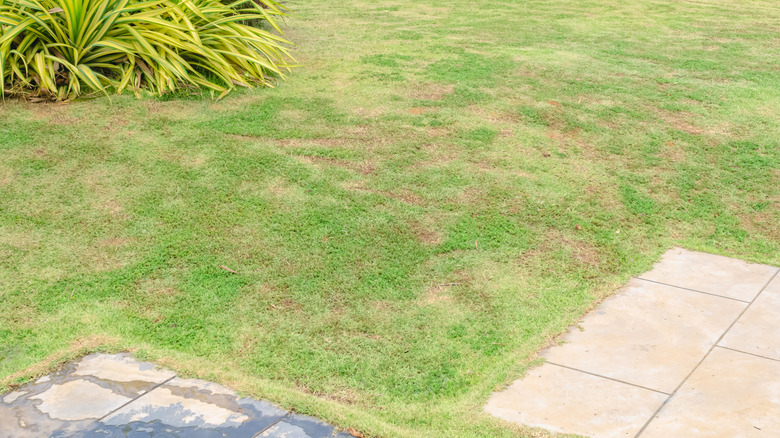
Brown patch disease is a fungal outbreak that attacks grass during warm, humid weather. The fungus attacks the crown of the grass plant and causes the stems to separate, killing off the blade. Small outbreaks will create that spongy feeling, while large outbreaks may cause your grass to lift up like the curled edge of a carpet because there's nothing holding it down any longer.
You'll know you're dealing with brown patch disease if you see circular or irregular patches of brown, dead grass that seem to show up out of nowhere immediately after a stretch of hot, humid days. The edges often have a darker, water-soaked ring early in the morning before the dew evaporates. If you look closely, you may also see tan lesions on individual blades, which will pull up easily since they're no longer anchored to the ground. Brown patch thrives in lawns that are over-fertilized with nitrogen, overwatered, or have poor air circulation, so if you've been heavy-handed with the fertilizer or hose, that could be why it's showing up.
Keeping up with lawn care maintenance can significantly reduce brown patch disease

For severe or recurring brown patch outbreaks, fungicides can help, but they work best when applied preventively. Otherwise, your best way to fight it is by keeping up with your lawn care chores. Be intentional about your fertilizer usage and pay attention to the nitrogen levels. You may want to get a soil test to make sure your lawn actually needs additional nitrogen, too. Water your lawn only when needed and always in the morning so that excess water has time to evaporate. Brown patch disease spreads fastest when grass stays wet for around half a day, so give the sun as much time as possible to get rid of whatever water is left over.
Beyond that, you'll want to focus on improving your soil's air circulation and drainage. Know what type of grass you have and learn how to mow efficiently so that you keep it at its recommended height, never cutting more than one-third of the blade at a time, and keep your mower blades sharp to prevent tearing. Core aeration will help reduce soil compaction and prevent thatch buildup, both of which tend to attract fungal diseases. If your lawn is in a shady area, you may want to prune back trees and shrubs for better light penetration and airflow, helping it dry out faster.
There could be an excessive amount of earthworms living under your soil
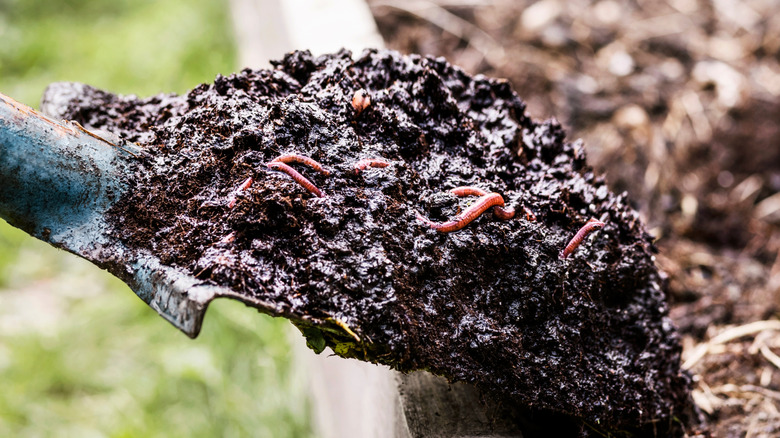
Earthworms are generally considered beneficial for soil health because they create pore spaces for air, water, and nutrients, and their castings naturally fertilize and condition your soil. But when conditions are ideal, particularly when your lawn stays consistently moist, earthworm populations can explode into the hundreds or even thousands. When that happens, they create so many tiny mounds of castings scattered across your lawn that it starts to feel soft and spongy underfoot.
Excessive earthworm populations create other problems that are harder to ignore. The castings can dull your mower blades, make mowing difficult, and leave your lawn looking muddy and ugly. What's more concerning, though, is that high earthworm populations attract predators like moles, gophers, and armadillos that dig and tunnel looking for an easy meal. Most lawn care specialists don't recommend using insecticides to control earthworms because they're beneficial to soil health, and the damage from predator activity usually outweighs any benefit from reducing worm populations. If you've got excessive castings, the best approach is to accept them as nature's way of fertilizing and conditioning your soil, unless predator activity becomes such a problem that it outweighs the benefits.