

12 Household Essentials You Should Be Replacing More Often (But Aren't)

The things we rely on the most are sometimes the ones that we always forget to replace. Everyday essentials blend into your daily routine, and before you know it, you've been using that same item for months or even years. As a result, it might become degraded to the point of losing its effectiveness without you even noticing. That can be the case for things as different as water filters and pillows.
Other everyday items can become breeding sites for bacteria, like your shower curtain liner or your kitchen cutting boards. The things you count on to be clean and ready for use could be sources of contamination. Keep tabs on these and other household essentials, making sure to replace them at recommended intervals. You might need to do this even sooner if you notice deterioration or decay, so for each item, we've included the signs that it's ready to be replaced.
Keep cutting boards in good shape

Your cutting boards see a lot of action, so it's important to keep them in good shape and replace them regularly. Items like raw meat or fish can introduce bacteria to the cutting board surface. While frequent washing helps to sanitize the surface, your cutting board can still become compromised. Over time, cuts or abrasions on the board can harbor bacteria that aren't easily removed by washing. For that reason, experts say that you should replace a plastic cutting board about once a year, depending on how frequently you use it.
A wood cutting board has a shelf life too, although it can be longer than plastic boards. In many cases, a wood cutting board can last for several years. However, it's important that you don't wash them in a dishwasher and follow the proper steps for wood cutting board care.
Regardless of what a cutting board is made of, routine sanitizing and frequent replacement are the best ways to keep your prep surfaces clean. Some of the most telltale signs that it's time to replace a cutting board include excessive wear to the surface or deep grooves from your knives. And if your cutting board always looks dirty no matter how much you scrub it or it develops an odor, it's time to replace it.
Replace range hood filters
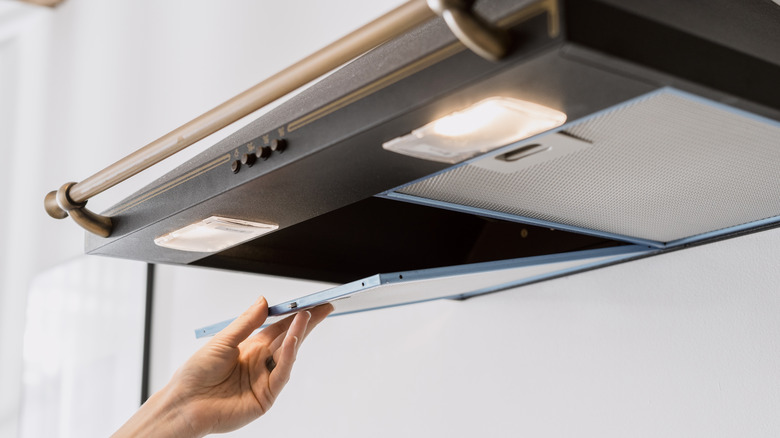
A range hood ventilates the air in your kitchen and captures smoke and odors rising from your cooktop. But if the filter inside of your range hood is past its prime, it's likely doing very little to contain cooking exhaust. This reduced ventilation can negatively affect air quality. This is especially true if you have a charcoal range hood filter, which is meant to be disposable. After absorbing odors over a period of time, the charcoal loses its effectiveness. A charcoal range hood filter should be changed about every three to six months. An aluminum filter should be replaced at least every 12 months.
Aside from marking the filter's replacement date on a calendar, you'll know it's time to replace it based on its decline in performance. You will likely start to notice a decline in the filter's ability to trap odors or smoke, leaving the scent of last night's dinner lingering in the air. Another indicator that it's time to replace your range hood filter is if you can see a buildup of grime on the filter itself. Charcoal filters are not washable and will need to be tossed and replaced. In the case of washable filters like those made of aluminum or metal baffles, you should scrub off the buildup every month.
Kitchen sponges need frequent attention
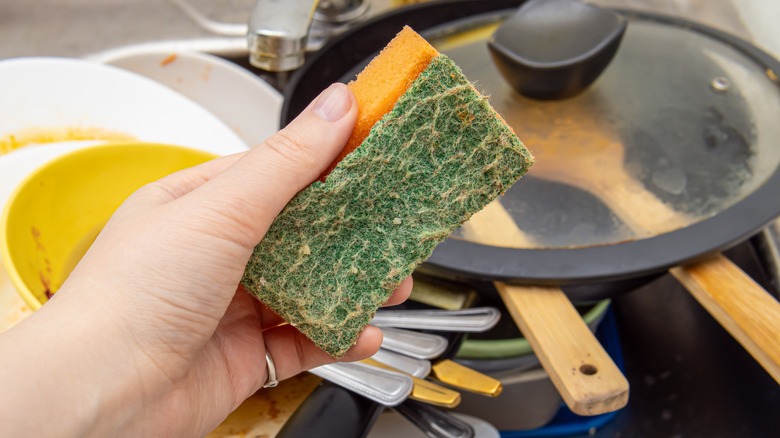
You rely on it to clean your plates, utensils, cups, and more, but a sudsy sponge isn't necessarily hygienic. Studies have found that sponges can harbor bacteria and then transfer them to whatever you are washing. So the next time you're doing dishes, don't just rinse and repeat with the same sponge you've been using for weeks (or more). Stop and think about whether it's actually time to throw out your kitchen sponge. Experts generally advise you to replace your sponge on a weekly basis.
In addition to frequent replacement, it's also a good idea to sanitize your sponge regularly. One of the easiest methods is to put your sponge in your daily dishwasher load and run the cycle on hot. As an alternative, you can sanitize a sponge by microwaving it on high for a minute, but make sure the sponge is wet and doesn't contain any metal.
Reusable plastic water bottles don't last forever

For many people, reusable plastic water bottles are an appealing and long-lasting alternative to single-use plastic bottles. But if you go that route, don't expect an infinite lifespan from your water bottle. You can wash and reuse these bottles many times, but they still reach the end of the road eventually. For reusable water bottles made of polycarbonate plastic, the expected useful lifespan is about a year (or maybe two). After that, it's time to replace your water bottle.
You'll know that a reusable water bottle is ready for replacement if something is off about the plastic's appearance or smell. You should also immediately replace a plastic water bottle that shows any sign of mold growing or cracks in the bottle. Strange odors or an off taste are also good reasons to swap out your plastic bottle for a new one because they are possible signs that bacteria are growing.
Swap out toilet brushes
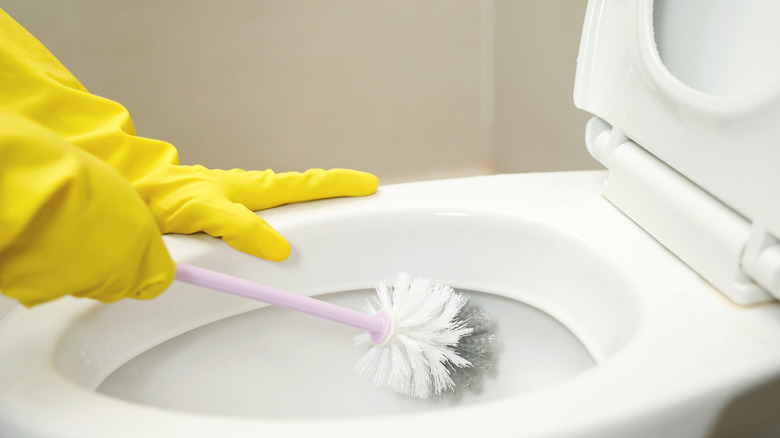
The purpose of a toilet brush is to scrub your porcelain throne, which means that it's likely to come into contact with waste and frequently stays moist. Because of that, bacteria can grow on a toilet brush, so you should be conscious about cleaning it frequently and replacing it regularly. You can clean a toilet brush by spritzing it with disinfectant or letting it soak in a toilet bowl filled with clean water and a capful of bleach. If you're not diligent about cleaning your toilet brush, then every six months is a good interval for replacement.
The key indicators that a toilet brush is due for replacement include discolored bristles or an odor coming from the brush. Also, if the bristles are damaged — either bent or missing, it's time to replace the brush because it won't clean as well. You should also replace your toilet brush if the head or handle is bent because it will be harder to use effectively. You can also ditch this toilet-cleaning tool and scrub your toilet by hand (while wearing gloves, of course).
Check on your toilet plunger

You hope you never need it, but when you do, you don't want to find out that your toilet plunger is past its useful life. When used infrequently, this household essential is easy to forget about, but it doesn't last forever. To be effective at clearing blockages, a toilet plunger needs to be in good condition. Over time, the rubber flange can become stiff or crack. If this happens, it'll be hard to get a good seal between the flange and your toilet bowl, and the plunger's effectiveness will be compromised. For this reason, you'll likely need to replace a toilet plunger every six to 12 months, depending on condition and use.
Get rid of stinky shower liners
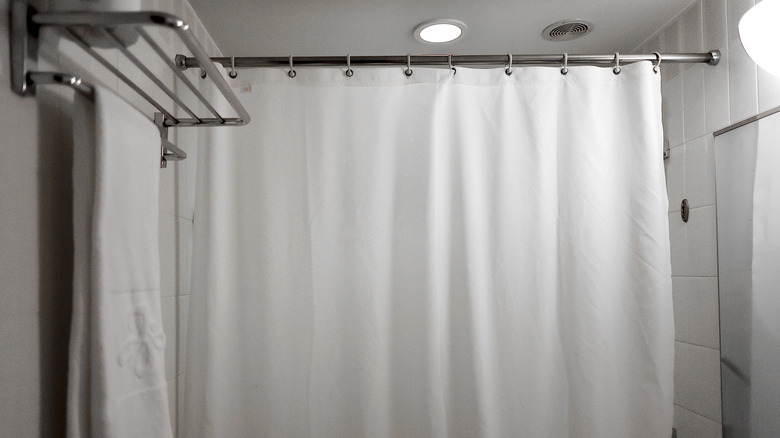
The shower is a wet, warm place, so mold and bacteria can grow easily on a shower curtain liner. For that reason, experts recommend that you replace your shower curtain liner every six to 12 months. This replacement schedule is just a guide, and more frequent replacement might be necessary. For instance, mold and mildew can grow more quickly in especially humid climates or if ventilation is poor in your bathroom.
It's a safe bet to replace your shower curtain once or twice a year. But don't base your replacement schedule on the calendar alone. Be on the lookout for discoloration, which is a telltale sign that your shower curtain is ready to be tossed. This is especially true if you notice a pink-tinged slime developing at the bottom of your shower curtain and extending upward. That's usually a common type of mold or bacteria.
Pick a new pillow

Your soft and squishy pillow might not be the best choice for resting your head. Pillows have what might be a surprisingly short useful life of about a year (or maybe two). After that, the pillow may offer less support. Neck pain in the morning could be a sign that it's time to replace your pillow. Of course, the type of pillow you choose and the quality of materials will impact its lifespan. Polyester pillows have a shorter lifespan of approximately a year, while latex pillows are made of denser material that might hold its shape for several years.
Besides support, another reason to regularly replace pillows is cleanliness. It's important to properly wash your pillows, but over time, they can still accumulate germs or allergens. Dust mites, in particular, can build up inside of a pillow. Other allergens like mold or pet dander can also lodge inside a pillow. With that in mind, experts recommend that people with allergies might want to think about replacing their pillows more often — about every six months.
Don't forget about HVAC filters
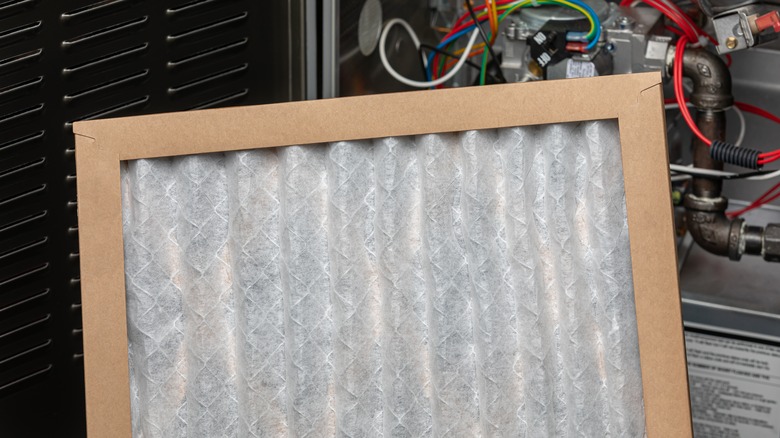
It might not come as a surprise that you should be changing your home's HVAC filter regularly. However, it's a home maintenance task that is often easily forgotten because the filter is usually out of sight and out of mind. Put it on your calendar to replace your furnace filter at least everythree months.
You may even need to replace it sooner if you notice that visible dust and dirt are accumulating on the filter to the point that you can't see through the filter material. That means it's a good practice to pop the filter out and look at it regularly, perhaps once a month. Other situations that might call for more frequent filter replacement include very hot climates where the cooling system is almost always running or in homes with pets.
Regularly replacing the filter is very important for reducing strain on your HVAC system and can improve its efficiency. You don't want to cause undue wear and tear to your air conditioner or pay higher-than-necessary utility bills. According to the U.S. Department of Energy, keeping up with air filter maintenance can lower energy consumption by 5% to 15%.
Replace refrigerator water filters

The convenience of filling up your glass with cold water straight from the fridge means that it can be easy to forget about what it takes to keep that water crisp and pure: a working filter. Over time, contaminants and small particles from the water supply fill up the material inside your fridge's water filter (that's what it's supposed to do!). If you don't replace the filter, it becomes less effective or stops filtering altogether.
The specific replacement frequency for a fridge water filter varies depending on the type of filter your refrigerator uses. Two other important factors are the amount of particles or contaminants in your water supply and how much water you use from the fridge. Usually, the lifespan for a filter is calculated in terms of how many gallons of water it can process before it's spent. With those variables in mind, count on replacing your refrigerator's water filter every six months to a year with average use.
Pantry staples go bad

If you keep pantry essentials on hand but don't use them as quickly as anticipated, they might go bad. Some common baking supplies, for instance, are perishable. Flour can become rancid and should be replaced after three to eight months, depending on the type of flour and its storage conditions. Wheat flour has a higher concentration of natural oils, which causes it to go bad more quickly than more refined white flour. That's also true of many common wheat flour alternatives, like nut flour or coconut flour. Flour is a shelf-stable food that you can keep at room temperature according to the USDA. However, it will last longer if refrigerated.
Spices need regular replacement, too. Flavor degradation can affect the quality of these ingredients in your next recipe. Ground spices should be replaced after three months and whole spices after eight to 10 months. Keep that in mind when you're tempted to buy spices in bulk. Sometimes, it's more advantageous to buy smaller quantities of spices, especially if you use them in your cooking less frequently.
Don't take smoke detector batteries for granted
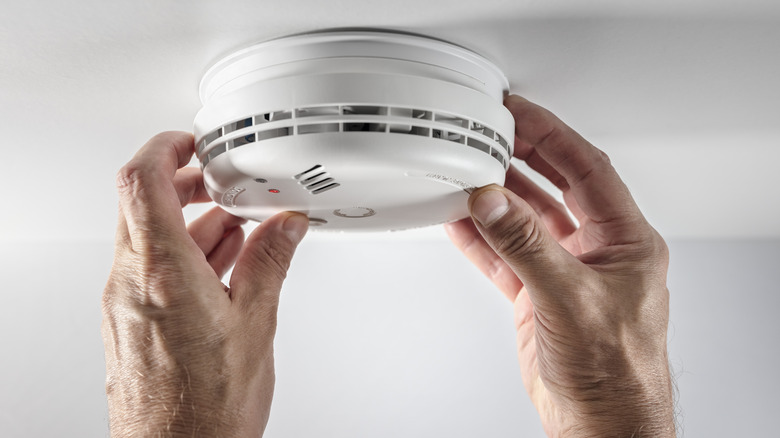
You should replace the batteries in your smoke detector at least once per year. This is an important home maintenance task that you shouldn't overlook because you rely on these devices to keep you safe round the clock. While a smoke detector itself usually has a 10-year lifespan, the batteries can go dead much more quickly. According to one study reported on by the National Fire Protection Association (NFPA), battery problems were the most frequent cause of smoke detector failure.
You don't want to find out in an emergency that these detection devices aren't working as they should. The NFPA recommends that you test your smoke alarm once each month to ensure that it's working properly and the batteries are functioning. If the device doesn't work during your test, replace the batteries. If it's still not responsive during the test after that, replace the whole smoke detector.