

12 Effortless Ways To Upgrade Your Entryway Lighting
We may receive a commission on purchases made from links.
Inadequate lighting is one of many entryway design mistakes you could be making. Whether your entryway is a tiny corner of your living room or a massive foyer with sweeping ceilings, getting the lighting right is an important part of making the space feel welcoming and setting the right tone for your home. It's the first place your guests see and the space that welcomes you home each day, so you want it to look cozy and inviting. Yet the lighting is also important for safety and functionality — finding your misplaced keys or the coat you want is much easier in a well-lit space. You don't want your guests tripping over the edge of the rug or a bin full of mittens when they walk in the door. Fortunately, you don't need to put in much effort to add more light to your front entrance. In fact, you don't even need an electrician.
It's helpful to evaluate the space at different times of the day to identify the lighting issues. You might get plenty of natural light during the day, but the hallway turns dark and shadowy at night. Maybe it's just one corner that's always dim and needs a little boost. Your style also helps you choose options. If you want a fun, modern entryway, consider a neon sign or a branch-shaped light. To keep it cozy and homey, try flameless candles or battery-powered wall sconces. You can find a mirror, lamp, and plug-in chandelier for any style of home. Not sure where to start? We've put together 12 great entryway lighting ideas that won't make you break a sweat.
Install battery-powered wall sconces to highlight features
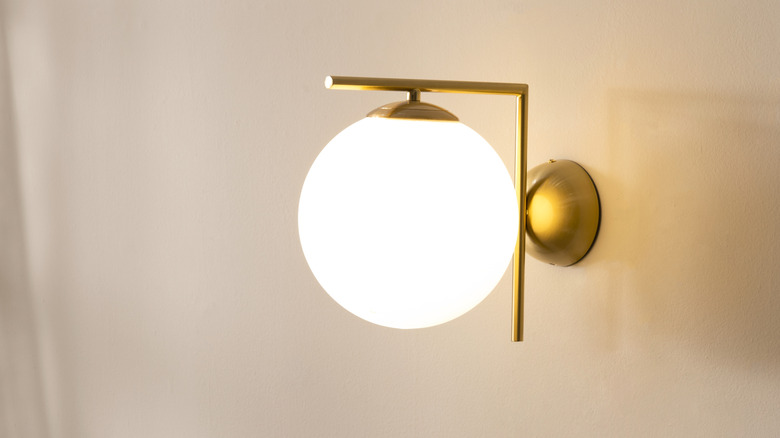
When you're looking for effortless ways to brighten your hallway, you want to avoid anything that involves hardwiring fixtures or hiring an electrician — those are more involved jobs that involve more planning or sweat equity. That's why battery-powered wall sconces are the perfect choice. You can mount them anywhere, even if there's no outlet in your foyer, and it's even possible to use adhesive mounting options to avoid drilling holes, making it renter-friendly. Cordless wall lights often use energy-efficient LEDs, and many models are rechargeable. You can even choose sconces with remotes that let you adjust the brightness or light color, which allows you to change the ambiance in your entryway.
Consider how you want to use the sconces in the foyer — they work well to highlight an architectural feature, illuminate a stairwell in the foyer, or add a decorative touch with the design. Regardless of the purpose, the sconces will add illumination, but it's helpful to keep other benefits in mind when choosing the fixtures. If you have a mirror in your entryway, consider flanking it with sconces — the light will sparkle off the mirror, creating more illumination. When it comes to style, choose a finish and style that complements other pieces in the space, and consider the scale to keep the look balanced. When you decorate with sconces, an ideal height for entryway sconces is eye level, but you can adjust them to fit your preferences and needs.
Incorporate table and floor lamps for increased lighting
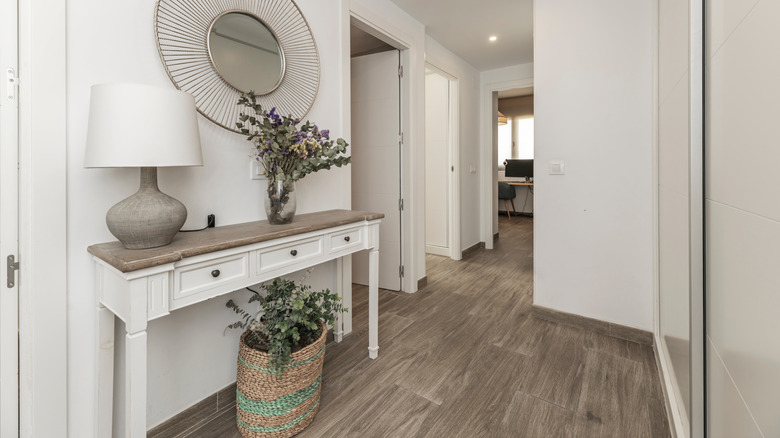
Lamps are an effortless entryway lighting option because you simply position them and plug them in. When you want to redecorate, the lamp can easily be moved. Table lamps come in a range of sizes and fit perfectly on hallway console tables or shelves to layer light in the space. In a small entryway with no table, a floor lamp offers a supplemental lighting source that doesn't take up much space. Can't decide between and floor lamp and a table lamp? Don't decide — include both table and floor lamps in the space for flexible lighting.
The size of your entryway and the furniture in the space often influence your lamp selection. If you have a table, a lamp is a natural choice. Place a single lamp at one end if space is limited, or add a lamp at each end for a balanced, symmetrical, traditional look. For a unique look, skip the traditional base and shade for a rounded lamp option, like the IUSEIT LED ball lamp, or a sculptural light, similar to the Airnasa infinity spiral lamp. The Govee floor lamp is a slim option for a tiny entryway (it's a stunning way to fill an awkward corner in your entryway), and it allows you to choose from a variety of colors. When deciding on lamp options, consider the location of outlets, or opt for battery-powered lamps for more flexibility.
Install an effortless chandelier
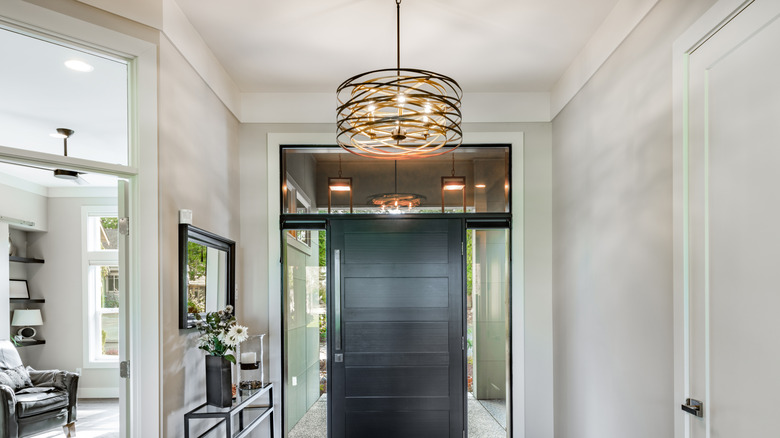
An overhead light provides general, ambient lighting in your entryway. Making that light a chandelier adds a stylish centerpiece to the space. Adding a chandelier to a foyer sounds like an intimidating project, but it doesn't have to be when you choose a plug-in model. They come with an electrical cord attached, similar to a lamp, but they're chandelier-style lights that you hang from the ceiling. Instead of attaching it to a junction box and wiring it to the electrical system, you hang the light from a hook in the ceiling. You can also choose smaller pendant lights instead of a large chandelier if the entryway is small or you want to place multiple fixtures in the area.
Plug-in chandeliers and pendants come in the same range of styles, materials, and sizes as hardwired options, so you can find one that blends with the existing decor in your entryway. Consider extra features, such as dimmable lights to help you adjust your entryway illumination and remote controls to allow you to control the light, especially if you have a tall foyer. When choosing the location for your plug-in ceiling fixture, locate the ceiling joists to make sure you can secure the light properly. Also, consider where the outlets are — ideally, you want the shortest distance from the light location to the outlet to make it easier to disguise the cord.
Hang a decorative neon sign for beauty and illumination
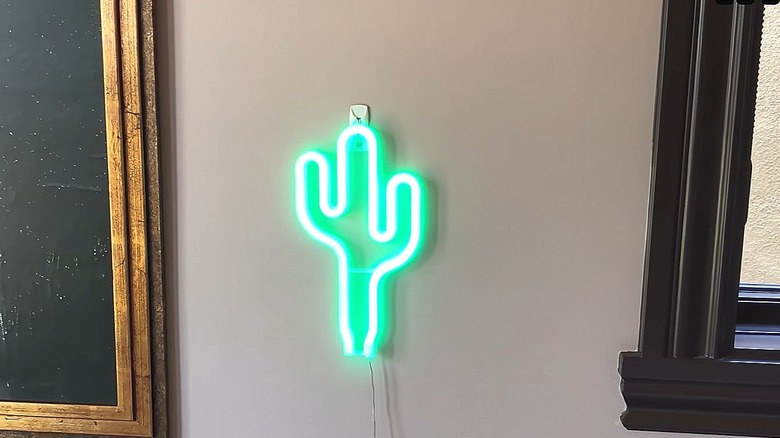
Neon lights might bring to mind beer signs at dive bars or flashing lights outside of diners, but you might not think about them for decorating your home. Are neon light fixtures a cute home accent or seriously outdated? We say that depends on your decor and how you use the lights. In an entryway, a neon display offers a touch of color and a cheerful greeting to guests. With so many neon-like pieces available, it's easy to find a design that matches your design scheme. The lights become not only a source of illumination for your entryway but also a piece of decor that grabs attention. Today's neon lights actually use LED rather than gas-filled tubes, which means they stay cool and don't use much energy — perfect for a low-stress way to illuminate your entryway.
Custom neon signs are a popular option for homes. Design a sign with your last name, a welcome message, or a favorite quote to greet everyone who walks through your front door. Or, find a premade sign with a message that resonates with you. If you prefer images over words, try something simple, like this Ganeen orange sunrise neon sign. If you don't love the look of neon signs, a similar option is a canvas print with lights integrated. This Lavish Home lighted version of Starry Night offers a modern, illuminated twist to a classic.
Cozy up the space with battery-powered candles
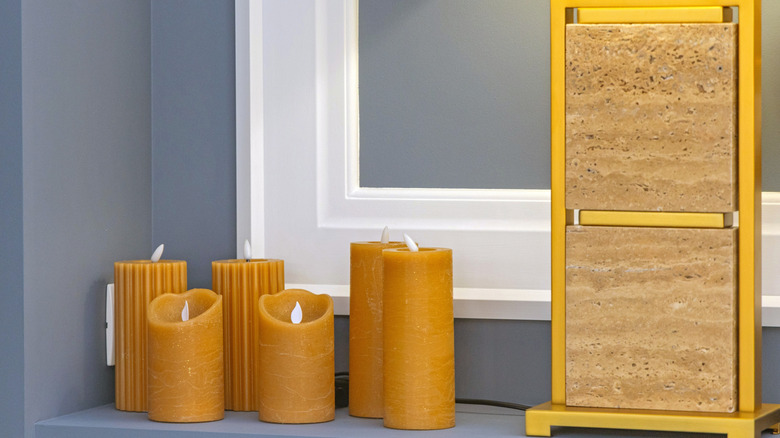
Since you don't hang out in your entryway, you don't want to light real candles to illuminate the space, but you can stock up on battery-powered flameless candles to give the space a warm, inviting glow. They're available in all types of candles, from tiny votive candles to tall pillars, which means you can recreate any candle look you love without dripping wax, smoke, or dangerous flames. Battery-powered candles won't illuminate your entire entryway, but they will add a glow and create a sense of warmth. Positioning them on or near a mirror or another reflective surface can help amplify the light.
An entryway table is an ideal spot to display your candles, but they can also go on a shelf or in a large decorative lantern that you position on the floor or stairs. You'll get more illumination and a stunning look when you group multiple candles together, but don't make it too matchy. Using candles of different heights and sizes creates more interest in the display. Use candle holders of various heights or position the candles on different surfaces if all of your candles are the same height. Using the odd-number decorating rule works well with candles — choose three, five, seven, or another odd number of candles for the grouping to get the best look.
Weave fairy lights into florals and decor
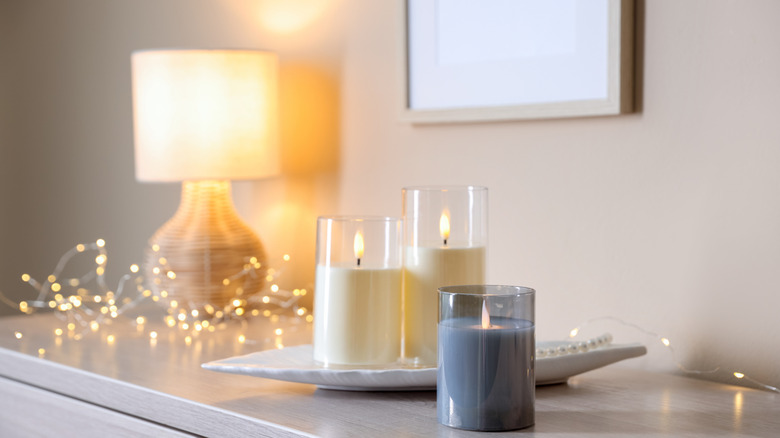
Think of the warmth you feel inside when you see a strand of Christmas lights — adding fairy lights (or other string lights) to your entryway captures that feeling year-round while also illuminating the space. With many battery-powered versions of string lights available, you can put the lights anywhere, even if your entrance doesn't have a lot of outlets. You could simply string the lights around the foyer, but there are many creative ways to repurpose string lights usefully all over your home, including in the entryway. Weaving them into the decor you already have is a simple way to upgrade the look while brightening the space and highlighting the pieces you love.
Scan the entryway for decor pieces that would work well with string lights — plants, vases, bowls, and wall art are prime examples. Choose a short strand of fairy lights to bunch into the bottom of a clear vase, or add it to a decorative bowl with filler items, like pinecones or seashells, mixed in with the lights. If you want something a little more structured, tuck LED branch lights from Amazon into a vase, with or without plants or florals. Simply draping a strand of lights on an entry table or shelf around the other decor pieces is also an option.
Replace the light bulbs for a warmer glow
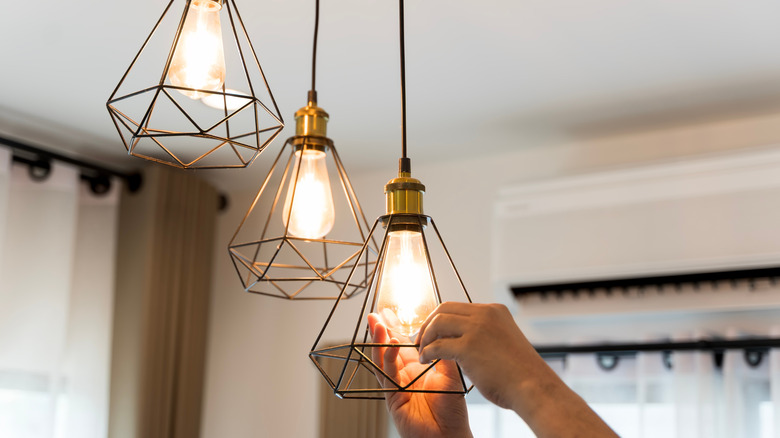
Adding warm lighting is one of the top ways to make your entryway feel more inviting. You might not need to change your light fixtures to get that warmth, though. It could be as simple as getting new light bulbs for the fixtures and lamps you already have. The color temperature you choose affects the overall look of the foyer. Selecting dimmable bulbs is also an advantage, because you can adjust the lights for different times of the day or to create different moods.
If you haven't already switched your hallway lights to LEDs, start with that swap to save energy and have more control over the light color and warmth. If your goal for your entryway is to create a softer, warmer look, opt for bulbs between 2700K and 3000K — this is the warm white range. It has a yellowish look to the light and is still functional, but cool white bulbs, ranging from 3500K to 4100K, are brighter and offer more functional illumination if you're concerned about safety. This range is also more modern, while the warmer white bulbs take on a more homey, rustic, classic look.
Incorporate smart lighting for control at your fingertips
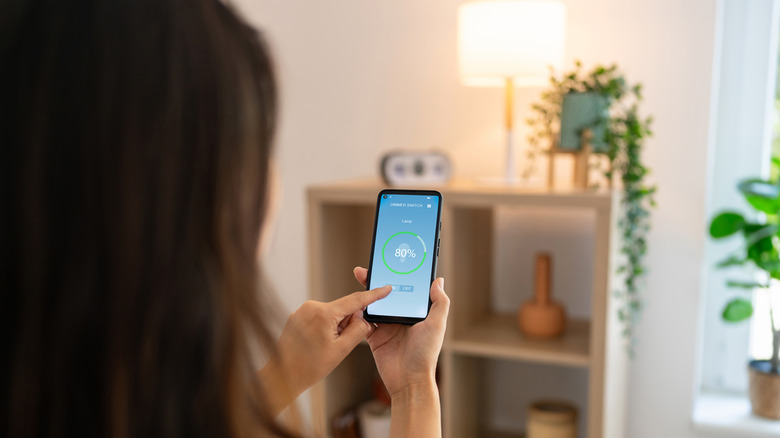
Smart lights pair up with apps or home assistant devices to give you wireless control over features like the color and brightness of the bulbs, as well as when they're on and off. Many smart lights even let you program when they're on and off. For your foyer lighting, that means you could set a schedule so the lights come on automatically before you get home, so you don't have to fumble with a light switch. And since a smart light app lets you turn lights on and off even when you're not home, you can make it look like someone's there as a bit of a security feature.
Use smart lights to personalize your home and entryway easily by selecting the right option for your situation. The easiest option is replacing your regular light bulbs in the foyer with smart light bulbs. These bulbs screw into standard sockets (make sure you select the right base size for the fixture), however, the fixture or lamp needs constant power, so using it with a fixture on a switch could be an issue if the switch gets turned off. You can also install a smart light switch or a smart light fixture, but those options require hardwiring, which makes it a more complex project that may require an electrician.
Install motion-sensor lighting in your hallway coat closet
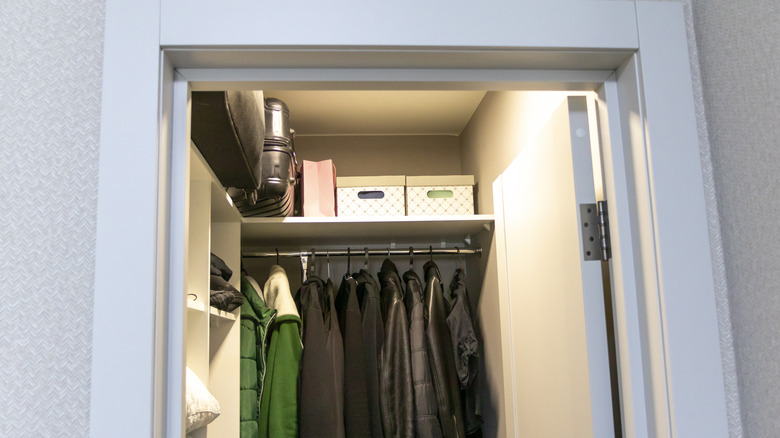
Tired of fumbling around in your hallway coat closet finding what you need? Motion-sensor lights are a cool closet lighting option that isn't boring and are highly functional. Even if the rest of your entryway is well-lit, the coat closet is often darker. If you're lucky, you have a single light bulb on the ceiling, which can leave dark areas in the closet. Reaching up to pull a chain to turn on the light isn't always easy, either. Motion-sensor lights offer an energy-efficient way to get the closet illumination you need with automatic on-and-off functionality. Even better, you can find many battery-powered motion sensor lights, making this a simple solution to install.
The size of your closet and the areas where you want illumination affect the type of fixtures you'll choose and the best positioning. Placing a bar-style light, like this Flamwild motion sensor light, above shelves or hanging areas illuminates the items in those areas, allowing you to find what you need. To illuminate the lower portion of the closet where you store shoes, consider smaller lights, like these Guankai motion sensor stair lights. When installing the lights, make sure the sensor points toward the door to ensure it works properly.
Use battery-operated picture lights to illuminate art or decor
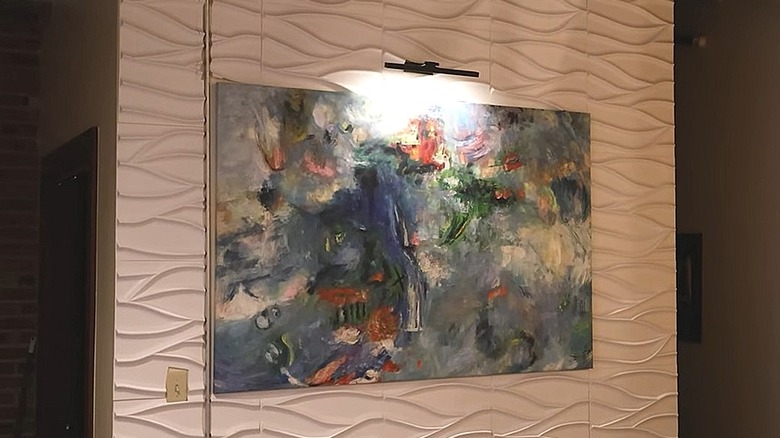
Artwork in your foyer adds a splash of color to the area, shows off your personality, and hints at what guests will see throughout your home. Illuminating the artwork you already have in your entryway draws the eye to its beauty and helps you highlight those images that you lovingly picked out for your home, and it can also highlight the details and texture in the artwork. Plus, lights installed above art add an extra bit of illumination to the hallway to complement the other fixtures, lamps, and light sources.
An effortless option is a picture light installed right above the art. It directs the light downward toward the image and is sometimes adjustable to let you point the light where you want it. Because picture lights come in hardwired, plug-in, and battery-powered models, you can choose the level of commitment you want. Battery-powered versions offer a clean look with no wires, and they're simple to install — just mount them to the wall above your entryway artwork.
Dress up the walls with decorative lighting
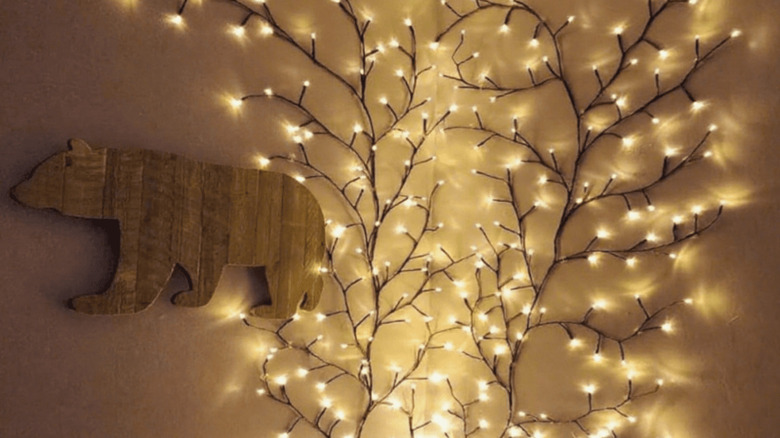
Instead of illuminating artwork you already have on the wall, use the lights as the decorative display. Sculptural lights draw the eye while adding a bit of warm illumination to the room. The styles of lighted displays vary and are typically either battery-powered or use a standard plug as a power source. Incorporate them into a gallery wall in the entryway, or choose a large lighted decor piece as the main design element in the foyer.
One popular version is a tree-like light display, similar to this Goeswell enchanted willow vine. Many of the lighted branches are adjustable, so you can position them in various formations on the wall, and some include remotes with different lighting modes. For your entryway, consider curving these branches up and around a mirror on the wall to create a lighted focal point. You'll also find lighted sculptural pieces, like this Jvsufuik lighted mandala.
Hang mirrors and incorporate reflective surfaces to amplify light
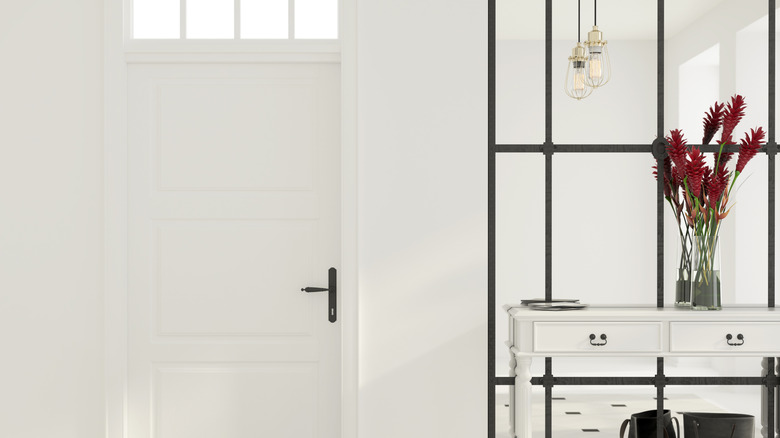
The entryway is a common spot to decorate with mirrors, but the reflective surfaces go well beyond looks. Mirrors and metallic surfaces reflect natural and supplemental light to amplify it and make the room feel brighter, even if you don't add any new lighting sources. Adding mirrors is an easy way to get more out of the light sources in the room, but it's also important to position them properly to maximize how much light the reflective surfaces give off.
Positioning the mirror so it can reflect various sources of light is ideal. If your entryway has a window or your door has glass panels, place the mirror on a wall either opposite of the natural light source or perpendicular to it, as close to the light source as possible. To combine several strategies into one, choose a mirrored or high-shine entryway table, top it with lamps, and position a mirror above it. Or, create a row of smaller mirrors to spread out the light reflection. You can also integrate small mirrors into an entryway gallery wall.