

Keep Your Jade Plant Happy This Winter With These Easy Tips
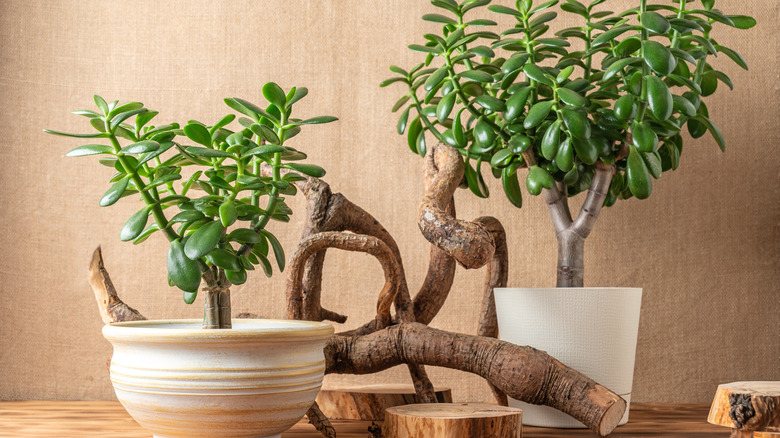
A few simple adjustments to your houseplant care routine can help your jade plant (Crassula ovata) remain healthy throughout winter. Even as indoor temperatures drop during the colder months, jade plants can adapt, but you can't expect them to behave as they do in the spring or summer. Their growth naturally slows as sunlight weakens, and they don't need as much water, which makes common habits like overwatering or feeding even more risky.
These shifts are subtle but important, and adjusting your plant's care routine will prevent problems that often go unnoticed until the plant begins to decline. Even though jade plants tolerate a wide range of household conditions, they still experience a quiet seasonal rest. During this semi-dormant period, the plant needs to be protected from certain external influences. Lower light won't harm your jade plant outright, but the stems may droop if it does not receive enough light. Indoor drafts and cold window surfaces can also stress your jade plant, especially when its foliage touches chilled glass, so it's a good idea to move your plant a little distance from the window during winter.
These issues may not appear dramatic at first, but winter is when jade plants benefit most from thoughtful placement and controlled watering. With the right approach, you can guide your plant through the colder period without setbacks and keep it positioned for strong spring growth. Knowing the best ways to tweak your houseplant care routine for winter is crucial if you want your plant to resume its growth in spring.
How to keep your jade plant thriving through winter
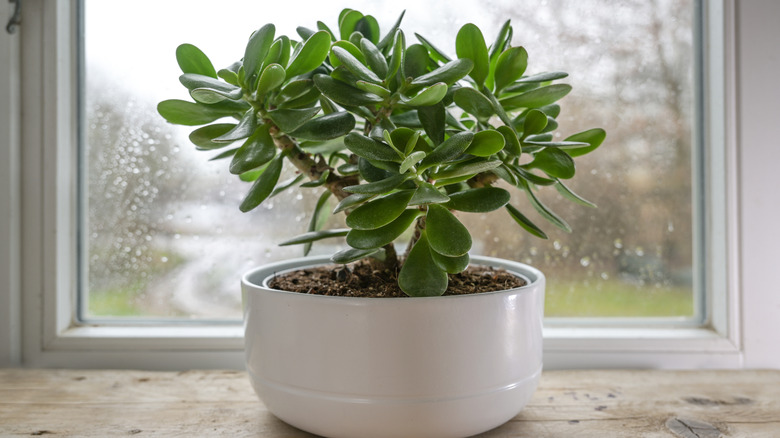
Jade plants are semi-dormant in winter. Because it doesn't grow as much during this time of the year, you only need to water your plant after the soil dries out. Overwatering in winter can lead to leaf drop or stem rot because jade plants (like all succulents) hold water in their leaves, stems, and roots and don't need as much in winter. Fertilizer use should also be reduced, as during the colder months, fertilizer is only beneficial if your plant is in a bright location where light is strong enough to support its nutrient uptake.
Jade plants need four or more hours of direct sunlight to support their growth and keep them looking healthy. Although it's tempting to keep your jade plant in the best spot to improve your luck (according to feng shui), in winter, move it to a south-facing window to ensure that it gets the sunlight it needs. If the light levels in your home are too low, you can supplement your jade plant's light needs with a grow light.
Your houseplants need a little extra TLC after a drop in temperature, and these small adjustments will keep your jade plant stable until spring. Avoid repotting your plant until new growth begins. Jade plants can grow quite happily while root-bound, but should be repotted every two or three years to encourage healthy development. If your jade is looking top-heavy, be sure to repot it before it tips over, but wait until new growth resumes in spring.