

Plant Hellebore Flowers Under This Tree And Watch How They Thrive In Early Spring
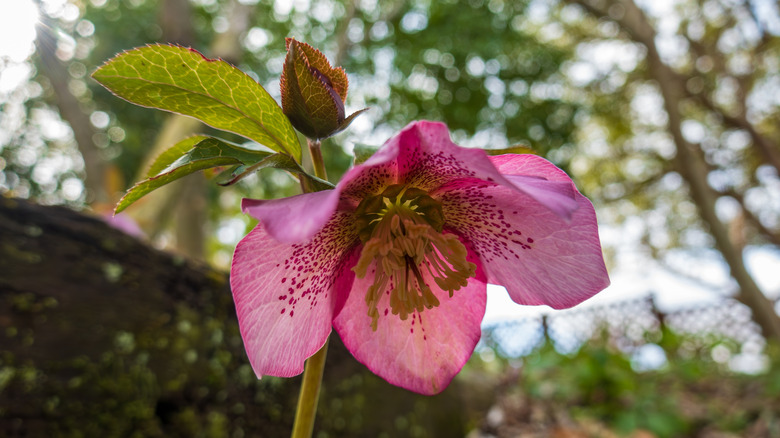
Winter is a time when most plants in the garden are conserving their energy and you may not see a lot of color around. But there are some plants that are capable of blooming regardless, daring the cold to create stunning displays and liven up an otherwise gloomy yard. Hellebores (Helleborus spp.) are exactly such flowers, which bloom in spring and winter and don't require a lot of sun, bringing timeless beauty to your garden. In fact, some hellebore varieties can even bloom during the snow.
But if you want to create the best conditions for these shade-loving beauties to thrive, plant them underneath the canopy of a deciduous tree, such as the Japanese maple (Acer palmatum). The natural life cycle of a Japanese maple tree ensures perfect conditions for hellebores all year round: optimum shade during summers and dappled sunlight during winters when its leaves drop. This makes the pair indispensable, especially if you're thinking of growing a perfect cottage garden or shade gardens.
Hellebores are long-living perennials you can enjoy for years to come. They belong to the buttercup family, with as many as 22 species in the genus, that are extremely popular among gardeners for their winter-blooming habit. Although their Greek nomenclature points towards the fact that the plants are highly poisonous, they more than make up for this trait with the jaw-dropping array of colors of their saucer-shaped flowers. Japanese maples, on the other hand, are short trees, but just as aesthetic as the flowers they canopy, thanks to their beautiful deep-red foliage. Both these plants are native to temperate Asia, although hellebores are also native to Europe and Morocco.
Hellebores and Japanese maples are excellent companion plants
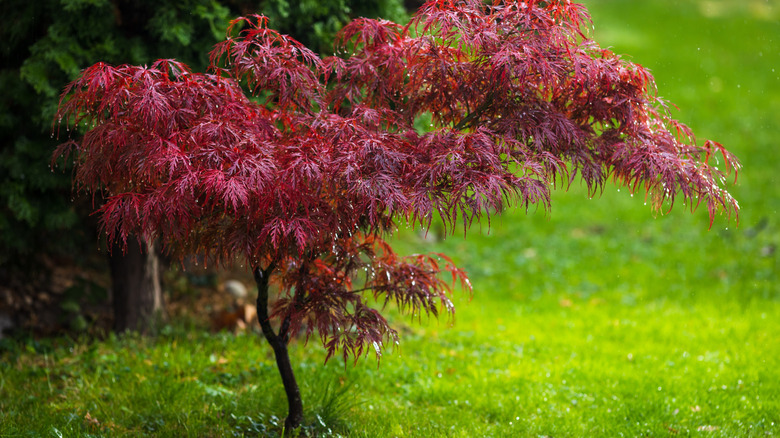
Both hellebores and Japanese maples are hardy through USDA Hardiness zones 5 to 8. Hellebores also share their growing conditions with these maples. They like growing in moist soils with high organic content and good drainage. Furthermore, the similar sunlight requirements of the two species is also what makes them great companion plants. Hellebore plants do best in dappled sunlight and partial shade (about two to six hours of direct sunlight a day). You can create both these conditions for them by growing them underneath Japanese maples. Once the trees drop their leaves during winters, hellebores can get the sunlight they need to bloom. It is also a good idea to cut back on their foliage before the flowers bloom to save the leaves from the cold, which can get scorched if the weather is extreme.
When spring arrives and the Japanese maple grows back its leaves, hellebores complement them with a carpet of beautiful, dark green and glossy foliage. But keep in mind that you will have to plant hellebores en masse to enjoy this pretty sight. If the conditions are right though, hellebores can also multiply themselves by self-seeding. If you want them to keep on growing foliage, cut the spent flowering stems.
If you're looking for particular hellebore cultivars, 'Ruse Black' is especially great for growing underneath Japanese maple trees. Being native to Japan, these stunning flowers can make excellent Asian gardens when grown alongside the trees. 'Ruse Black' also stands out with its dark-purple flowers and white stamens, which can grow as tall as 16 inches. Be ready for a glowing red garden once the tree grows its leaves and these hellebores bloom. Keep in mind that some species of hellebores can be weedy.