

The Type Of Fern That'll Thrive Under The Low Light Conditions In Your Home
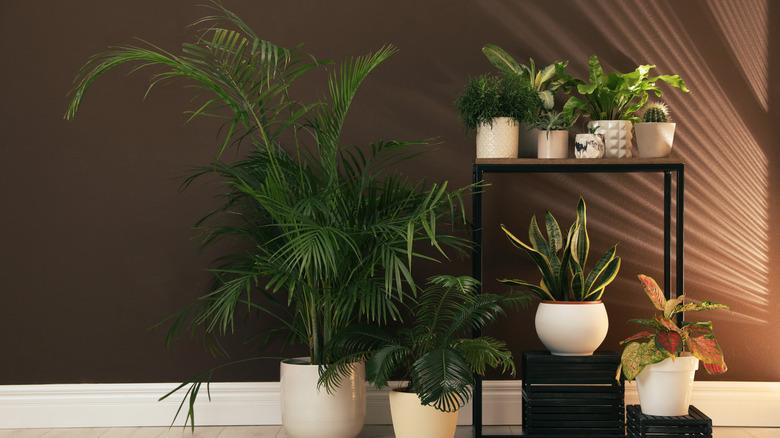
A home full of thriving houseplants creates a wonderful, cozy environment. However, to ensure that the plants you have are happy, you need to think about the different locations in your home and which plants are best suited in each. You don't want to put a sun-loving succulent in a gloomy corner of your kitchen. Similarly, you don't want to put plants that suit shade on your south-facing windowsill. Thankfully, there are loads of plants out there, so you are bound to find those perfect for every room of your home!
If you have a room that doesn't get much sun, you may want to consider houseplants that thrive in low light. One fantastic option is the blue star fern (Phlebodium aureum). This fern doesn't need much sun, growing happily in both deep and partial shade. As a low-maintenance plant, the blue star fern adds beauty — not stress — into your life and home.
The blue star fern has quite a unique look, too. Its long, thick fronds grow in a fun zig-zaggy pattern, with the ability to reach up to 4 feet high and spread 6 feet wide. You can get the fern in a range of colors depending on its cultivar, including bright green, blue-green, and gray-green. The gold, fuzzy rhizomes of the fern are also pretty fun, growing around the base of the plant to add more intrigue to your houseplant collection.
How to look after blue star fern

The blue star fern is a low-maintenance houseplant perfect for beginners, so you don't need to have a degree in horticulture to keep this one alive. When planting it up, use a peaty, soil-based potting mix with good drainage. Then, place it in a location that does not receive direct sunlight. You may want to consider planting it in a hanging basket, as this can help it get a good amount of air circulation.
In terms of ongoing care, you need to make sure that it is getting enough water and humidity. The blue star fern does like medium to high humidity, so look into ways of increasing humidity for indoor plants, such as pebble trays or plant cabinets. You should try to keep the soil consistently moist, but the fern doesn't mind too much if the soil dries out between waterings. Overwatering can cause issues for the plant, and the rhizomes do not like being wet. So, when you water your fern, check the soil beforehand to ensure that the top inch has dried out. Then, water the soil at the edge of the pot and not directly onto the plant. You can fertilize your blue star fern, but do so carefully and dilute the fertilizer before applying it. A slow-release fertilizer every six months can keep it happy and healthy.