

Gardeners In Warmer Climates Can Plant This Flower And Enjoy Its Blooms Almost All Year
When it comes to garden planning and design, it is essential to work with your climate and bring in plants and flowers that suit your temperature and weather conditions. If you live somewhere warm, there are some fantastic heat-tolerant perennials that can handle the hottest summer days. And this particular flower doesn't just survive the heat, but it thrives in it. The Lantana genus is made up of gorgeous bloomers that have been used in gardens in mild and warm regions for over 300 years. With over 100 species and countless cultivars available, you can find the perfect lantana for you and your yard.
As most types of lantanas are hardy only to USDA Hardiness Zone 8, they are usually grown as an annual. But gardeners in warmer climates can grow them as perennials and enjoy their blooms throughout the seasons. When in the right location, lantanas flower from spring until the first frost. Some cultivars, such as the 'Miss Huff' lantana (Lantana camara 'Miss Huff'), will even bloom during the winter months in milder regions. However, before you decide to bring lantana into your garden, be aware that it is considered an invasive weed in Hawaii, Texas, and Florida. Check your state's invasive species list before planting lantana in your yard.
How to get lantana flowers to bloom
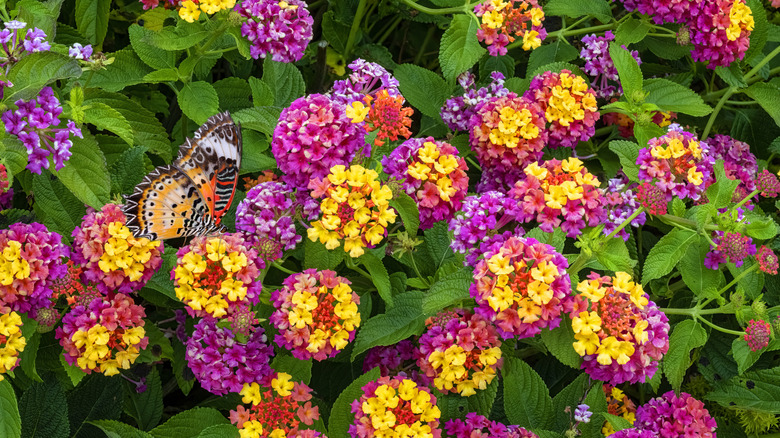
To ensure your lantana blooms for a long season, you need to plant it in a suitable spot. These low-maintenance flowering plants thrive in the sun, so make sure they are getting at least eight hours of direct sunlight a day. Too much shade can cause their blooms to suffer. You need to plant your lantanas in well-draining soil, so consider amending the soil before planting to improve drainage, or grow them in containers. Fertilizer will inhibit flowering, so only lightly feed them in the spring.
To keep your lantanas healthy and flowering, you need to keep on top of the watering and deadheading. Although lantanas are drought-tolerant plants once established, being dry for too long can reduce growth and blooms. Water them thoroughly once a week when the flowers are blooming if it does not rain. However, be mindful of overwatering, as this can also cause the flowering to slow down. Check over your lantanas regularly, and remove any flowers that have turned. This will allow the plant to focus on creating new blooms that you can enjoy season after season.