

How To Tell If Your Living Room Is Overly Ornate (And Tacky)
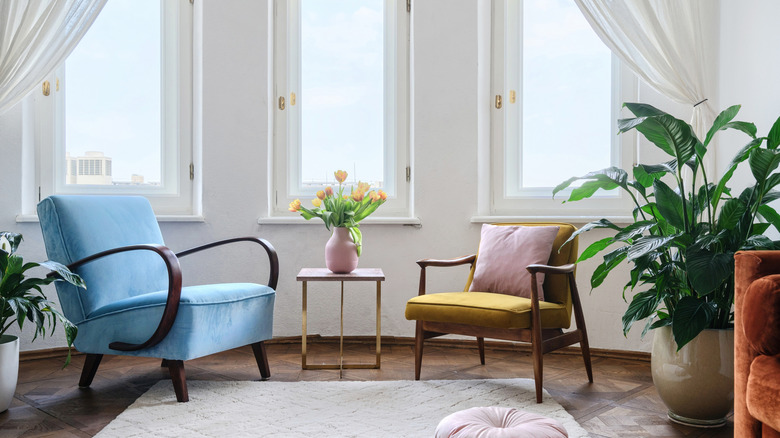
In recent years, homeowners have embraced ornate décor, especially since mastering the minimalist trend can make a home feel boring. Some have even leaned into the maximalist trend, pushing the boundaries of what is possible in their space. Bold, plush furniture, statement chandeliers, intricate patterned wallpaper, and ornate mirrors have grabbed the attention of designers and homeowners who dare to walk the delicate line between luxurious and kitschy aesthetics. Intricate furniture can easily overwhelm a space and remove that warm and welcoming feeling. For example, a chandelier should complement the space but can easily pull focus if it is too big for the room. So how do you know when you've gotten it just right, or when it's overdone to the point of being tacky?
No matter what your style, every part of your living room should have space to breathe. It is important to choose ornate furniture and other pieces wisely, so you avoid that gaudy look. It used to be that if you wanted to make a statement with your décor, you could easily slap a mirror onto a wall in the name of luxury, but glamorous furniture with over-the-top shine, such as jewel tone sofas, aren't being held to the same standard they were a few years ago. Today, designers are turning away from what might have once been perceived as a 'bougie' status symbol for a more understated form of elegance.
How to get it right

When it comes to getting the look of an overly ornate living room just right, it's often all about the context of the furniture and items included in the space. Accumulating a lot of loud and intricate pieces at once is a common mistake and can leave the overall aesthetic feeling forced. But what makes an ornate interior interesting is its confidence and authenticity. You want to create a space that tells a story with pieces collected over time and with intention. You also want to avoid cramming the room with too many knick knacks, as this can look more cluttered than inviting.
Paying close attention to scale when it comes to larger items is equally important. Make sure you don't get an oversized couch, cabinet, or wall decoration that will steal all the attention and completely swallow the room. Stay away from faux finishes, like tacky sponged walls that were popular in the 90s. At the end of the day, bringing in small elements of ornate décor can create a decorative spark, but the line between incorporating your own personality and tiptoeing into tacky can easily become blurred. It may be a good idea to consider what not to do when decorating with maximalist style, and make sure you create a look that's cohesive, inviting, and one that can stand the test of time.