

How To Force Amaryllis Flower To Bloom In The Winter
We may receive a commission on purchases made from links.
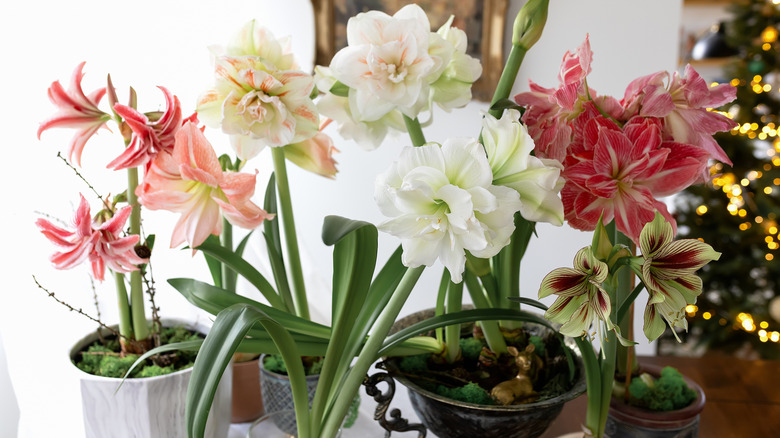
If you want a bulb you can plant in the fall for beautiful red blooms for the holidays, amaryllis are perfect. While many species and cultivars boast large, red, trumpet-shaped flowers, the plants also bloom white, yellow, pink, salmon, and even bi-colored. Some flowers are striped or double-petaled, and sometimes four blooms appear on a single stem. However, to get amaryllis (Hippeastrum spp.) to bloom in winter, you need to know how to force the bulb. Forcing is a gardening technique used to encourage bulbs to grow and bloom outside their typical season. It works by recreating the favorable conditions of warmer months. Spring-blooming bulbs often need to be chilled for successful forcing, but amaryllis is easier. It doesn't need a period of cold to bloom in winter.
Amaryllis is commonly sold as a dormant bulb in a kit with a pot and soil. Buying your kit early in the growing season means you'll have the widest selection of varieties and the best quality bulbs. Large bulbs may produce two stems and larger, more vibrant blooms, so look out for big bulbs to increase your chances of that happening. The bulbs should be firm, dry, and free of mold or damage. Some may show the beginning of green leaves. You'll also need the right-sized pot for your specific bulb — that is, 1 to 2 inches wider than the bulb's diameter and twice as tall. A slightly snug fit will encourage better flowering. If the bulb came with a pot, it might not be suitable.
Amaryllis is one of the easiest winter-blooming bulbs to force
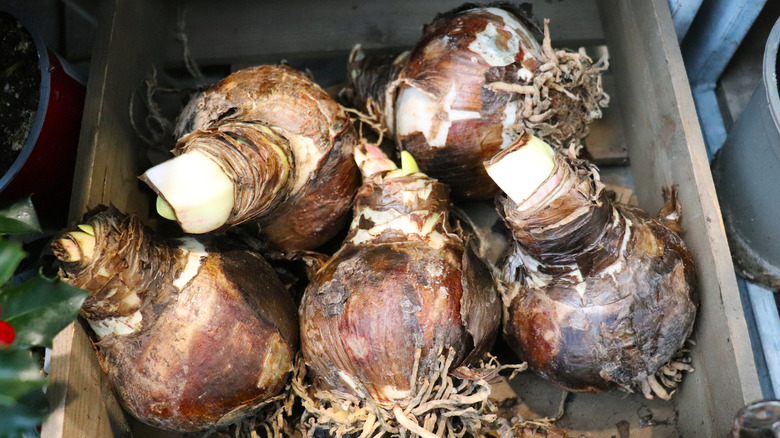
Growing an amaryllis as a houseplant that will spice up your holiday décor? The bulbs take just 6 to 12 weeks to bloom from potting. Use this range to help you figure out when to start the forcing process. Fill your perfectly sized flower pot halfway with well-draining growing medium designed for indoor plants, like Rosy Organic Peat-Free Potting Soil Mix. Center the bulb on the soil surface and add more potting mix around it. Keep at least a third of the bulb above ground to reduce the risk of fungal disease. Water the bulb to dampen the soil, and place the pot in a warm location with indirect light. You want the temperature to remain between 70 and 75 degrees Fahrenheit. When you see green shoots popping out of the bulb, move the pot to a bright, sunny windowsill.
Moisture management is one of the most important parts of forcing an amaryllis bulb. Following the first watering, the goal is to keep the soil barely moist. Only water your plant when the soil feels dry to the touch. All going well, you'll soon have leaves and a flower stem set with buds. As soon as flower buds begin to open, move your plant to a cooler spot — between 65 and 70 degrees Fahrenheit. Keep your flowering amaryllis out of direct sunlight and away from artificial heat sources, like vents and radiators. Now all that's left is to incorporate the plant into your festive decorations or gift it to a flower-loving friend or family member. However, you may want to think twice before growing amaryllis for someone with small children or pets. It's toxic to humans and animals if ingested in large quantities.