

What To Know Before Trying Ryobi Batteries On Your Harbor Freight Tools
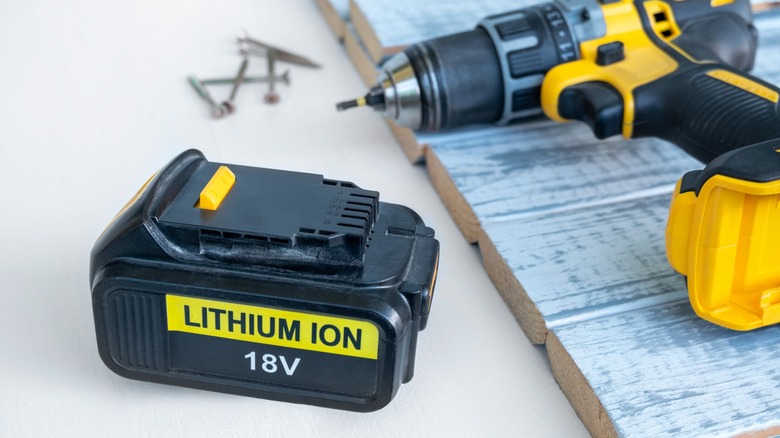
Power tools make even the most basic DIY home improvement projects for homeowners faster, easier, and honestly, a lot more satisfying. Whether you're cutting through plywood or driving dozens of screws to install a new kitchen cabinet, having the right tool for the job is certainly a hack. Plus, you don't need to be a pro to use them, and for the most part, they're safe to handle, even for beginners. The problem, however, is that power tools can be pretty pricey, and so can their batteries.
When a battery dies, many people often wonder if they can just swap it out with a battery from a different brand, especially if you have one in your tool collection already. After all, these batteries do pretty much the same thing and some of them look alike, so they should be cross-compatible, right? Unfortunately, that's not how it works. Most of the best power tool brands like Ryobi and Harbor Freight design their batteries in such a way that they are only compatible with tools in their ecosystem. For example, if you have a Hercules saw, it's never going to work with your Ryobi ONE+ 18V battery.
Some third-party adapters could help you work around it. However, before you start shopping for power tool battery adapters, you need to understand a few things about how these batteries work, why brands design them to be incompatible, and what can go wrong if you mix and match. While some people make it work just fine, others end up with fried circuits, batteries that won't charge, or tools that stop working altogether.
Why are these batteries and tools not compatible?
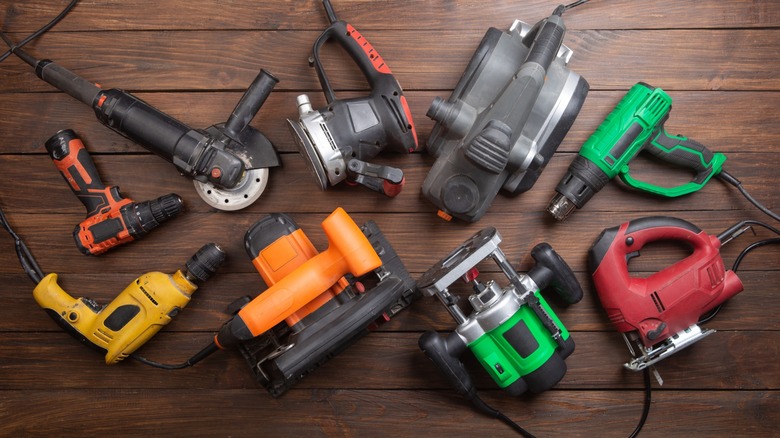
Tool manufacturers intentionally design their battery systems to exclusively work within their own ecosystem. The first thing you'll notice is that these batteries don't physically fit each other's tools without some kind of workaround. Ryobi uses one type of sliding rail and locking mechanism, while Harbor Freight uses another. Beyond physical design, these batteries also manage and deliver power differently. Each manufacturer designs its batteries with specific discharge rates to match its tools' requirements.
A Ryobi drill is engineered to draw power in a particular way from a Ryobi battery, and the same goes for Harbor Freight's Bauer tools with Bauer batteries. When you try to use a battery from a different brand, you're pretty much asking the tool to work with power delivery it wasn't designed for. As a result, you'll likely get inconsistent performance. In the worst-case scenario, you could end up with a tool that overheats or a battery that drains faster than it should.
Also, modern power tool batteries are built in ways that allow them to communicate with the tool through engineered chips. These chips help monitor battery health and optimize power delivery. Manufacturers, yet again, intentionally make batteries' communication protocols proprietary. So in a sense, there's a language barrier when you try to use a Ryobi battery on a Bauer tool. It's possible the tool might not recognize the battery at all, or it might work but without any of the safety features and power management designed to protect both the battery and the tool.
Can I use a third-party adapter instead?

If you're still determined to use a battery from one brand for a tool on another, your best bet is a third-party adapter. Yes, they can work, but there are some things to consider before you buy one. First, modern batteries have built-in management systems that continuously monitor temperature, voltage, and power output. Most adapters, however, are just basic connectors that transfer power from one point to another. They don't maintain that communication between the battery and the tool, which means you lose a lot of the safety features that are supposed to protect both.
Without proper battery management, you'll start noticing problems. For instance, you might not get accurate charge level readings, and temperature monitoring might not work correctly, which increases the risk of overheating. On top of that, every additional connection point in an electrical system introduces resistance, and that resistance wastes energy. This makes your battery drain faster than it should, and that potentially weakens your tool's performance. Plus, it's hard to find an adapter that perfectly connects and clicks well with the battery.
More importantly, if any damage occurs from using these third-party adapters, whether it's your Ryobi battery or your Harbor Freight tool, you've forfeited your warranty claims. Most manufacturers explicitly state that using third-party batteries or adapters voids you from warranty coverage. So, you'll have to sort out repairs or replacements from your own pocket. When you add it all up, the risks just aren't worth the amount you might save by not buying the right battery.