

Ever See A Closet Right Next To A Chimney? This Is What They Were For In Historic Homes
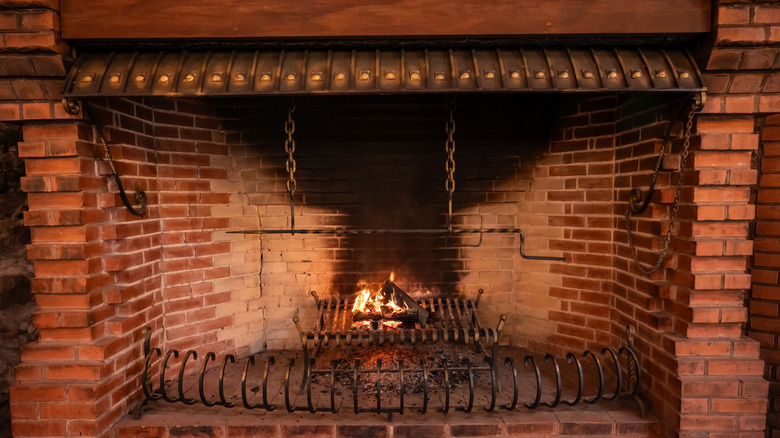
Historic homes have their share of quirks. Low ceilings, wide plank floors, and narrow staircases are all design elements many old homes share. These grand homes sometimes had back staircases for servants, dumbwaiters, and hidden bells that called the butler. Many share another common characteristic, as well — closets built into the wall next to the fireplace. Theories abound about what the closets next to the chimney were used for, but the answer to the question might be more mundane than you'd expect. It could be that they were used for the very same reason we use them now. Storage.
It's logical to think that a closet next to a fireplace would serve the purpose of keeping things warm. One theory has it that nightclothes were stored in the closet so they'd help keep you warm when you slipped into bed and waited for the covers to warm up, but people in that era didn't have special nightclothes. Instead, many people used bedwarmers, brass containers with a long handle filled with hot coals, to take off the chill. They were a precursor to the trendy, splurge-worthy bedwarmers on the market today. Similarly, some think the closets were warm places to store coats before they were worn outside in the winter, or to prevent boots from freezing in a cold house overnight.
More theories about chimney cupboards
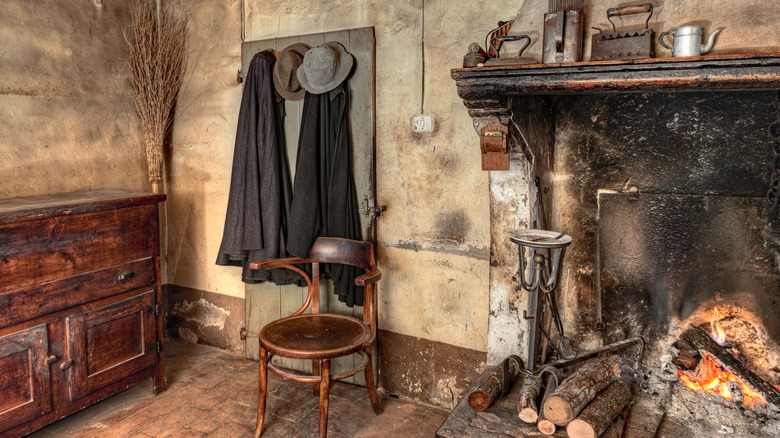
Perhaps more interesting is the possibility these were preachers' or ministers' cabinets where people either hid their liquor when the pastor came to call or, depending on your religious affiliation, a place to keep the sherry warm to serve the pastor. The fireside cabinet could also have been a hiding place for liquor from teetotaling community members who would disapprove of drinking. In the kitchen, a cupboard next to the fireplace might have been used to proof bread or cure meat. Another logical supposition is that they were where kindling and logs were kept for the fire.
The most likely reason that chimney cupboards exist is the way fireplaces were sited in a room. The space next to a hearth is usually tall and narrow or oddly shaped. Building a set of shelves and adding a door was an efficient use of the space in what were typically small homes. In Colonial homes, these were used in the kitchen to store food, spices, and cookware. Since the cupboards were warm and dry, they were possibly used for things that are affected by moisture, like sugar and salt. Some fireplaces have cupboards built into the space above the shoulder, or the place where the brick or stone narrows to the width of the chimney itself. These are also sometimes called chimney cupboards, and their sole purpose seems to be storage.
Today, pieces of furniture marketed as chimney cupboards are tall, narrow, freestanding cabinets with shelves and doors. Buying one new or thrifting one as an affordable closet space won't solve the mystery of why they exist. Still, it would be a faithful representation that pairs well with rustic or cottagecore decor. Replica chimney closets aren't limited to antique design; they can have chic sliding doors or glass inserts, making them distinctive storage solutions.