

How Often Should You Really Be Disinfecting Your Dish Sponge?
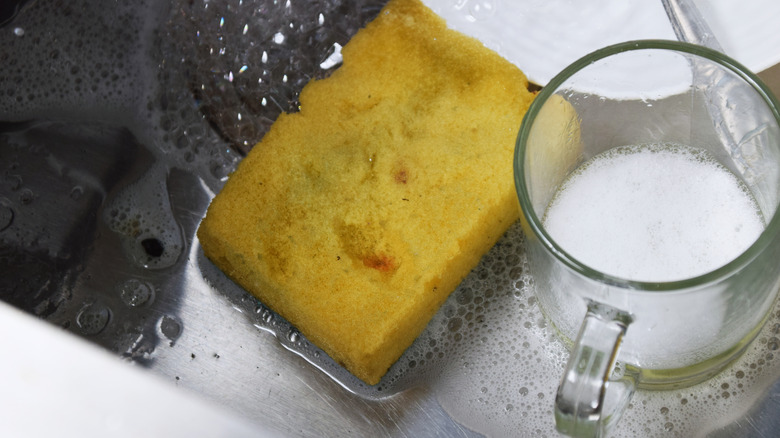
With every wipe, surfaces you mean to clean could end up dirtier than they were before you started. Kitchen sponges, those handy tools we grab without thought several times a day, potentially harbor millions upon millions of germs. In fact, dish sponges are one of the germiest places in your kitchen. Sure, we're always surrounded by them, and germ exposure has even been shown to help us build a strong immune system. But there's some yuckiness commonly detected in kitchen sponges that no one wants around. Bug-like listeria, E. coli, streptococcus, salmonella, and fecal coliform can have you and your housemates feeling pretty awful, awfully quickly.
Instead of letting Howard Hughes-level germophobia paralyze you, give your sponge an easy disinfecting treatment at least once a week to prevent illness. All it takes is the right amount of heat to get your used sponge up to snuff. It may be tempting to toss your sponge after one week in favor of a fresh one. This practice does mitigate the potential spread of yuckiness, but frequently replacing sponges can hit both the wallet and the planet pretty hard. When it's as easy as one minute in the microwave, get lots more safe use from each one before relegating it to bathroom duty or the trash. Microwaving or washing your sponge in the dishwasher should be a weekly cleaning habit for a cleaner kitchen and a healthier household.
How to disinfect your dish sponge and keep germs at bay
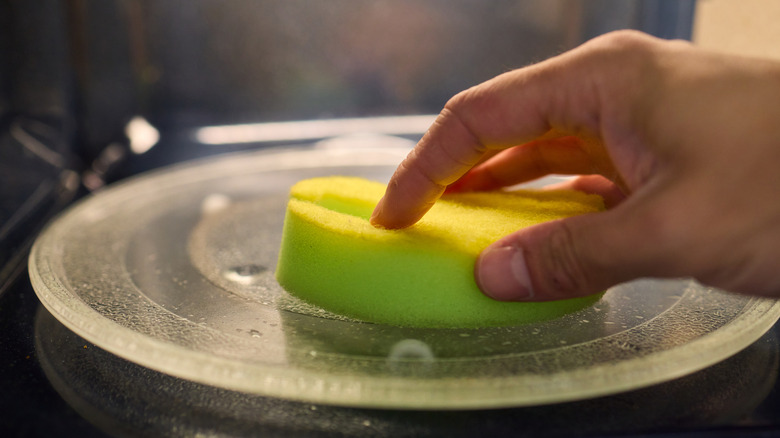
The quickest and most effective method to rid your sponge of potentially sickening bacteria is to wet it and microwave it for one minute on full power. In fact, the U.S. Department of Agriculture has found that this practice eliminates 99.999% of harmful bacteria. It also found that running your sponge through the dishwasher with the drying cycle is nearly as effective. These two ultra-easy solutions will help you get more use out of each sponge while also preventing some pretty nasty sicknesses. Soaking your sponge in a 10% bleach solution for three minutes does some good, but during the USDA's testing, it still left enough bacteria, yeast, and mold to be a concern.
Even with these proven methods of getting the gross out of your sponge, there are some kitchen sponge practices to steer clear of. One kitchen essential you should avoid cleaning with a sponge at all costs is your cutting board. Contaminants from cutting meats on a board are one of the biggest concerns. Instead, stick with a paper towel or a food-safe disinfecting wipe for this task. Letting your sponge stay wet while you're not using it is another way we unknowingly invite more illness-inducers to grow on its porous surfaces. Squeeze out your sponge well after each use, and let it dry fully to deprive germs of the moist environment they thrive on.
Lastly, cut out using a sponge to wipe countertops and other kitchen surfaces; this common practice can spread germs to a larger area. Wipe them down with a paper towel or cloth that you wash afterward.