

How To Best Handle A Neighbor Or Lawncare Service Trespassing Into Your Yard Or Garden
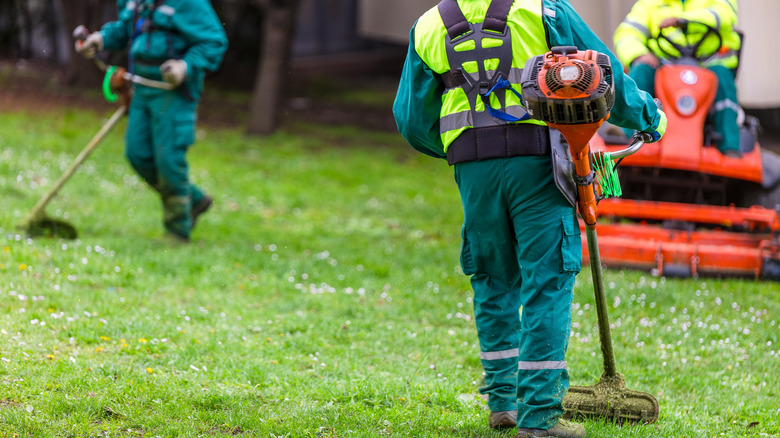
Plenty of people have experienced the neighbor who mows a little past the property line or a lawncare service that doesn't seem to know where the boundary is. If it's not causing damage or harm, you don't necessarily need to worry about it. Sometimes, it's simply a little less lawn you have to mow yourself. But if they're trampling your flower beds or allowing herbicides to drift onto your shrubs, you should take action.
It's also important to understand what your neighbor can and cannot do. For example, it's okay to prune your neighbor's overhanging branches that cross onto your property. It's not ok to cut down the whole tree or rip out the entire shrub. So, if your neighbor was simply pruning what's on their side, there's not much you can do. If they crossed onto your property to completely remove a plant, it's time for a talk.
How do you approach this situation without causing tension between you and a person that you could be living next to for decades? That depends on exactly what the issue is and what your neighbor is like. Sometimes, low-cost landscaping solutions that clarify boundaries are enough. In other cases, a polite conversation with the neighbor or the lawn care service will solve it. Sometimes, you might need to get a surveyor involved to clear up any misunderstandings about where the property line is.
Install landscape elements that clearly mark boundaries
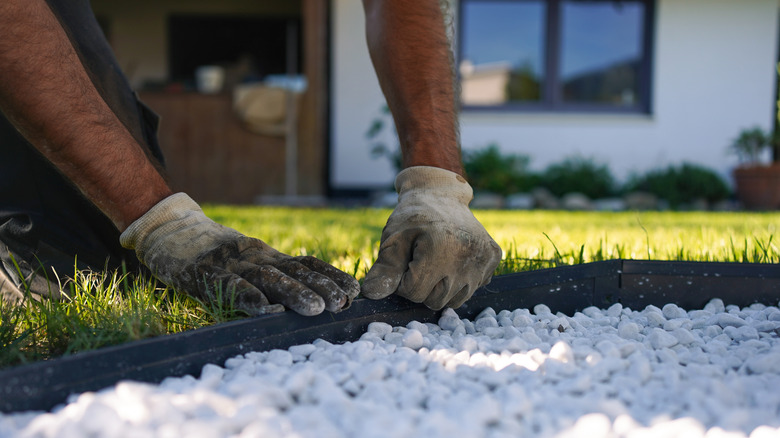
Remember that what seems like an obvious boundary to you may not be obvious to others, especially a lawncare service that manages multiple properties. You and your neighbor might know that the light pole at the street marks the boundary between your property and theirs. But a service that visits only once or twice a month may not remember that. Finding a decorative way to mark those boundaries is one of the most amicable ways to make sure the property line is as clear as you want it to be.
For example, if you have a garden bed that a lawn service keeps chopping down, install brick paver edges or a similar type of edging that clearly separates the bed from the lawn. Another benefit of brick or stone edging is that it physically prevents a lawnmower from straying too far inside your property. The person operating the lawnmower will not try to push the machine over the bricks or stones. It can also help to install "no trespassing" or "private property" signs along this property line to further emphasize that this is where your neighbor's yard ends.
You can also install a fence that surrounds your entire property. This clearly marks the property line and physically prevents anyone from accidentally trespassing into your yard. However, this might not work in front yards — especially if you have an HOA that limits fencing in the front of your house. In this case, look for HOA-compliant boundary solutions such as planting shrubs or installing shorter fencing.
Talk to your neighbor or the lawncare service (or both)

If clear visual markers of the property line aren't working, talking to them can help. To keep things civil, don't assume that your neighbor or their lawncare service trespassed on purpose. Instead, politely tell them about the incident so that they can be more careful in the future. If your neighbor disagrees with you on where the property line is, hire a surveyor to come out and mark it. This kind of disagreement happens often with ambiguous spaces like side yards or unfenced backyards. After the survey, find a permanent solution to mark the property line.
Talking to your neighbor is also the best approach if the issue is chemical drift. Your neighbor has the right to use legal herbicides or pesticides in their yard. But wind doesn't respect property lines, no matter how clearly marked. One solution might be asking them to notify you before any treatment so that you can protect any vulnerable plants with frost blankets or similar coverings.
You can also talk to your neighbor about safer types of weed killers or pest control products to use in their garden, like granular treatments to minimize drift. Harsher treatments are often overused and tend to do more harm than good in the long run. But remember that you're unlikely to convince your neighbor to change their habits right away. It's also easy for attempts to educate to be misinterpreted as criticism or accusations. So, be friendly and avoid sounding judgmental if they choose to continue using chemicals after your conversation.