

What You Should Know Before Switching To Engineered Stone Countertops

When you're tired of your old kitchen countertops and are ready for a change, you need to take several steps before a kitchen countertop installation. One of the first steps is deciding exactly what kind of material you want to use. Granite, marble, and engineered stone are among the most popular options. But, like so many decisions, each material comes with pros and cons, which come into play when deciding what's best for your home.
What is engineered stone? It is a composite of multiple materials, although it consists primarily of crushed stone that's mixed with resin and other binders. The majority of engineered stone countertops consist of crushed quartz, but they could include crushed granite, marble, or other natural stones. Because engineered stone countertops almost always consist of quartz, some people use the term "quartz countertop" interchangeably with engineered stone countertop. Quartz is a common mineral that consists of oxygen and silicon, and it's found in igneous, metamorphic, and sedimentary rocks.
You can use engineered stone in kitchens, bathrooms, or anywhere you are installing countertops. It is one of the most popular materials for kitchen countertops, as it offers a similar look to natural stone without many of the same maintenance hassles. However, it does have some drawbacks, such as being sensitive to heat and coming with a high price tag. We'll discuss the things to consider before installing quartz countertops, helping you decide whether it's a smart choice for your situation.
Why engineered stone countertops are a popular choice
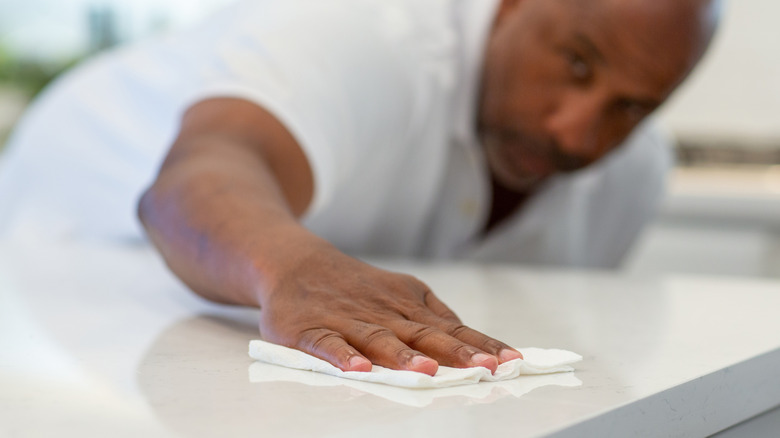
If your current countertop requires constant maintenance, one of the best things to know about engineered stone is that it's a low-maintenance material. It only needs occasional wipe downs with non-abrasive cleaners. The manufacturing process used for engineered stone countertops involves polishing the material. This polishing process means you don't have to seal it at the time of installation or in the future. The polymer resin used to bind the crushed stone creates a nonporous material. This material won't breed bacteria because of its nonporous design, meaning it is a safe choice in areas where you'll be doing a lot of food preparation. The binders also enhance the durability of the engineered stone, allowing it to resist scratches and stains without needing to be sealed.
Engineered stone is a beautiful material that you can order with certain pigment colors and designs that give you the exact look you desire. Natural stone countertops have non-standard designs, while the patterns and colors in the quartz material will have a uniform design. Depending on where you order your engineered stone countertop, you might be able to have the manufacturer add materials, like colored glass, metal flecks, or shells, that deliver a unique aesthetic.
If you're concerned about adding value to your home with your kitchen remodeling, installing engineered stone countertops should be appealing to potential buyers. A buyer will appreciate the nonporous engineered stone material and limited maintenance required, enhancing value.
Reasons why you might not want engineered stone countertops
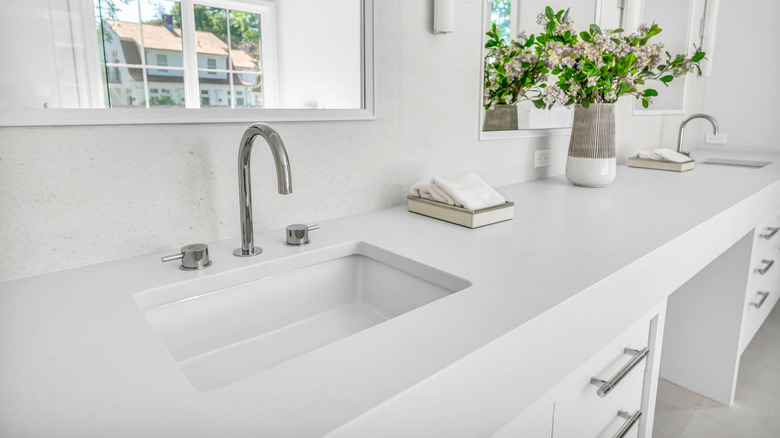
Some interior designers, like Emily Henderson, say you should avoid engineered stone countertops. From a negative standpoint, one of the most important things to know about engineered stone countertops is that they are not as heat resistant as other materials, such as granite and concrete, which have heat resistance of up to 1,000 degrees Fahrenheit. Engineered stone quartz countertops have a maximum heat resistance of about 300 degrees, which means many of your cooking pans could exceed that max when they first come out of the oven. When you place pans that are too hot on engineered stone countertops, the resin could warp and affect the smooth finish of the material. It loses both aesthetic appeal and functionality after warping.
Before settling on installing engineered stone countertops, you should understand what it will cost. The initial cost of the engineered stone tends to be higher than laminate, tile, or some natural stone countertops, but it does deliver better durability. If you want to mimic the look of natural stone or would like a complex pattern in the design, those design choices might increase the cost of the material by up to 30%. The cost for the material and professional installation may be $75 to $200 per square foot, but some installations will cost even more. More ornate edge styles, like bullnose or waterfall, will drive up the price of installation, as will needing multiple cutouts for sinks or faucets. Some homeowners might be tempted to try a DIY installation to save money, but the installation process is extremely complex. The material might chip or crack if improperly handled, so it's best to pay for professional installation.