

What Is A Frameless House (And Whether It's Right For You)
We may receive a commission on purchases made from links.
If you are considering building a new house, it can be an exciting time. However, it can also be intimidating because of the expense. The average cost to build a house from scratch is more than $425,000, according to the National Association of Home Builders. If that's out of your budget, you're not alone. You might be interested in alternatives that can save you some money – and potentially a lot of money.
One option worth considering is a frameless house that doesn't require timber framing. Some frameless construction methods are more expensive than timber framing, while others are cheaper. The cost also depends on the home size; if you are considering a prefab tiny home that doesn't require timber framing, for example, you can potentially save a lot of money with less living space to build and finish.
Beyond tiny houses that don't use traditional framing, some of the options for building a house without timber or steel framing include using 3D printing, insulated concrete forms (ICFs), and some nontraditional options such as straw bale homes or shipping container homes. Determining whether these frameless home options are suitable for your situation will depend on your budget, your desired square footage, and local building codes. For example, securing building inspector approval for a straw bale house can be challenging in some locations.
Are frameless concrete houses the right choice for you?

You have a few options for constructing frameless concrete houses. With ICF construction, the builder uses hollow foam blocks and fills them with poured concrete. The construction team stacks the blocks to create the walls. The foam holds the concrete in place until it hardens. Frameless concrete walls don't require wood framing and stand up to natural disasters better than timber framing. They are extremely energy efficient, potentially cutting heating and cooling bills by 30% compared with traditional homes. The building cost will be higher, though, as a frameless ICF home costs up to 5% more than a timber-framed house.
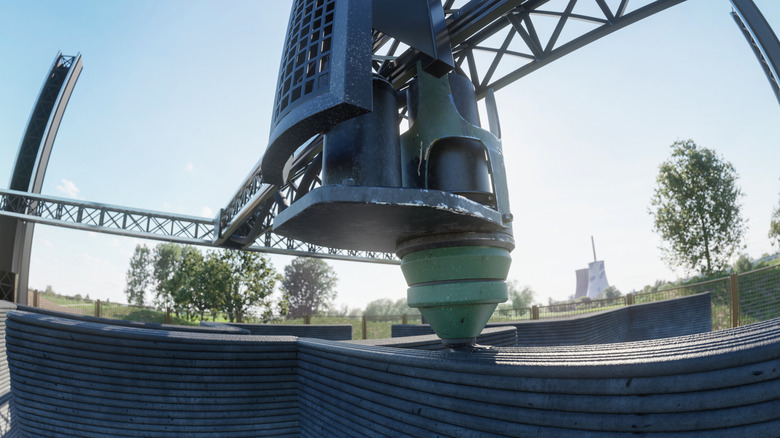
A 3D printed home uses a blueprint made with computer-aided design (CAD) software. A machine reads the blueprint and uses a nozzle to apply the wet concrete in the shape of the walls. After the concrete dries, contractors will add the utility systems and install doors and windows. Building the frame of a 3D printed home could cost up to 45% less than traditional wood-framed homes because it requires far less labor. Some of the disadvantages of using 3D printing for homes relate to aesthetics and cosmetics, as the home's walls can almost resemble layers of toothpaste. It may also be difficult to convince a local building inspector to sign off on the project because national building standards for 3D-printed homes don't yet exist.
Are non-traditional frameless designs worth considering?
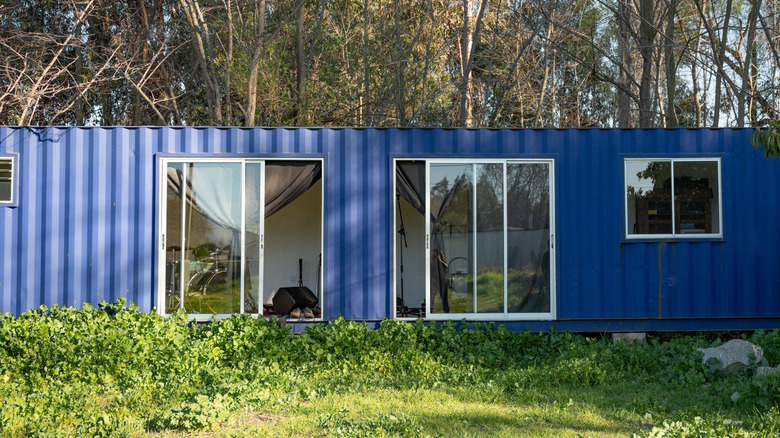
Some tiny homes are constructed without using timber framing, which helps to reduce costs. One design, called Nature Pod, uses inner walls to support the thick outer walls, creating stability. Its cost starts at about $16,600. Another option is to use a steel shipping container as the structural framing element, allowing you to add your design elements around it. You can buy such kits on Amazon for as little as $5,800, although you'll still need to pay for interior finishes, plumbing fixtures, and appliances. However, some of the downsides to living in a tiny house include odors in a confined space, aesthetics, trying to make beds in a loft, limited storage space, and needing to use small appliances.
If you truly want a unique frameless home design, straw bale homes are an option. Instead of framing, you likely would need to connect the bales with long wooden pegs to create load-bearing walls. However, because they don't need posts and beams, large open floor plans are possible. After covering the bales with plaster, you'll have outstanding energy efficiency. Straw bale homes can be cheaper to build because they don't need the same amount of materials as timber-framed houses. However, obtaining permits for this type of structure and working with building inspectors can be a significant challenge. The walls are thicker than with traditional framing, which means you may need to sacrifice some living space. Without studs and drywall, securely hanging pictures or shelves can be difficult.