

How To Determine If You Need An Expansion Tank For Your Water Heater
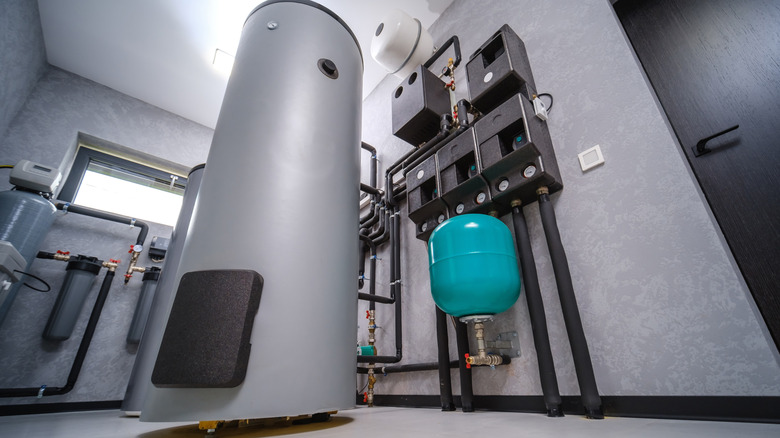
If you're seeing signs that it's time to replace your water heater and haven't bought one in a long time, it might be a little confusing. Your plumber might recommend adding a water heater expansion tank – a small container on the supply pipe that reduces the risk of excess pressure damaging your plumbing system. As the main appliance heats the water, the expansion tank alleviates the pressure buildup, preventing it from affecting the overall plumbing system. Most people have a closed-loop plumbing system, which means water cannot flow back into the city water lines when excess pressure is present. This makes an expansion tank a smart safeguard against damage.
But do you actually need an expansion tank? It partially depends on the type of water heater you've selected for your home. If you have or are installing a tankless water heater, the plumber might only recommend installing one if your local building code requires one for any type of water heater. Generally, tankless heaters never cause thermal expansion in the plumbing system, meaning people in this situation can often skip the expansion tank.
If a plumber finds that the supply entering your home has excessive pressure, installing an expansion tank can help keep the system stable. However, if you have a pressure-reducing valve (PRV) installed in your plumbing system, you might not need an expansion tank. Ultimately, it will depend on the local regulations and the opinion of your plumber.
Signs that you might need to install an expansion tank
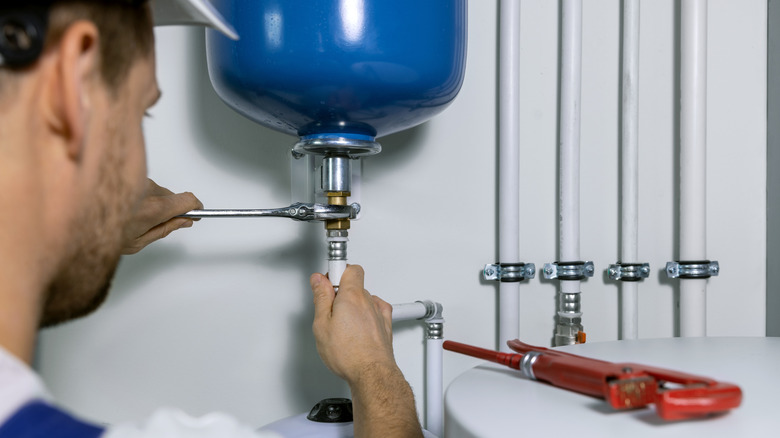
If your current water heater is leaking, installing an expansion tank can help, regardless of whether you replace it or have a plumber attempt to fix it. Excessive pressure is a common reason that water heaters develop a leak. Leaks on the temperature-pressure relief (TPR) valve are another sign you may need an expansion tank. If you hear banging noises in the pipes when you turn on the hot water, excessive pressure is probably causing the noise, which is also called water hammer. Fluctuating pressure at the hot water faucet can also indicate thermal expansion, which may mean it's time for an expansion tank.
You can easily check your home's water pressure level by purchasing a gauge and taking a DIY measurement or by hiring a plumber to test the system. Household water pressure should fall between 40 and 60 psi. Even if your reading is just below the top of the range, remember that when the heater raises the temperature of cold water, it raises the pressure in the system, which might move it beyond the top of the range. An expansion tank can stabilize that pressure.