

Get Bigger Leaves On A Pothos Houseplant With This Simple Method
We may receive a commission on purchases made from links.
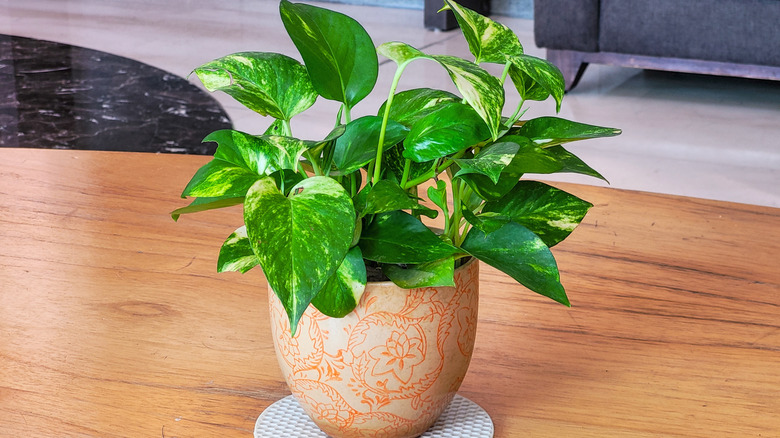
Pothos have been houseplant favorites for quite some time — after all, they're easy-going and pretty trailing vines. Pothos (Epipremmum aureum) are natural climbers, and in their native habitat (the forests of Southeast Asia, Indonesia, and the Solomon Islands), they scale trees to reach the sunlight. Pothos do well as houseplants. They are very forgiving and will tolerate a wide range of climatic conditions with surprising resilience. This hardiness makes them some of the easiest plants to grow for beginner gardeners indoors. While their leaves are always attractive, pothos give their best displays — including big, healthy leaves — when given a moss pole to cling to.
Once your pothos starts climbing its moss pole, you should begin to notice a positive change in its appearance and overall health. The vertical support encourages the plant to direct more energy into upward growth, which helps it develop stronger stems and broader foliage. The moss pole retains moisture, creating a humid microenvironment around the aerial roots, something pothos also benefit from in their native habitat. As the plant secures itself to the pole, it begins to behave more like it does in the wild, producing a fuller, more impressive overall shape. With the simple addition of a moss pole, you can keep your pothos plant happy and healthy all winter long — or any time of the year, really.
How to add and care for a moss pole in a pothos planter
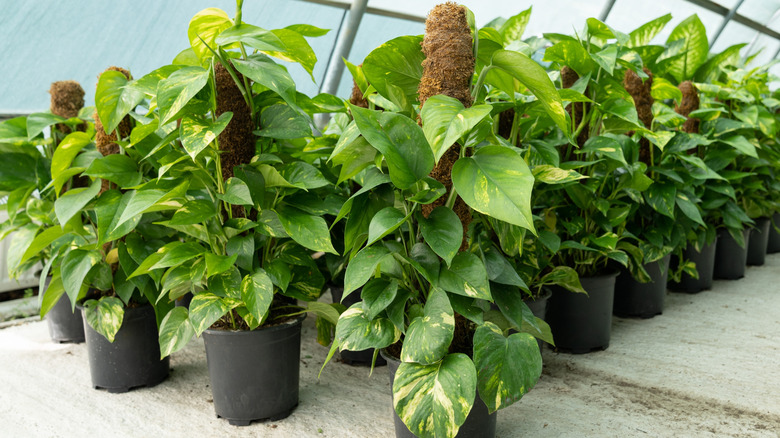
You can choose to DIY a Dollar Tree moss pole that your plants will thank you for or you can purchase something in store or online. We like the Duspro Natural Stackable Moss Pole for its flexibility and its low price of just over $14. To give the aerial roots something to grip onto right away, moisten the pole with a spray bottle. Some gardeners soak their poles in a shallow container full of water and then squeeze the excess water out. The moss should feel damp, but should not be dripping water. Gently slide the pole into the soil behind the plant, close to the main stem. You want to avoid disturbing the roots as much as possible. Press the soil down around the base of the moss pole. Once it feels secure, wrap the pothos vine around it in a loose upward spiral, fastening it in place using soft plant ties or twine as you go.
Moss poles need maintenance to remain a reliable climbing surface that helps your pothos produce the larger, healthier leaves you so desire. Keep the pole consistently damp by misting it or pouring water down its length during regular watering. Doing this maintains humidity around the aerial roots and encourages strong attachment. Instead of replacing your moss pole every few years, you can simply extend it. Over time, the pothos will push its roots deep into the moss pole, displacing the moss. If the plant outgrows its first pole, you can either add a new section to the top of the old pole or wrap any trailing tendrils around the existing pole as they grow longer.