

The Clear Sign You're Giving Your Christmas Cactus Way Too Much Sun
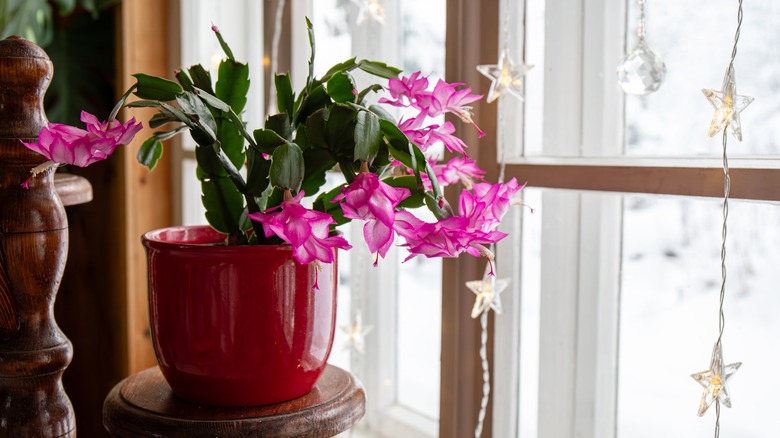
Christmas cactus (Schlumbergera spp.) is unique because of its ability to flower at a time when most of your plants are enjoying their winter slumber. Christmas cactus puts on a display of breath-taking flowers in a variety of colors –- from pure white to pink, purple, and shades of red –- making them perfect houseplants that will spice up your holiday decor. But even though these plants are considered low-maintenance and can adapt to different indoor conditions, the one environmental stressor that they are completely intolerant of is direct sunlight. Getting optimum light conditions is crucial for most houseplants, but even more so for Christmas cactus, since it is sensitive to both the duration as well as the intensity of sunlight. But how do you even know when you have given these tropical succulents more than their share of sun? Well, if you begin to see signs of leaf scorch in the plant, or if the plant starts dropping its leaves, it is safe to assume that your Christmas cactus is demanding to be relocated to its native conditions: bright but indirect sunlight.
Christmas cactus are epiphytic succulents, native to the humid rainforests of Southeastern Brazil, and therefore, used to growing in warm and sunny surroundings. Although they ideally like two to six hours of direct sunlight every day, you definitely can not go overboard with the dosage. Being completely intolerant to the scorching afternoon sun, your Christmas cactus will immediately show its displeasure of the extra sunlight by changing the color of its leaves. Too much sun can also make your Christmas cactus more susceptible to pests. In fact, this lovely holiday plant can even die if you let it stay in the sun for too long.
Christmas cactus can get scorched, discolored, weak, or droopy in too much sun
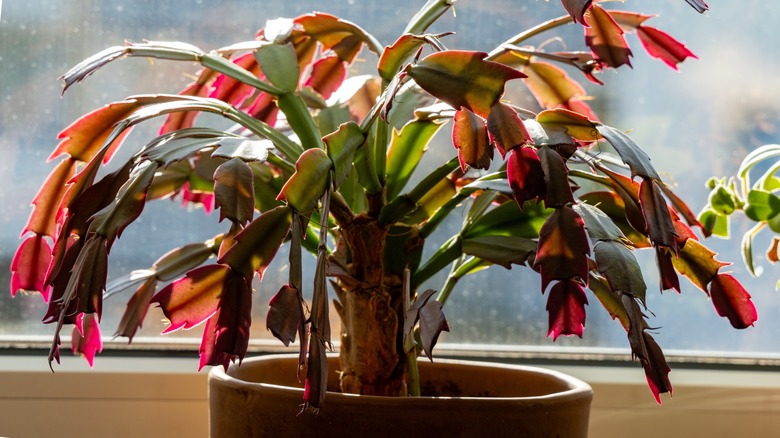
When caring for your Christmas cactus and, in particular, protecting it against the sun, the biggest tell-tale sign that you should watch out for is sunburn. Too much sunlight, combined with heat, can break down the chlorophyll present inside the leaves of the plant. These leaves (which are actually flattened stems), begin to turn yellow, purple-red, and then pink as the severity of the sunburn increases. The stems can even turn brown in some extreme cases. Apart from the discoloration, the plant can also start appearing weaker, and begin to wilt, wrinkle, or droop, if it can't handle the sun. If you're seeing similar changes in your Christmas cactus, consider it time to find out the right location for your houseplant that can better mimic its tropical origins.
Apart from the intensity of the sunlight, giving your plant sunlight at the wrong time of year can also be detrimental for your Christmas cactus, particularly for healthy flowering. For instance, if you notice that your Christmas cactus has abruptly shed its flowering buds, it is likely that you have interrupted the period of darkness it needs with light, whether it is artificial light or sunlight. The plant needs at least 13 hours a day of continuous darkness during fall to bloom in winter, and people often use a blackout curtain to create these conditions. However, exposing your plant to sunlight even for a short time during this phase can cause the buds to fall off. If you see buds falling off or other signs of leaf scorch in your Christmas cactus, immediately consider shifting its location to an east-facing window or use a sheer curtain to lower the intensity of the sunlight on the plant.