

8 Types Of Planters That Can Survive Outdoors In The Winter
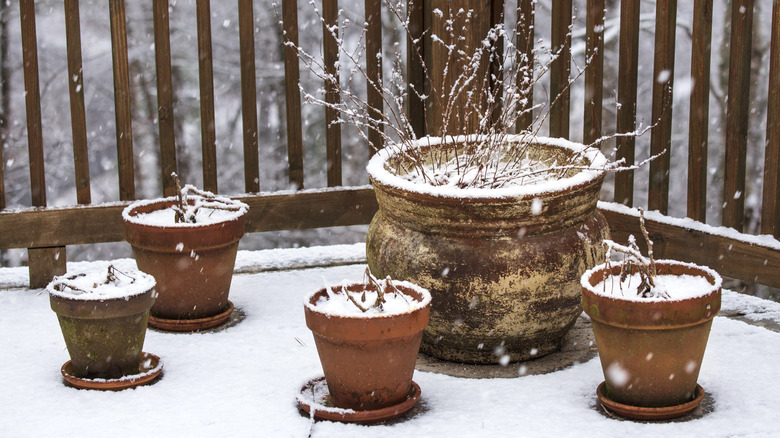
When the winter months arrive, there are plenty of tasks you need to do to make sure your garden stays protected. However, between mulching plants and winter pruning, you may forget about your planters — only to find them cracked and damaged when spring comes around. To save you from having to buy new planters every year, it's helpful to get types that suit the weather conditions in your climate. So, if you live somewhere that has freezing winters, you'll need to make sure that they can withstand these significant swings in temperature.
When shopping for winter-proof planters, you should certainly avoid most terracotta pots — unless they're made out of specific clays that tolerate low temperatures. That's because the majority of them are made from porous clays, which can crack and break in the cold. Instead, opt for fiberglass, plastic, or wooden planters. Even if you do get a cold-proof planter, you may still wish to protect it with plastic or burlap wraps over the winter months to ensure that the plants inside are protected.
Plastic planters
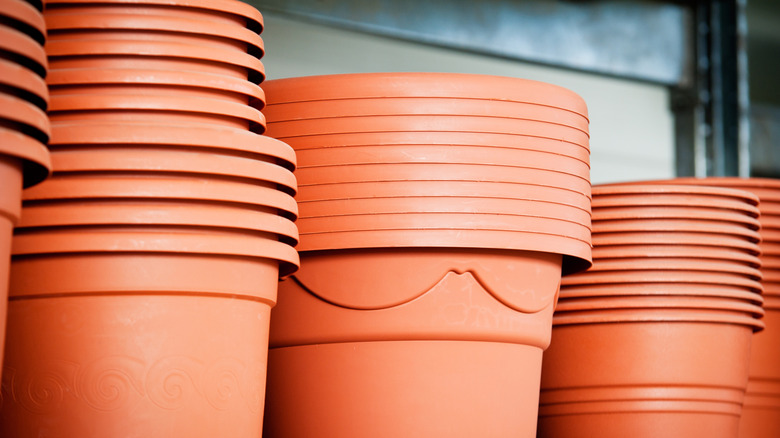
Many sturdy plastic planter pots are suitable to be left outside over the winter months. Unlike ceramic or terracotta pots, plastic containers tend to tolerate the freezing and thawing of winter better. When shopping for plastic planters, look for ones that say they are frost proof, as weaker plastic pots can crack in the winter as the soil inside expands. Because these planters are usually fairly light, however, you can move them to a warmer location if the soil is constantly freezing and thawing.
Fiberglass planters
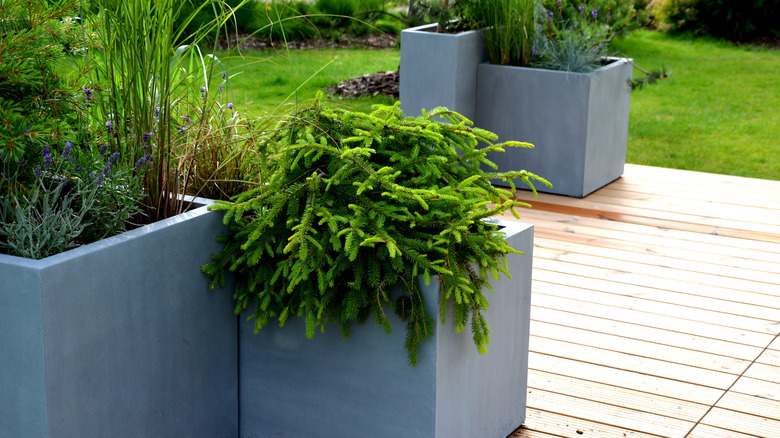
Fiberglass planters are a fantastic frost-proof option. These planters come in a range of styles, so you can usually find one that fits your garden's aesthetic. As these planters are non-porous, they don't hold water and so tend not to become damaged by thawing and freezing in winter. Furthermore, many of the best fiberglass planters are UV resistant, meaning they won't degrade in the sun. Although they tend to be pricier than other options, fiberglass planters will normally last longer and withstand a range of weather conditions and temperatures.
Wooden planters
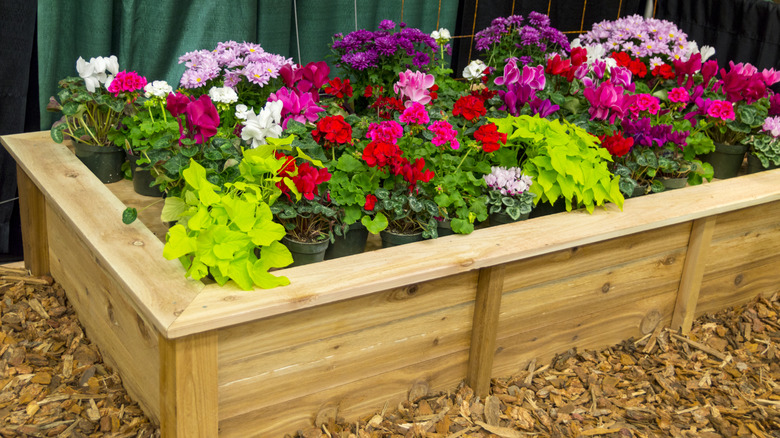
Many wooden planters can be left outside, as long as they're made out of durable hardwood. Some of the best woods for planters include cedar and redwood, as these kinds are resistant to decay, so look out for them when shopping. If you're creating a DIY wooden planter at home, you should coat the inside with a non-toxic wood preservative, punch holes in the base, and line it with a compost bag. Wooden planters can last for years when properly cared for.
Concrete planters
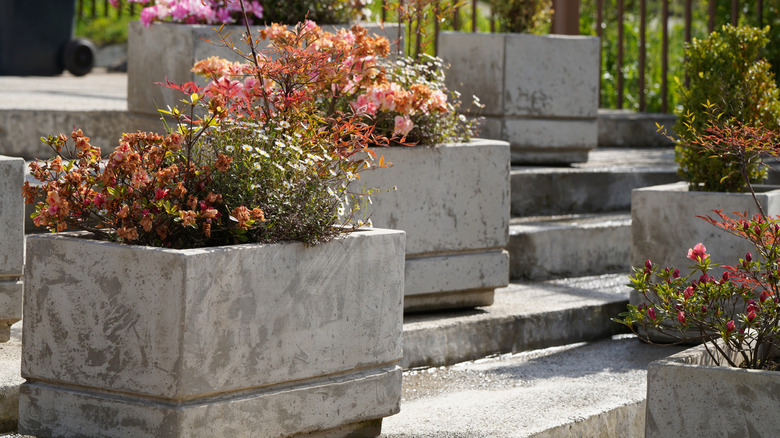
Concrete planters are extremely durable and can tolerate frost, sunshine, and changes in temperature. As these planters are quite heavy, they're also suitable for areas that endure windy or stormy winters. Because of their durability, concrete planters tend to last a fairly long time, making them a good investment for gardeners. There are many stylish options available when it comes to concrete planters, too, with these pots being particularly suitable for modern and minimalistic garden designs. You can also pick up concrete planters at a reasonable price, unlike some of the other durable planter options out there.
Metal planters
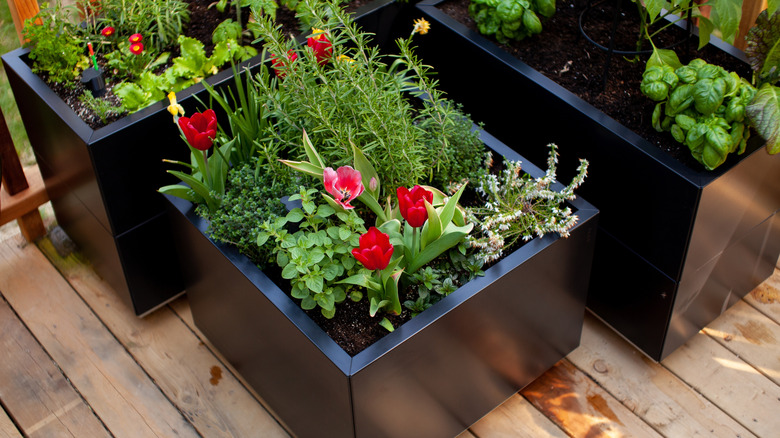
Metal planters bring a unique look to your garden, and they can be left outside in extreme weather. When buying a metal planter for your yard, however, make sure that you go for one that has been galvanized. This refers to the technique of coating iron or steel with zinc to protect against erosion and damage. Also, while these planters are usually fairly affordable and can withstand frost and sun, they do tend to get hot or cold quickly — so you may need to wrap them up to protect your plants in the winter.
Stone planters
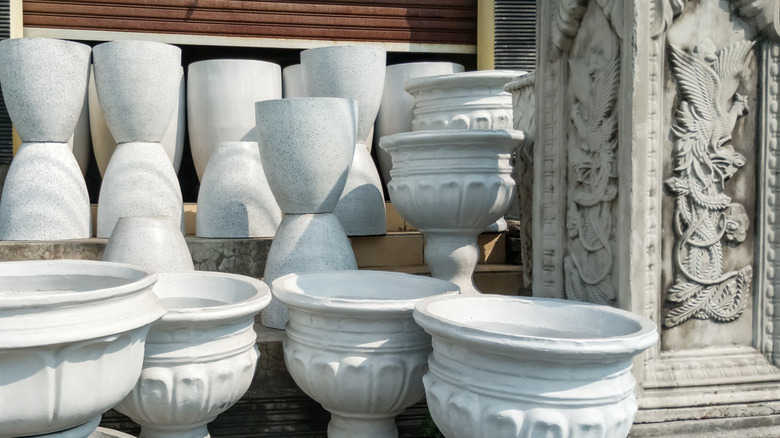
Stone planters are both frost and sun proof, making them sturdy additions to your garden. They also have a beautiful, traditional vibe to them that will elevate the look of your yard. To ensure that your stone planters — and the plants they contain — are happy over the winter months, it's advisable to wrap them in plastic or burlap to provide them with some protection. Of course, if you decide to use stone planters in your yard, you may be looking at forking out a fair amount of money – but their beauty and durability is usually worth the cost.
Certain terracotta planters
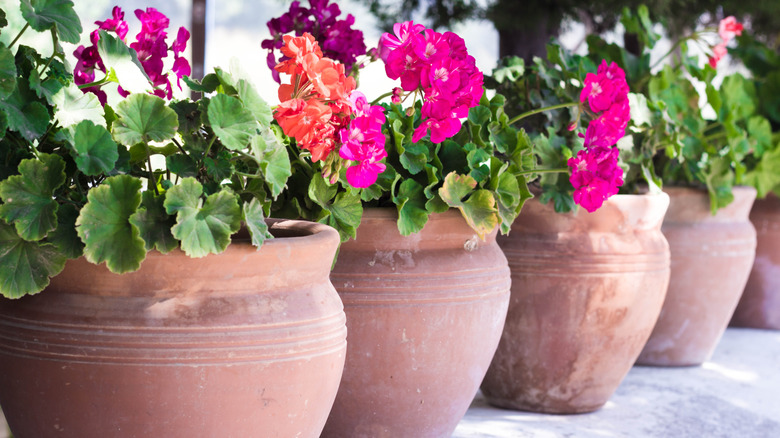
The majority of terracotta planters should be moved inside for the winter months, as they can become badly damaged by freezing temperatures. However, there are certain types of terracotta that can survive harsh weather. For example, Impruneta terracotta pots are made from clay only found in a certain region of Italy. As this clay is rich in iron, the terracotta it creates is strong — it's even been used to cover roofs. Even if the clay is durable, though, you should make the terracotta is glazed before leaving your containers outside in winter.
Glass fiber reinforced concrete planters
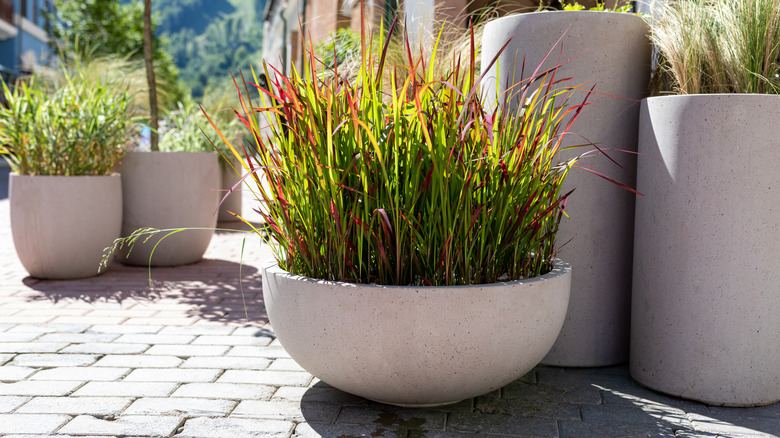
Glass fiber reinforced concrete planters are made out of — you guessed it – glass fibers, cement, water, and fine aggregate. Planters made out of this material are much more lightweight than those made from concrete or stone, yet they're also highly durable when it comes to winter weather. This is also considered a waterproof material, which means it will perform just as well as frost-resistant concrete when it comes to freezing and thawing. These planters can cost a little bit more than plastic or wooden options, but they do also last a long time.