

Take Cuttings From This Plant In The Winter To Attract More Hummingbirds Next Spring
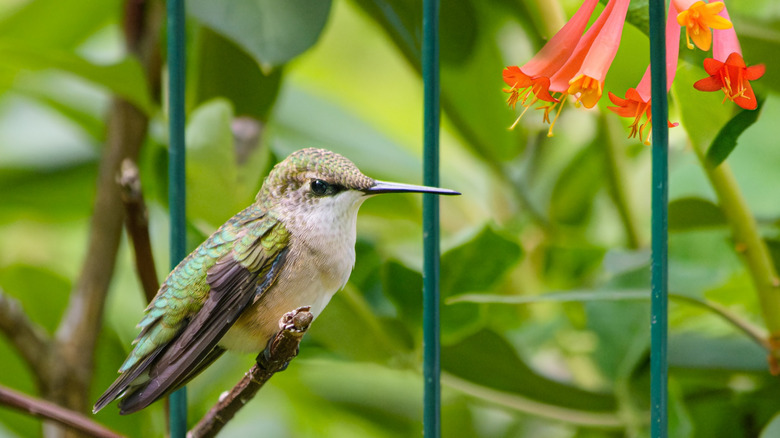
Hummingbirds' long, needle-like beaks and thread-thin tongues are perfect for dipping into tubular flowers. Honeysuckle (Lonicera spp.) fits the bill for ideal hummingbird feeding. This fast-growing plant is pretty and fragrant enough to please humans, as well. Propagating North American native honeysuckle varieties like coral or trumpet honeysuckle (L. sempervirens) can help you make the most of what's maybe an annoying task: pruning. If you've got to do it, you might as well nurture some new honeysuckle plants to life for more hummingbird enjoyment, either for your own garden or an interested friend. This vining, flowering beauty thrives in zones 4 to 9, and native species can magically turn your garden into a hummingbird paradise.
Honeysuckle has earned a less than stellar reputation due to its highly energetic growth habits. Introduced species like Bell's (L. bella), Morrow's (L. morrowii), Japanese (L. japonica), and Amur (L. maackii) are invasive in parts of North America, so don't include these types of honeysuckle in your winter propagation efforts. (Here's how to tell if the honeysuckle in your yard is native or invasive.) However, native varieties have earned their status as a worthy addition to landscapes all over the continent. They're easy to grow outdoors, but they've also been identified as one of the easiest flowering plants to propagate by cuttings. Dormant native honeysuckle — particularly trumpet honeysuckle — may still be holding onto leaves in the winter in warmer areas, but leafless cuttings will also take root with the right care.
How to choose and root honeysuckle cuttings in winter for spring planting
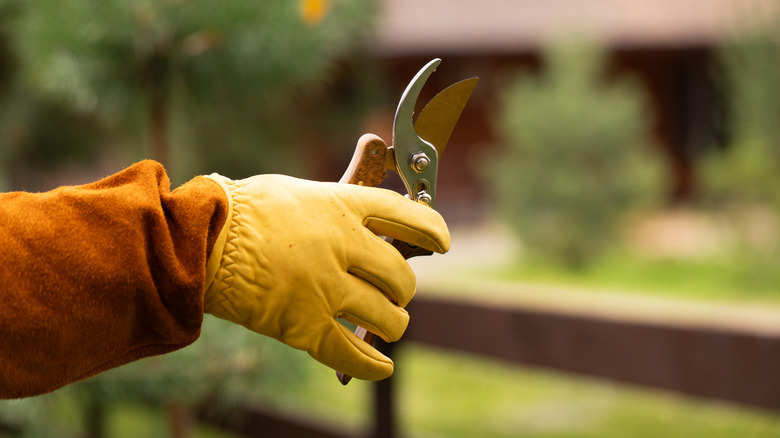
As you're pruning your honeysuckle in the winter, keep your eye out for the healthiest living branches to save for rooting. Good candidates are healthy "semi-hardwood" ones (this year's growth that's on the older side and still pliable). Clean and disinfect your garden tools, then trim 10-inch sections of vine right below a leaf node. Snip your 10-inch sections into smaller 4- to 5-inch pieces for propagating. Prepare more cuttings that you expect to plant because it's likely that some won't take root. Strip away any but the topmost leaves. Scoring the cutting's bark can improve the chances of rooting: Gently scrape away the top layer of bark on the bottom 2 inches of each stem.
Fill pots with rooting medium made from sand, perlite, vermiculite, and/or coconut coir, dampen it, and plant the scored end of your cuttings about 1 inch into the medium. Place the cuttings in a spot with bright, indirect light, and keep the medium moist while waiting for roots to form in a few weeks. Transfer the rooted propagations to soil-filled pots, and once your area's last frost has passed, plant your new honeysuckles in well-draining, fertile soil in a spot with full or partial sun.