

The Budget-Friendly DIY Project That Instantly Updates Any Fireplace
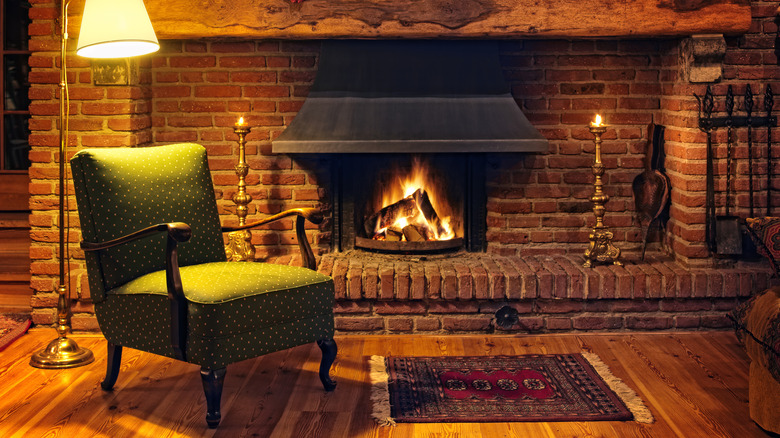
There's just something about fireplaces that adds a touch of cozy to a home. Maybe it's the crackle of the fire in the winter or decorating the mantelpiece with fresh flowers in the spring, but there's no denying that a lot of people love the ambience a fireplace can provide. However, sometimes your fireplace just doesn't match your home. If the brick is giving off an unwanted pub vibe or the stone feels more 80s than you, the whole room feels off, right? But with the cost of a fireplace remodel averaging more than $1100, many homeowners decide the most cost-effective option is just to deal with it. However, there is a budget-friendly way to update an outdated fireplace: Paint it white.
White fireplaces are loved by interior designers and for good reason: They can brighten a space, act as a neutral backdrop for every season's decor, and easily elevate an outdated fireplace without remodeling. Now, we'll be honest: This is not exactly a quick project, but a good part of the time is waiting for the primer or paint to dry. However, it may be worth budgeting a weekend or two to complete this DIY.
Speaking of budgeting, how much should you expect to spend? It depends on what your fireplace surround (the outside of the fireplace) is made of and what you have at home. But if you're planning on buying everything new, expect to spend about $70 to $100 on materials like paint, primer, paint rollers, brushes, and patching compounds. You'll also need some rags and drop cloths.
What kind of paint do you need for a fireplace surround?
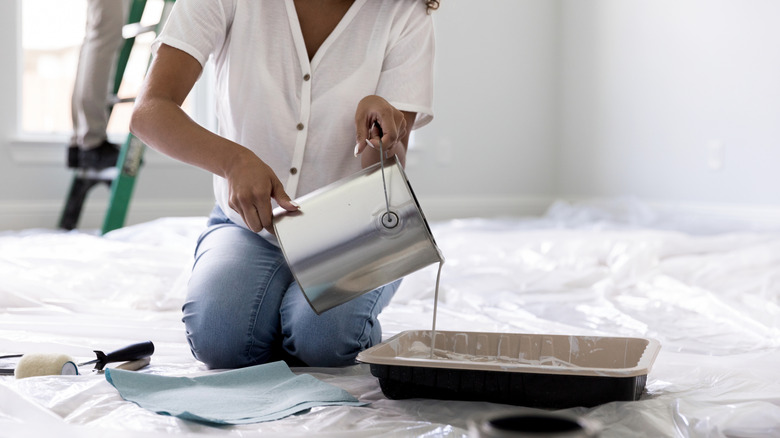
Before we break down what those steps look like for each material, we need to talk about the most important element in this DIY: Paint. First up, do you need a heat-resistant paint? Many experts agree that you do not need heat-resistant paint unless you're painting the inside of the fireplace (a.k.a., the firebox). However, it's worth gauging how hot your fireplace gets when used. If it gets extremely hot when you have an open fire going, a heat-resistant paint is likely the best option. If the surround doesn't get too hot, an interior paint suited for the material will likely be sufficient. Check the label to make sure it can handle temperatures up to at least 200 degrees Fahrenheit. If you want to paint inside the firebox as well, make sure your paint has high-heat resistance (at least 500 degrees Fahrenheit).
Now, onto sheen. Expert recommendations leaned more towards glossy finishes because they're easy to wipe clean, while some DIYers loved the look of eggshell. Any of these sheens are a great option. There's only one type to consider avoiding: Matte. While it might complement the room, this finish is harder to clean ash off.
Tips to paint your fireplace white for an elegant look
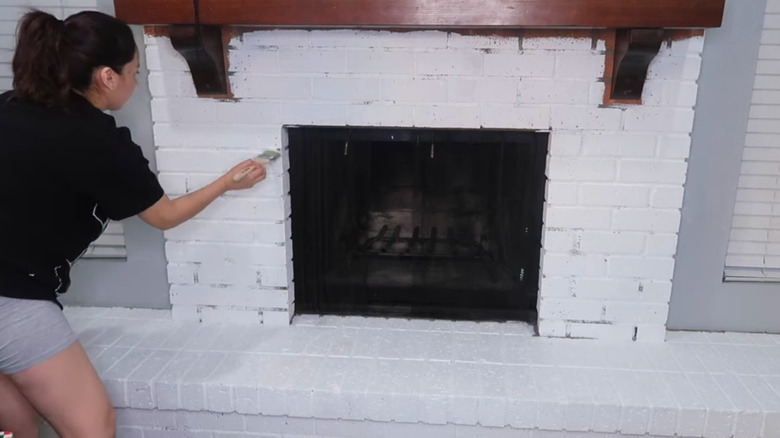
There are four core steps to paint your fireplace surround, whether it's made of brick, stone, or tile: Clean, prep, prime, and paint. Each step differs depending on your surround's material. If you want to paint your brick fireplace, scrub gunk off the stone with a hard-bristle brush, then do a quick wipe down with a multipurpose cleaner. (If there's a lot of buildup, try a degreaser.) Let it dry and seal any cracks with masonry caulk. Next, grab a paint roller, a small paintbrush, and your primer. Use the roller to cover the brick faces and the paintbrush for the mortar. Plan on doing two coats, especially if you have stubborn soot stains. Let dry, then apply two thin coats of paint using the same method.
Painting a natural stone fireplace is similar to brick. Clean the stones using the brush and a stone cleaning spray. Patch any large cracks with an acrylic latex caulk and let it dry. Apply primer using a paint roller with a minimum one-inch nap to cover the stone and a small paintbrush for crevices. Once dry, paint, letting it dry in between coats.
Sprucing up your tile fireplace? Use a tile cleaner, then grab your sander. With 100-grit sandpaper, sand down your tiles to help deep clean and give the paint something to grip onto. Wipe the dust off. Apply one to two coats of bonding primer, and let it sit overnight. Then apply two layers of paint and let it dry.