

Don't Waste Your Time Giving Your Christmas Tree Hot Water This Year. Here's Why
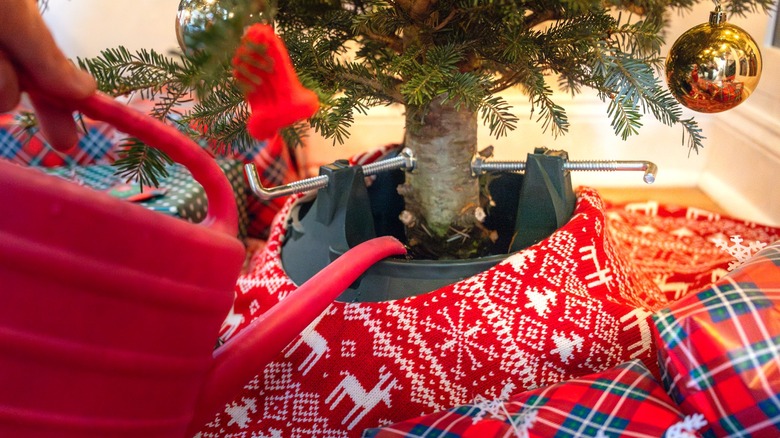
When you want to switch away from an artificial tree, it's important to know what to look for when buying a live Christmas tree and how to care for it after you get home. When properly maintained, a cut Christmas tree can remain fresh for four to six weeks. Live Christmas trees need fresh cut trunks and fresh water to survive the entire holiday season while looking their best. One thing you don't need, though, is hot water in the tree stand's reservoir, according to the National Christmas Tree Association and Rick Bates, professor of horticulture at Penn State University, who stated (via NPR), "It really doesn't matter. Cold water is fine. What does matter is the fresh cut on the base of the tree."
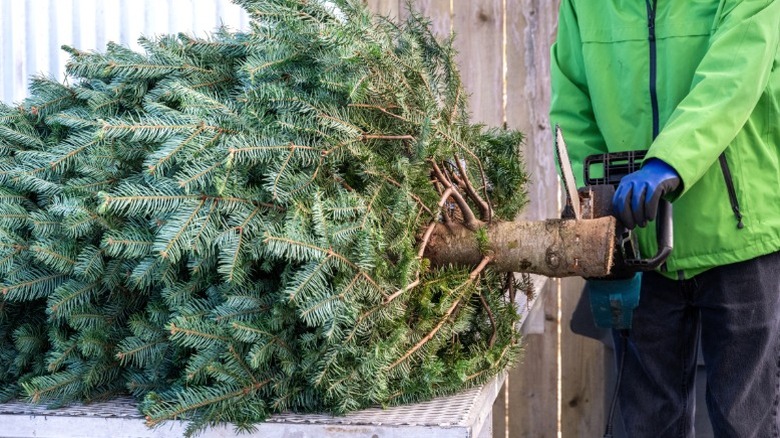
Cutting between ½ and 1 inch from the base of the trunk after you return home is one of the best ways to prolong the life of your real Christmas tree. The cut made at the farm will begin to dry out and develop a sap seal quickly; making a new cut and immediately placing it in water keeps the sap from closing off the trunk. Generally, you should add a quart of water to the reservoir each day for every 1 inch of diameter of the cut section of the trunk. If it's absorbing even more water than that, it's a good sign that the tree will remain healthy.
Why hot water is a debatable topic (and what really matters)
If you've read somewhere that hot or warm water is important for the health of a live Christmas tree after it's been cut, you're not alone. Academics and industry experts have differing opinions on whether warm water works better than cold, and the debate has been occurring on the internet for several years. In 2007, the University of Kentucky College of Agriculture published a "Caring for Christmas Trees" guide that recommended adding warm water to the stand's reservoir. This guide says that the warmth will keep the sap from hardening and encourage the trunk to begin taking in the moisture. Many others have followed suit, suggesting hot water for the first watering session to get the sap flowing and using regular room-temperature or cold water after that.
Still, other experts say water at any temperature will give the live tree the hydration it needs and prevent the sap from hardening and that it's more important to understand how much water a Christmas tree needs to thrive. You should not drill holes in the trunk to try to speed up the intake, either. As long as the cut at the end of the trunk is fresh and it is always below the water level, a simple tree stand reservoir will deliver the necessary moisture for intake. According to experts at Michigan State University, there's also no reason to add anything else to the reservoir; plain tap water will successfully keep the tree fresh as long as you provide enough of it.