

The One Thing You Should Always Check Before Using Straw Mulch In Your Garden
We may receive a commission on purchases made from links.
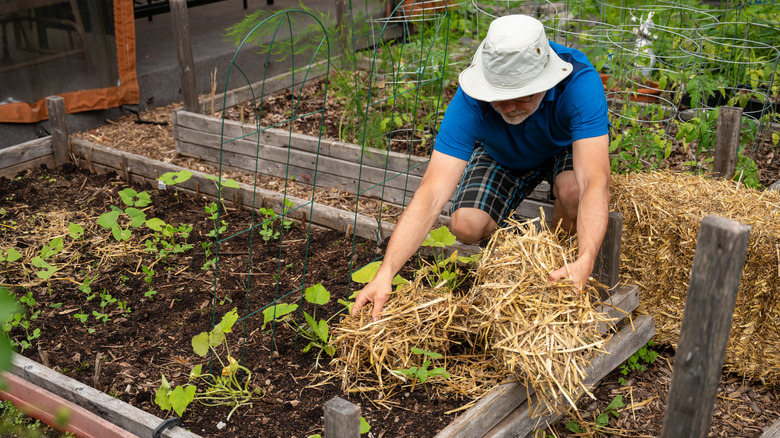
Imagine you bought some bales of straw to mulch your garden beds in fall. You happily lay the straw down, safe in the knowledge that you're doing what's needed to keep your plants insulated from the coming cold. A couple of weeks pass and you start to see tiny green shoots sprouting from the soil. These weeds are competing with your plants for resources and completely ruining the look of your garden. There might be some gardening mistakes that can only be learned the hard way, but the kind of headache we just described is easily avoided. You just need to take some time to inspect the straw before using it as mulch. You mostly want to look out for weed seeds, which will germinate in your garden beds not long after they hit the soil. You should avoid straw that's been sprayed with herbicides, though that's not something you can see.
Ever wondered what straw actually is? Straw is the dried stalk that is left behind after grain crops, like wheat or barley, are harvested. These stalks are bundled into bales and put to various uses in farming and gardening. Using straw as mulch is highly beneficial, particularly for vegetable beds, because of its ability to lock in moisture and smother weeds. For example, straw is the best type of mulch to help your strawberry plants thrive. Having said all that, the problem is that finding straw without seed heads in it can be a challenge. When one of the primary reasons for mulching is stopping weeds, covering your garden beds with weed seed-filled straw is definitely not the brightest idea.
Any seeds in straw mulch can become weeds
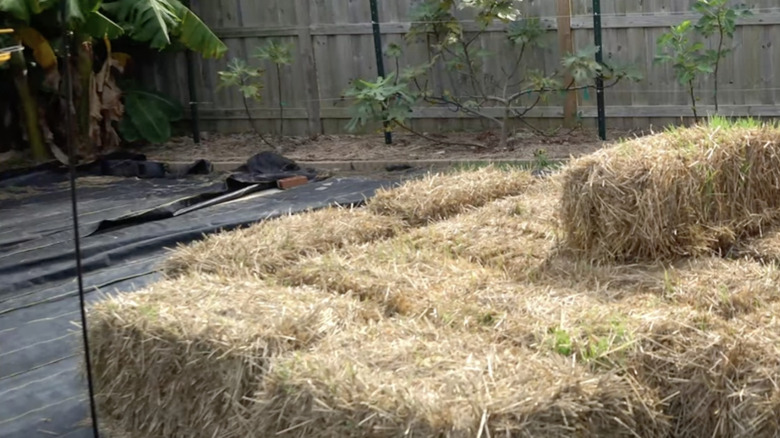
There's no denying you should be using straw in your yard and garden. It's cheap, easy to spread, and highly beneficial for your plants and soil. However, straw mulches filled with weed seeds can wreak havoc on your beds. Straw is essentially the leftovers of a grain harvest. That means there's the chance it retains some of the seeds from that crop. When you spread the straw over your garden, the grain seeds fall to the ground where they might germinate. Before you know it, you'll have barley, oat, or wheat seedlings everywhere. And, of course, any weeds going to seed in the field get picked up by the harvesters and incorporated into the straw, too.
How do you know if the bales of straw you just bought from the plant nursery or garden center contain viable seeds? At best, most product listings will state the straw has minimal dust and seed, like this four-pound bale of Out-Grow 100% All Natural Wheat Straw. You could try asking for recommendations from friends and neighbors who garden with straw, but it's likely going to be difficult — perhaps even impossible — to find completely seed-free straw. Instead, you can leave the bales to rot outside in the sun and rain for at least a month. Any viable seeds will die in the heat generated inside the bales or germinate in place. Hand pull the sprouts, let them die off naturally, or spray them with diluted vinegar to kill them. Keep your aged straw and fresh straw separate. Fresh straw usually has a golden-yellow hue that grows paler as it ages.
Distinguish straw from hay and avoid herbicide-sprayed straw
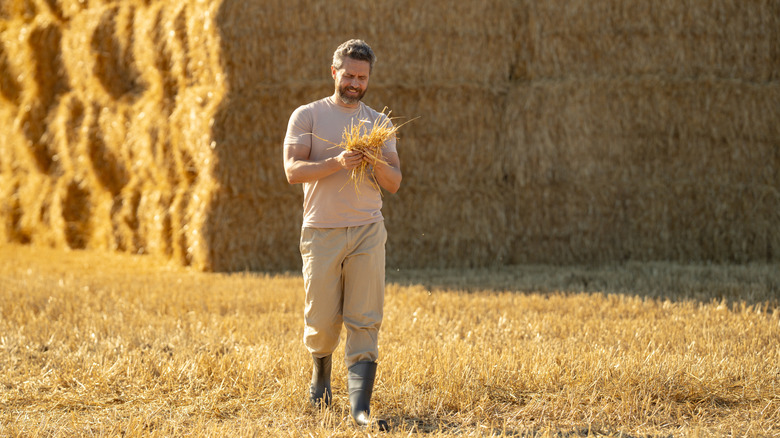
When it comes to eliminating any possibility of stray seeds, another straw mulch mistake that will damage your garden is not knowing what kind of material you're buying. A lot of gardeners confuse hay and straw, and they cover their backyard with weed seeds unintentionally. Hay is harvested from a complete crop, usually alfalfa or rye, that is grown for animal feed. While straw has its origins in grain crops and is sometimes also used as animal feed, straw and hay are different products. Unlike straw, hay should contain seeds. The seeds are what makes the hay so nutritious for animals. A bale of straw and a bale of hay look similar, and sometimes the terms are used interchangeably, so be extra cautious while shopping for straw mulch.
While seeds in straw mulch are annoying, you definitely do not want it coated in herbicides. Herbicides like aminopyralid, clopyralid, and picloram are often used to treat weeds in pastures and grain crops. They're considered safe for grazing animals. However, these herbicides can stay in the straw for a long time and damage the plants you want in your garden. The damage can manifest as poor seed germination, reduced yields, or changes in the shape of fruit and foliage. Look for herbicide-free guarantees and common herbicide chemicals in listings or packaging labels when buying straw mulch or confirm the lack of herbicide use with your supplier. If you do end up with a bale of contaminated straw, leave it out in the sun (away from sensitive areas) to break down the herbicide — it can take months — or dispose of it.