

Not Once A Day, Not Once A Week, Here's How Often To Water Snake Plant In The Winter
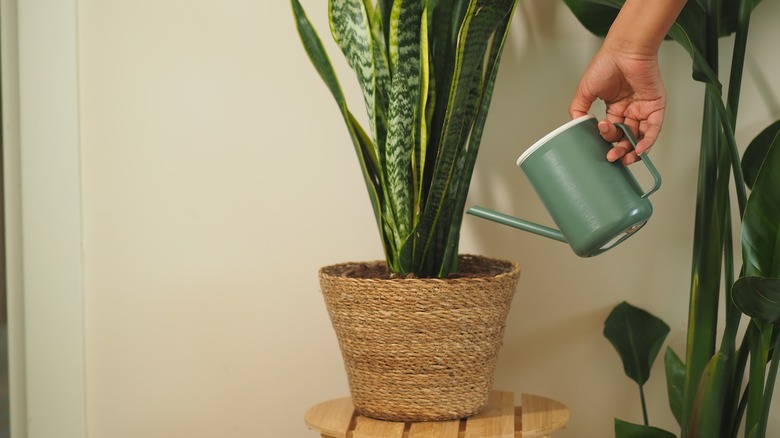
Watering a snake plant in winter follows a rhythm entirely its own. Whether or not this famously tough houseplant stays healthy through the coldest months hinges on you understanding that rhythm. Snake plants (Dracaena trifasciata) are herbaceous perennials native to central and southern Africa, where their clumping growth habit and the energy they store in their fleshy, leathery leaves help them to endure long periods of drought. A snake plant is just as resilient in your home. As growth slows in the colder months, the plant's water needs drop; it likes its soil on the dry side. In winter, you should water your snake plant once every one to two months, supplying it with just enough moisture to stop the soil getting bone dry.
As mentioned, snake plants are known for their hardiness, and that makes it easy to assume they're unaffected by irregular or incorrect watering schedules. Although that's true to an extent, part of caring for your snake plant for optimal growth involves avoiding both underwatering and overwatering. Even though snake plants survive drought well, they need to be carefully watered when growth slows in winter. Water only to keep the soil from drying out completely; always wait until the potting mix feels nearly dry before watering. In fact, overwatering is probably one of the biggest mistakes you've been making with your snake plant and the quickest way to cause it serious harm.
How to water a snake plant correctly in winter
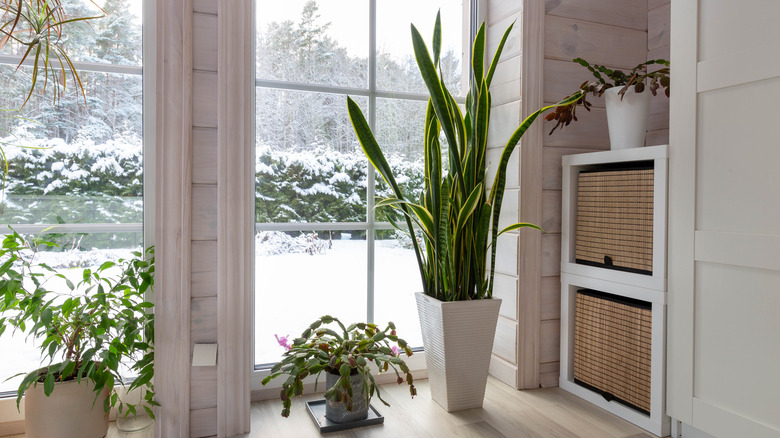
To keep your snake plants healthy all winter, the way in which you apply the water matters as much as how often you water. Always water the soil itself rather than pouring water down through the clustered center of the plant. Moisture can collect in the rosette of leaves, creating conditions that will encourage crown or root rot. Use a pot with ample drainage holes that's just large enough to contain its root ball. You want any extra water to drain away quickly. Snake plants survive far longer in dry soil than they do when it's damp.
Snake plants grow best in a well-draining potting medium, like sandy or loamy soil. Excess moisture evaporates more easily from a clay or ceramic flower pot than it does from a plastic planter, so this is the best choice for your houseplant. This type of container helps ensure your snake plant's roots don't sit in soggy soil all day. As a final precaution, note how long the soil stays damp after watering. If you notice that the potting mix stays moist for a long time, reduce the volume of water you use next time you give your plant a drink. Alternatively, you could amend your potting mix with coarse perlite, crushed lava, or pumice for better drainage and aeration.