

17 Decor Trends From Decades Gone By That Bring Back Holiday Nostalgia
We may receive a commission on purchases made from links.
Remember when Christmas was pure magic? You didn't rush around from sale to sale, finding the perfect gifts for everyone while staying within your budget. Disagreements over politics weren't on your radar — you were too busy chasing cousins around the Christmas tree (adorned with shiny glass ornaments and bubble lights) or sneaking the Hershey's kisses off the tops of peanut butter blossoms. Maybe the reason the Christmas decor trend of the year is all about nostalgia is that it lets grown-ups recall those magical, worry-free Christmas celebrations of childhood.
We took a chance to reminisce on 17 Christmas decor trends from bygone eras. Browsing the list, you might almost hear the nuts cracking in the mouth of a soldier-style nutcracker, feel the tickle of the tinsel icicles, see the glow of lights bouncing off shiny ornaments, and smell the ham that sat next to Grandma's holiday-themed glassware. Whether you just want to reminisce or you want to recreate the vintage look, our list leads the way, just like Rudolph's shiny nose has for decades.
Aluminum trees
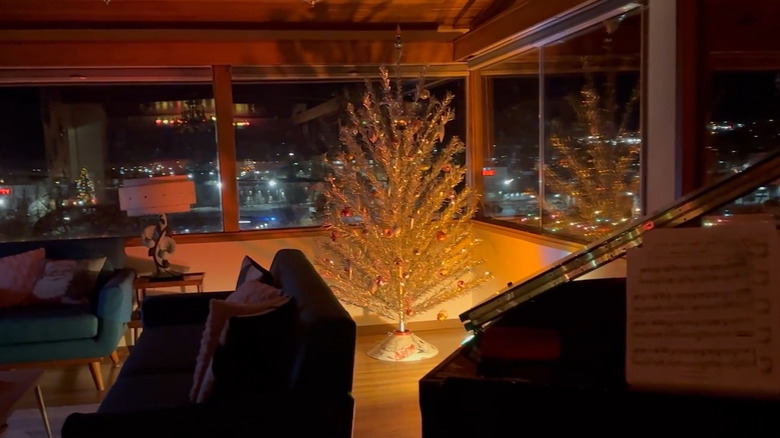
Was Charlie Brown to blame for the demise of this mid-century modern Christmas tree trend? We might never know for sure, but he did pass up the sparkly, colorful trees for his iconic drooping tree just two years before a slowdown in production of aluminum trees. This nostalgic trend was born in the late 1950s, when the Aluminum Specialty Company started producing the sparkling, tinsel-covered trees. Some people added motorized color wheels to create a dazzling light show on the branches. Production of aluminum trees stopped in the early 1970s, but you might remember them from your childhood if your parents or grandparents held onto theirs.
No one, not even Charlie Brown, can keep you from recreating this vintage trend, thanks to a resurgence in mid-century modern decor. Pair this Vickerman vintage aluminum Christmas tree with a BW Brands Christmas tree color wheel from Amazon. You can buy an authentic 1960s aluminum tree from auction sites or antique stores, but expect to pay several hundred dollars for it.
Shiny Brite ornaments
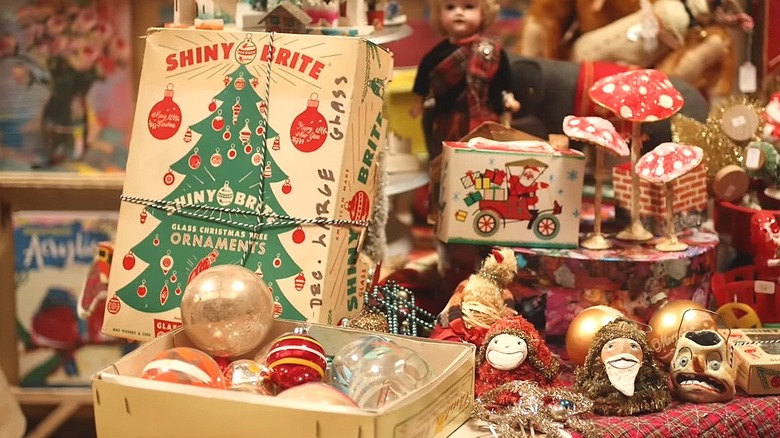
Forget buying brand new Christmas tree decor: The vintage ornament trend is completely taking over. You know the ones: brightly colored, shiny glass relics in various unique shapes, sometimes with textured designs or indentations with additional detailing. Shiny Brite was the big name in glass ornaments in the 1940s and 1950s — the secret to the shine was a layer of silver nitrate inside each ornament. But there were other brands that also created vintage glass Christmas ornaments.
Dress up that aluminum tree you ordered with these shiny, colorful ornaments. Shiny Brite ornaments are a vintage Christmas decor item you should keep an eye out for when thrifting — they're valuable because of their rarity. To keep the decorating budget low, pick up new replicas of the old baubles — like these Kurt S. Adler solid and reflector glass ball ornaments. Or, grab inexpensive shiny ornaments and use distressing methods, like rubbing pigmented paste wax on them or removing the shine from certain areas with fingernail polish remover.
Vintage Santa faces
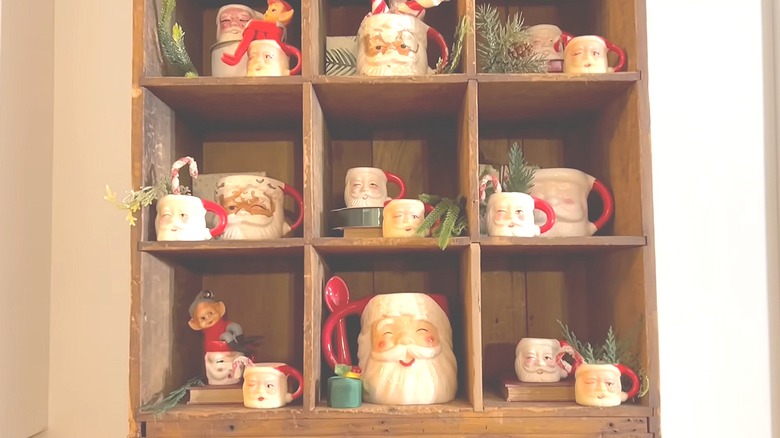
Images of Santa varied widely in the 1800s, but by the mid-1900s, the head elf took on his plump, jolly look, with rosy cheeks and his iconic white beard. You likely recall decor with that classic jolly face, whether it was a melted plastic two-dimensional Santa, ornaments on a tree, or other decorations. Perhaps one of the most popular versions was the Santa face mug, made popular by the Holt Howard Company in 1949. You might have sipped hot cocoa from one since they remained popular for decades.
Vintage mugs aren't the only option to bring this aesthetic to your seasonal coffee bar or holiday display. Snag these Transpac retro Santa Claus mugs for a festive option. Mugs aren't the only way to work in the vintage Santa look. Wrap your gifts in Wrapaholic Kraft vintage Christmas wrapping paper for vintage images. You can also find throw pillows, prints, figurines, and other new holiday decorations that display a vintage Santa look.
Soldier-style nutcrackers
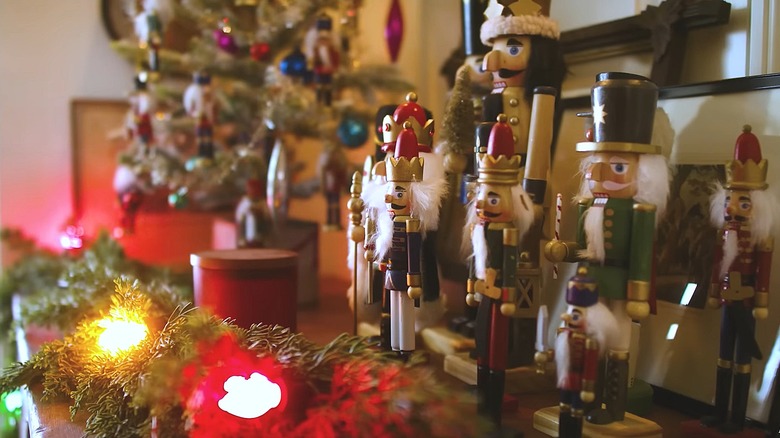
From chestnuts roasting on an open fire to bowls of hazelnuts, walnuts, and pecans still in the shell, nuts are closely tied to the holiday season. And where there are nuts in the shell, there's also sure to be a nutcracker nearby. Just the mention of the tool at the holidays likely brings to mind the iconic soldier-style wood figurine. Originating in Germany, these wooden Christmas icons made their way to America with soldiers returning from World War II. Along with the actual nutcrackers, The Nutcracker ballet is also quite nostalgic for many people, whether they danced in it or watched from the audience.
Nutcrackers are a vintage Christmas decor option that's still on trend, making them easy to find, even if you don't have any vintage figurines from your childhood. Many retailers sell decorative versions of the soldier nutcrackers, often in a variety of color schemes and decorative themes. You'll also find them adorning other holiday decor, from inflatables to wrapping paper.
Ceramic lighted trees
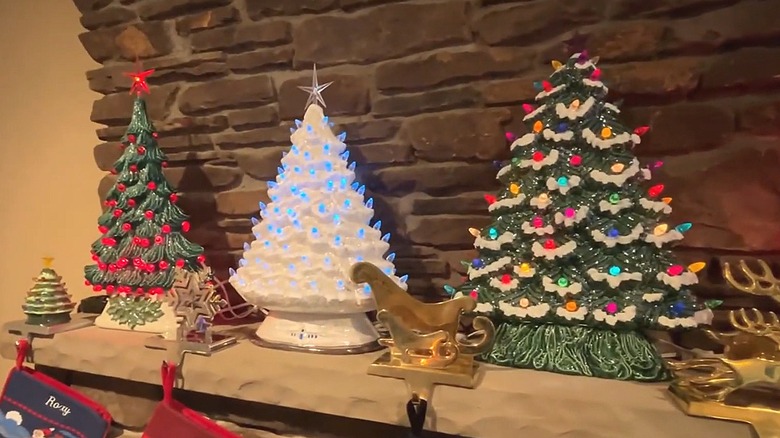
Lighted ceramic trees held onto their spot in Christmas decor for longer than many trends — they first appeared in the 1940s, made primarily by artists, and remained popular into the 1980s, which means there's a good chance your family (or someone you know) had one. While you could buy these trees premade, craft workshops were also popular in the 1960s and 1970s, allowing the everyday person to paint their own.
While the '90s might have pushed ceramic trees to the wayside, they're once again becoming popular, so it's time to dust off that family relic. If you have an older version, a few quick hacks will have your vintage ceramic Christmas tree ready for the holiday — carefully cleaning it and replacing burnt-out bulbs are two common restoration tasks. In lieu of a family heirloom tree, head to a local pottery painting studio to relive the '60s and '70s by painting your own modern-day version. Or, head to Amazon for a selection of premade replicas, like the Casafield ceramic Christmas tree.
Bubble lights
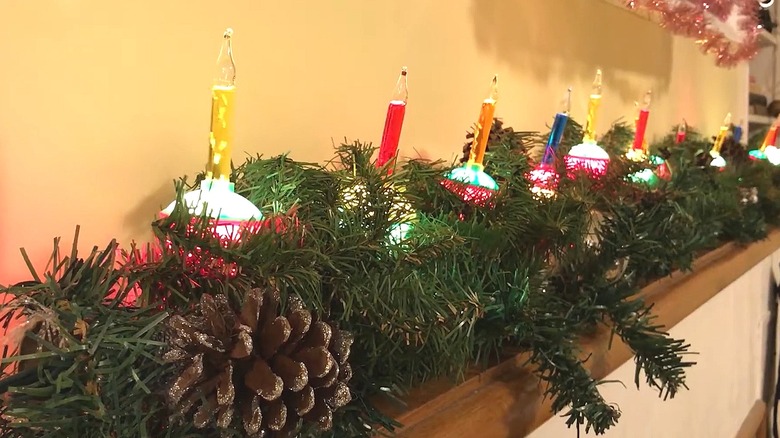
The glowing, bubbling liquid in bubble lights mesmerized generations of kids at the holidays — and likely holds a place in your heart, as well. NOMA Electric Corporation began producing the colorful lights, which look like mini-candles, in 1946. They lit trees throughout the '50s and '60s, with options including single lights and strings. You may even recall bubbling Santas, snowmen, and other shapes. The magic behind the bubbling is methylene chloride, which has a much lower boiling point than water and bubbles from the heat of the bulb.
Similar holiday lights, like Brightown Christmas bubble string lights, are still made to this day, so you don't have to scour antique shops to find them. Modern bubble lights are often UL-listed with improved designs that make them safer than vintage models — especially LED versions. If you decorate with bubble lights, use caution to avoid breakage, which could expose you to methylene chloride and pose health risks.
Window candles
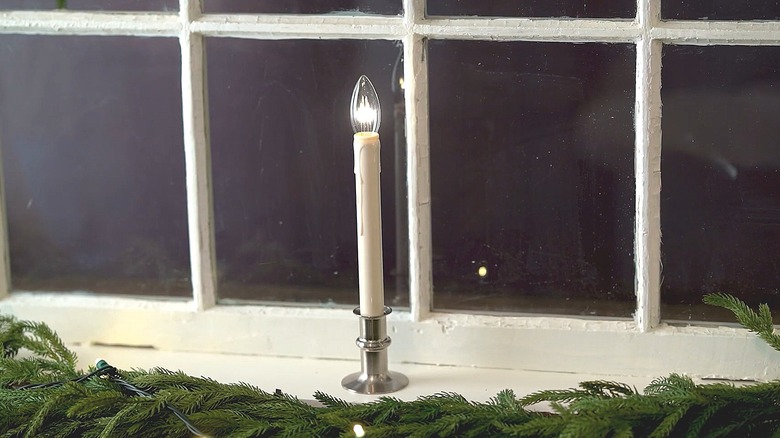
There are many stories about the origins of candles in windows, but one of the most common is the use of flickering candles in windows in colonial times. It told travelers who were passing by that the home was a safe spot with food and shelter available. Others use the candle to honor someone who has passed or who is away. Fast-forward to the 1970s and 1980s, when plastic plug-in candles with orange bulbs adorned many a window. Perhaps you grew up with a holiday night light in your window, thanks to your parents' love of the plastic candle, complete with plastic wax drips down the side.
While this tradition originated long before battery-powered candles, the safest option to implement it today is with flameless versions. LED models recreate the flickering effect, and some, like these RONXS window candles, come with timers and remotes. Plus, the window candle trend is one of many holiday decorating ideas for small spaces since it doesn't take up much space.
Citrus garlands
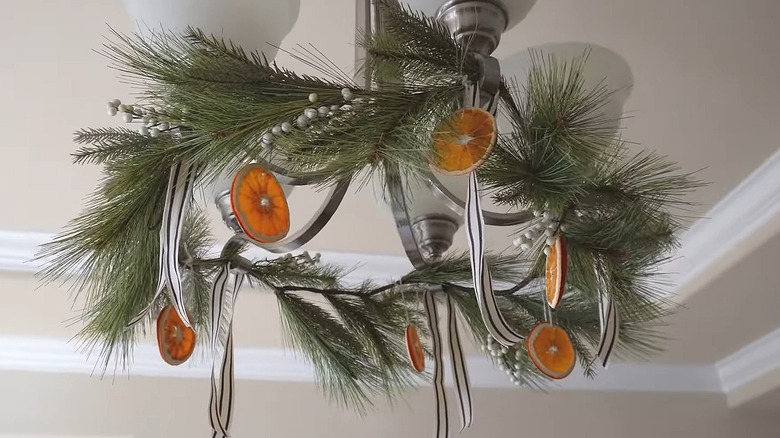
Did you wake up on Christmas morning to find an orange in your stocking? That holiday tradition dates back to the 19th century. During the Great Depression, oranges were an affordable symbol of hope, often serving as a gift and decor. One version of citrus-themed Christmas decor is the dried orange slice garland. Maybe you saw them hanging in your home (or even helped make them). Another DIY garland that was popular in the 20th century was stringing popcorn and cranberries. Both food-based garlands retain that nostalgic, old-fashioned feeling today.
As people search for ways to make the holiday more affordable and nostalgic, they're bringing back DIY options, like drying orange slices for homemade garland. Instagram and TikTok feeds include many tutorials on the project. You can make your own by thinly slicing oranges and baking them for three to four hours in an oven up to 250 degrees Fahrenheit. Then, string the dried citrus with pompoms, wooden beads, cinnamon sticks, or other holiday elements.
Non-traditional pink decor
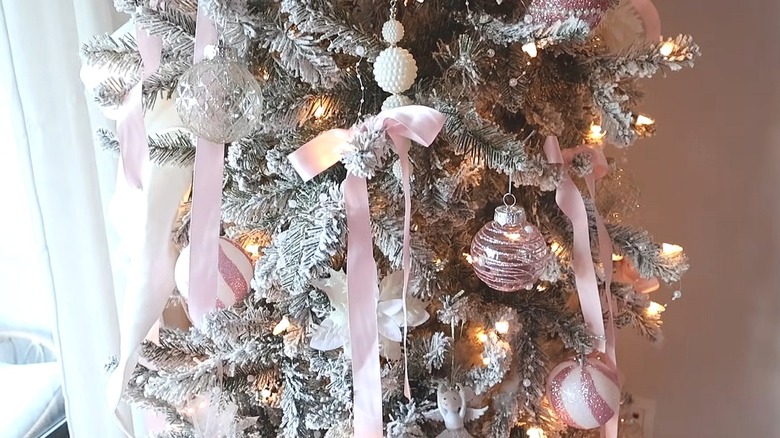
When you walk the aisles of modern-day retailers, like Michaels and Target, you might think the abundance of pink decor is simply a way to be quirky. But the color was popular in mid-century modern Christmas decor, from pastel pinks in the 1950s to bolder pink Shiny Brite ornaments. You might even recall seeing a pink tree that your parents or grandparents held onto. Other unique colors, including pastel blues and greens, also brighten Christmases during that time period.
Pink is one of the unexpected colors to use in your Christmas decor, especially if you grew up during the pink Christmas era. It could be a good alternative if you want something a little brighter and unusual than the traditional red, green, and gold color scheme (not that there's anything wrong with the traditional route). Since pink Christmas decor has seen a resurgence in recent years, you should have no problem picking up a variety of decor pieces to create this vintage look today.
Christmas villages
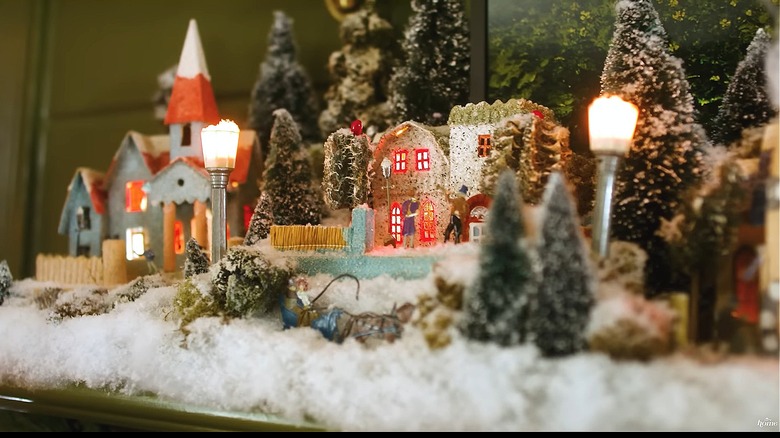
Today's holiday villages often include bright lights, skaters moving across plastic ponds, rotating amusement park rides, and other fancy actions. But they started much simpler. Putz houses are the perfect example — they were typically made of paper or cardboard and decorated to look like assorted buildings. Putz houses grew in popularity during the mid-20th century. Ceramic holiday village buildings entered the decorating scene in the 1970s and 1980s — you might remember gazing at massive village setups during your childhood, imagining you lived in the idyllic town.
Putz houses are one of many valuable vintage Christmas items to look for at thrift stores and estate sales. And, of course, you can start your own new ceramic village quite easily, but the buildings can be pricey. Another option is scouring thrift stores to piece together a village — either use the pieces as-is or refinish them to create a fresh look. Even Dollar Tree sells village components with its Cobblestone Corners Christmas Village Collection. Repainting or embellishing the inexpensive pieces lets you customize a new (but nostalgic) holiday village.
Icicles on trees
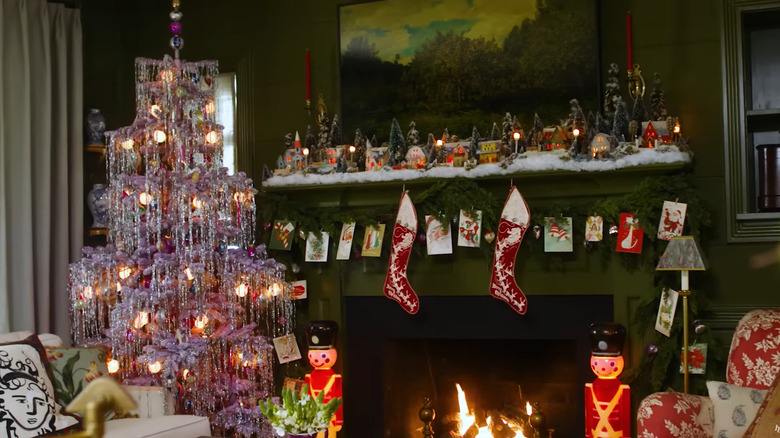
Another sight that might remind you of Christmas from your childhood is a tree covered in tinsel strands, mimicking the look of icicles. The silvery strands might be a pain to pick out of tree branches, but they sure added a sparkling effect to the trees of yesteryear and were particularly popular in the 1950s. Or, your tree might have been decorated with hard plastic spiraling icicle ornaments to create a similarly icy feeling. Either option filled in spots on the tree between other decorations and helped amplify the glow of the lights.
You can still purchase both types of icicle decorations for your modern-day tree. These Brite Star icicles recreate the tinsel-strand look, or grab Boao twisted plastic icicle ornaments to adorn your vintage-style aluminum tree. They also pair perfectly with colorful, vintage-style ornaments to recreate that 1950s Christmas vibe. Keep in mind that before recycling a real tree, you'll need to remove any tinsel strands.
Christmas-themed drinkware
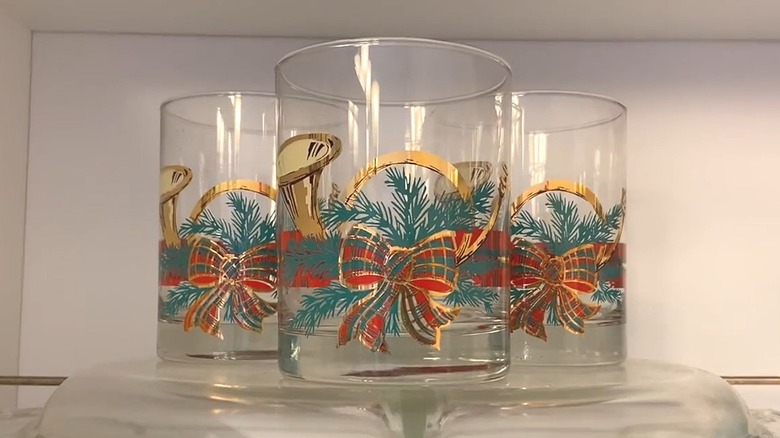
Like so many other festive, nostalgic Christmas traditions, patterned holiday drinkware was popular in mid-century modern design. You might have sipped eggnog out of George Briard holiday drinkware adorned with holly, nutcrackers, and other holiday symbols — the drinkware was a hot ticket from the 1950s to the 1970s. Other families leaned toward Hazel Atlas holiday drinkware, made between the 1950s and 1960s and similarly decorated with festive images.
It's still possible to find these and other vintage holiday drinkware sets at thrift stores and estate sales, often with a full set of glasses costing under $30. If you're worried about the safety of vintage cups, you can reuse thrifted glassware to DIY Christmas decor that will take your breath away. Or, grab a brand new set of glasses with a vintage vibe, like these Spode Christmas tree highball glasses. Festive glasses are a fun addition to the dinner table or your holiday bar, and they pair well with holiday-themed plates and bowls.
Trains around the tree base
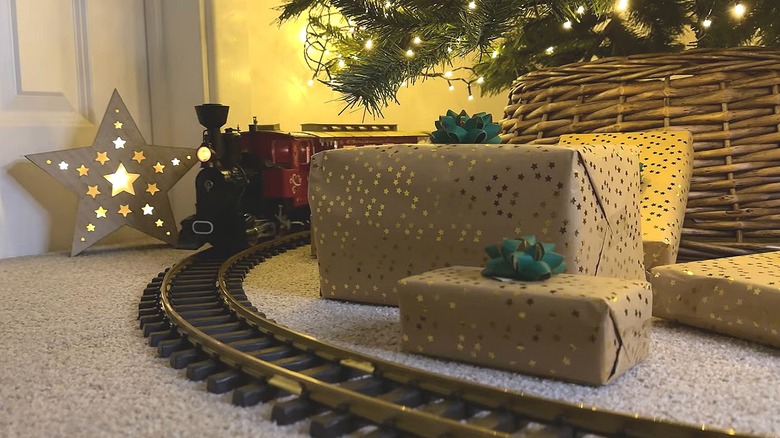
With increased accessibility to trains throughout America and Europe in the 19th and 20th centuries, model trains also grew in popularity during that time. Setting them up around Christmas trees became more popular in the 1920s and 1930s, creating a whimsical addition to holiday decorating. That was thanks in large part to the promotional material from the Lionel Corporation, which encouraged giving trains as gifts. Even if your home didn't have a train running around the tree, you may find nostalgia in many classic Christmas movies that featured this decor choice.
Not as many homes have trains underneath their trees these days, but you'll still find sets available around Christmas time, often with a holiday theme. Many options, like this PaLeyFer Christmas train set, feature lights and train noises to make it extra fun for little ones. If you already have a kid's train set around the home, set it up around the tree. You can attach mini bottle brush trees and other holiday extras to turn it festive for the season.
Handmade paper chains
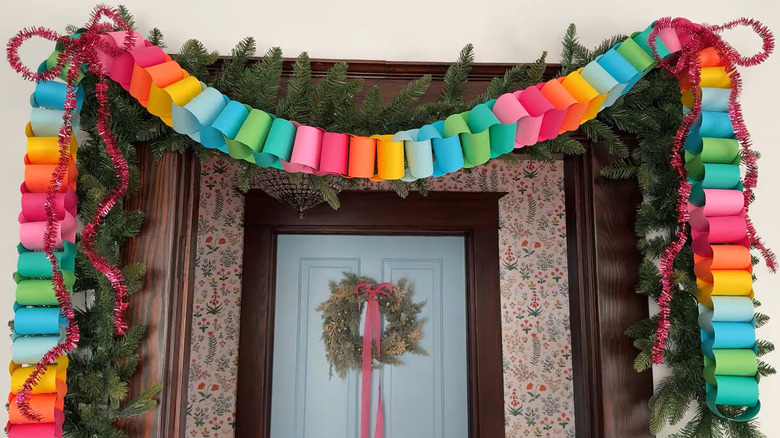
Chances are good that you made many a colorful paper chain in elementary school, whether it was a countdown to an event or an inexpensive way to decorate the classroom for the holidays. Paper chains date back much further, though, serving as a Victorian-era holiday decoration. It was a way to add more decorations to the tree while using what was around the home. Despite the simple construction, the chains were fun to make and added cheer to the decor.
If you thought your paper chain-making days ended in elementary school, you're missing the viral videos on TikTok of people recreating these colorful chains of paper. The best part about DIY paper chains is that you have complete control over the colors, patterns, strip sizes, and materials you use. Many viral videos use materials other than construction paper, such as felt or fabric. Those more durable options mean you can pull out the same chain year after year.
Handmade ornaments
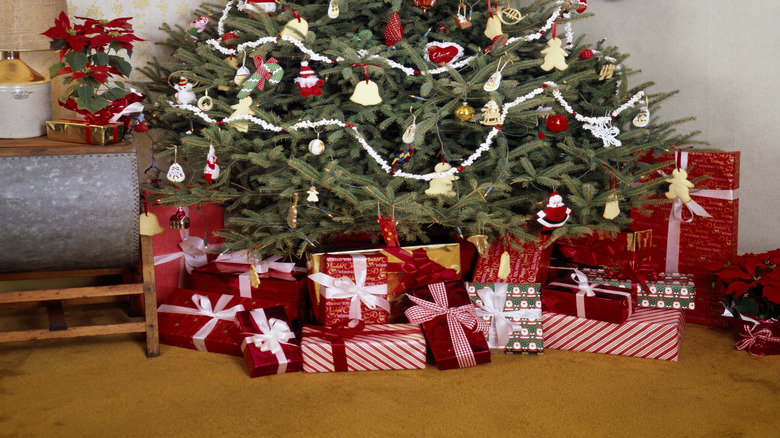
These days, ornaments are mass-produced and often made out of plastic. Even wood ornaments aren't often hand-painted unless you buy them from a local artist. But older ornaments often had the subtle variations that come only with hand-painting. You might also recall a tree full of handmade ornaments from your childhood, whether it was salt dough ornaments shaped into anything you could imagine or sleds made from craft sticks. Or maybe it's the homemade felt hobby horse candy cane covers that make you think of Christmas in your younger years. Unique ornaments with greater attention to detail evoke nostalgia, regardless of the era or design.
Why not make homemade ornaments your new tradition? Craft stores sell a variety of wood and ceramic ornaments ready for hand-painting. You can mix up a batch of salt dough or make DIY ornaments with your family for a personalized touch to the tree this year.
Blow mold decorations
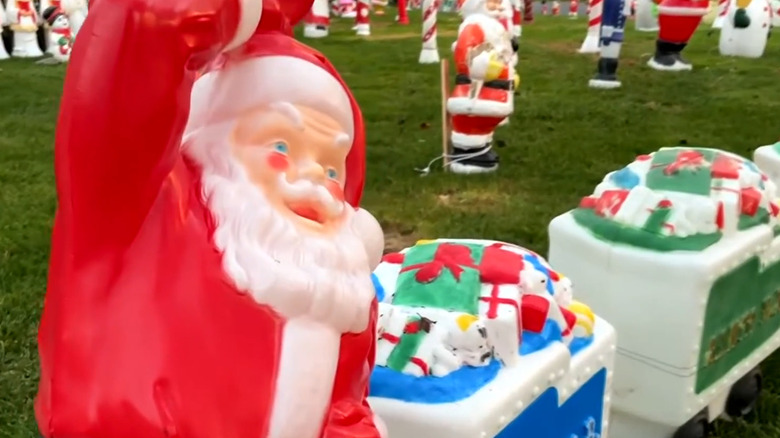
Long before massive inflatables as tall as houses and LED figurines that could light a runway, outdoor holiday decor was smaller and simpler. Seeing blow-mold holiday decor in antique stores could stir up all sorts of feelings of nostalgia. Popular from the 1950s to the 1970s, these hollow plastic decorations came in a range of shapes, from Santas to angels. The production process involved heating and blowing plastic into a mold to create the unique shape. You may recall glowing giant candles or a waving Santa from your youth.
While blow mold decor may have fallen out of favor, the pieces that were made held up well over the years, which is why you'll still often find them at thrift and antique stores. Newer reproductions can fool you, so check for a date printed on the bottom to verify the age. Older models may also have more aging or have older-looking plugs.
Vintage-style characters
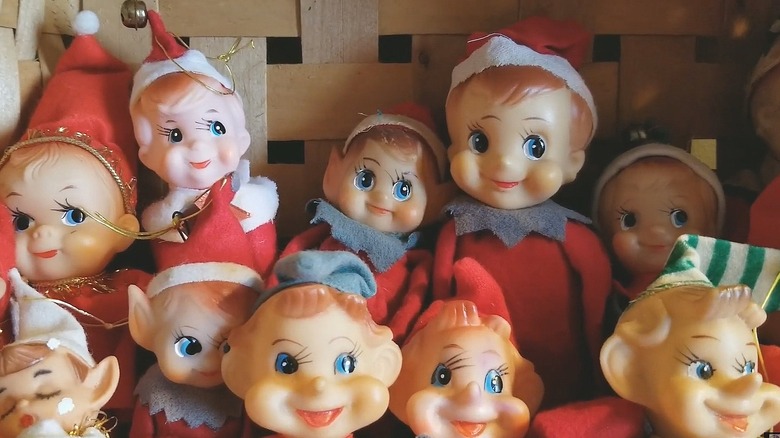
It's difficult to put into words what a vintage elf, reindeer, or Santa looks like, but seeing one brings back a wave of nostalgia. Retro reindeer might appear rosy-cheeked with big, soft eyes and minimalistic details. Older elves might look mischievous with wide faces and the traditional pointy hats. Your childhood Christmas decorations might have included popular holiday characters of the time, including Frosty the Snowman and Rudolph the Red-Nosed Reindeer.
With the return of retro decor to modern-day holidays, it's not difficult to find vintage-style characters on new products. Holiday wrapping paper is often available with retro graphics that will make you feel like a kid again. Wall hangings, signs, and figurines are also options that may come in vintage styles. Old vintage Christmas cards can be turned into frame artwork or banners for your home. Ornaments, like these Cuixinclt retro deer decorations, give your Christmas tree a retro touch.