

How To Stop Your Tuscan Kitchen From Looking Straight Out Of The 90s
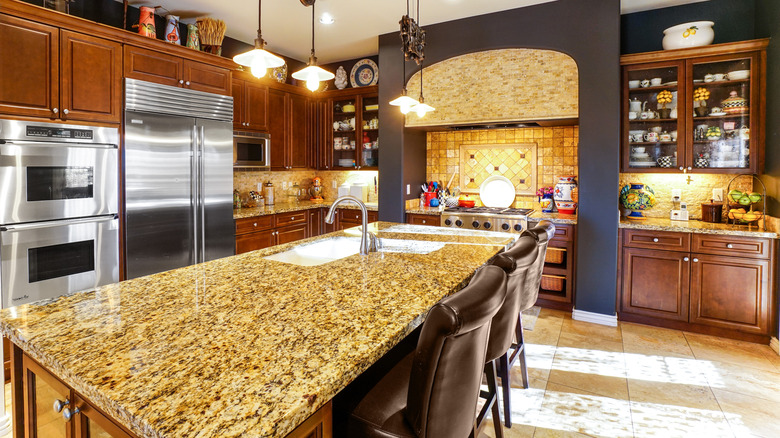
Many people will remember the Tuscan-inspired kitchens of the late 1990s and early 2000s. Ironically, it was an extremely popular interior design trend not so much in Italy but across North America, where homeowners were embracing the style for its rustic warmth and old-world charm. And believe it or not, the style is making a major comeback today — especially in kitchens — though it looks very different this time around. So if you've been thinking about leaning into Tuscan decor, now is definitely the time to do it. Just make sure your design choices reflect the updated interpretation to give your kitchen a timeless sophistication, rather than making it look like something out of the '90s.
Back then, the Tuscan kitchen aesthetic was all about bringing in dark, earthy tones, often shades of deep brown. Wood cabinets — usually in dark cherry stains — were the norm, as were orange-hued travertine tiles and granite countertops. Dark exposed wood beams were also quite popular in Tuscan-style kitchens, along with wrought iron features such as lighting fixtures and kitchen hardware. Walls tended to be beige, taupe, or brown, and sponge-paint finishes were everywhere. The combination resulted in a dim, closed-off space. And although all the colors were warm, the overall effect feels surprisingly cold when you look back at it now. Today's Tuscan-style kitchens, however, take a much lighter approach, blending authentic European character with modern farmhouse-inspired elements — resulting in a space that's bright, airy, and rooted in natural colors and textures.
How to bring the Tuscan kitchen style into 2025
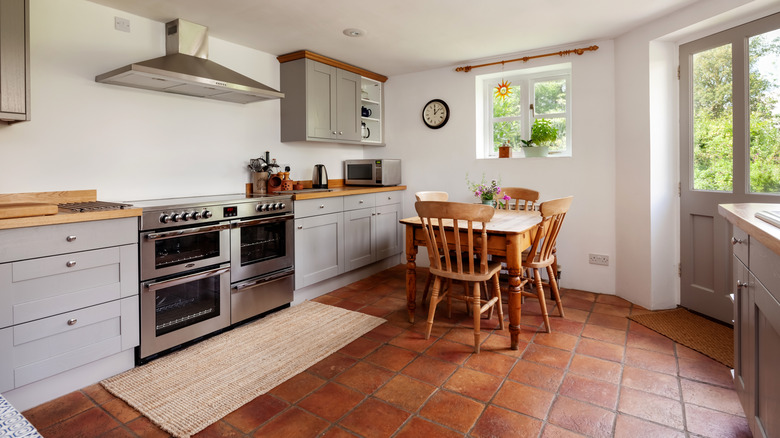
Although modern-day Tuscan-style kitchens still lean into earthy tones, the colors aren't nearly as heavy as they were in the 2000s. Rather than filling the room with shades of brown, today's palette centers on warm neutrals like off-whites, beiges, and creamy taupes, with darker earthy shades like brown and green woven in as subtle accents. Textured walls remain popular — but again, in a more subtle way. Instead of sponge-painting, try limewash paint to add old-world elegance to your space. Or consider a whitewashed stone accent wall — a common feature in Tuscan interiors.
The use of natural materials also remains key — especially wood features such as cabinetry, furniture, and exposed beams — just in lighter finishes. So, rather than cherry stains, think blond woods like bleached oak. Other details like flooring and countertops have evolved, too. While Tuscan kitchens might be making a comeback, travertine tiles aren't. Opt for terracotta tile floors instead — the outdated kitchen flooring is finally coming back, and it will instantly give your space a European feel. Alternatively, a terracotta backsplash would bring a warm and sunny vibe, too. For countertops, consider a lighter stone such as white or off-white marble with warm gold, beige, or brown veining.
Finally, natural light is an essential detail as well. In the late '90s and 2000s, kitchens often featured heavy blinds to amplify the earthy vibe. But today, it's all about open, bright spaces. Choose lighter window treatments in natural materials like bamboo or linen that will let in plenty of light to keep the overall space feeling airy and inviting.