

20 Plants That Look Similar To Hibiscus For A Low-Maintenance Tropical Vibe
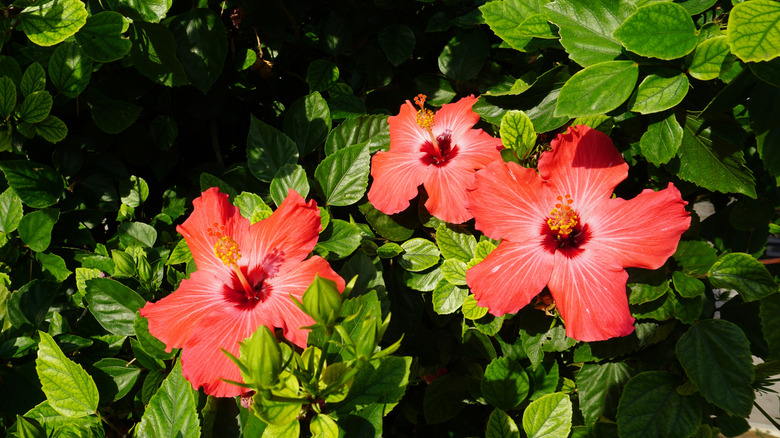
With their large, trumpet-shaped blooms and rich, bright colors, hibiscus flowers are a wonderful addition to any garden. However, these plants may not suit everyone. Tropical hibiscus flowers can only really flourish in specific environments, while certain perennial hibiscus plants need warmth and sun to thrive. Furthermore, hibiscus flowers need to be constantly kept watered and moist, which can be difficult if you live in a climate that's prone to drought. Thankfully, there are some brilliant hibiscus dupes out there, from large perennial shrubs to small flowering annuals.
These shrubs and flowers have been picked for their appearance and low maintenance. Like hibiscus, the plants on this list tend to have those iconic trumpet-shaped flowers, but they come in different colors and sizes with different environmental needs, so you can pick the plant that fits your aesthetic and your climate. When picking your hibiscus lookalike, take note of your USDA hardiness zone, your climate, soil type, and how much sun your yard gets. Doing so will help you pick a plant that can really flourish in your garden.
African mallow
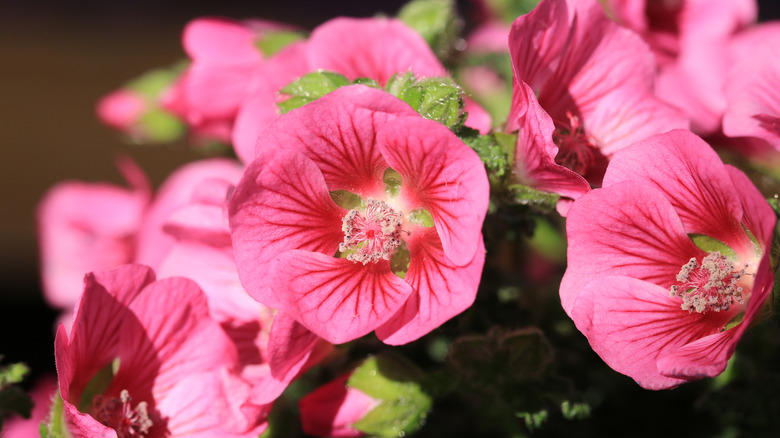
African mallow (Anisodontea capensis) is an easy to grow shrub that produces stunning pink and purple flowers. Almost like mini hibiscus blooms, these flowers appear all over the plant from spring until the first frost. Hardy to USDA zones 8 to 11, the African mallow can thrive in a range of soil types as long as there's decent drainage. If you can, plant this shrub in a location that gets morning sun and afternoon shade. It's fairly tolerant of drought when it has established itself, so it'll be perfect if you live in a hotter climate.
Desert globemallow
If you're looking for a drought-resistant plant that thrives without much water and produces dazzling, bright orange blooms, the desert globemallow (Sphaeralcea ambigua) may be perfect for you. This native flower is hardy to USDA zones 6 to 9 and adapts well to hot, dry environments. Desert globemallow grows well in both sandy and clay soils and prefers full sun. Growing up to 5 feet tall and 4 feet wide, it's the largest species of globemallow. However, you can cut it back in the fall to maintain a compact shape if you wish.
Musk mallow
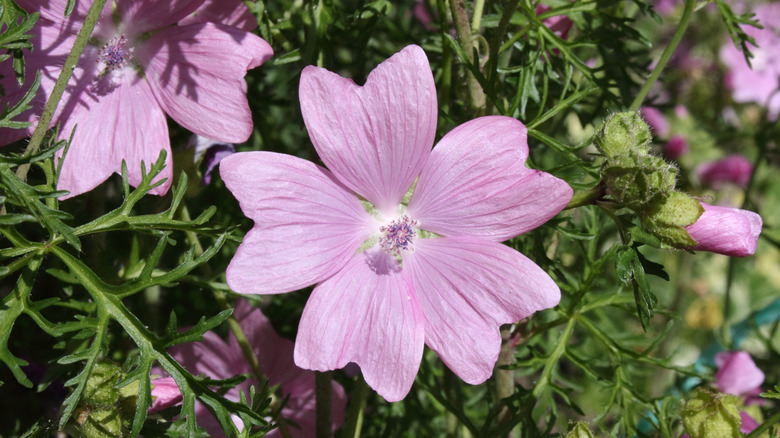
Musk mallow (Malva moschata) is a small, beautiful perennial that's suitable for growing in USDA zones 3 to 8. Their large, pink, shaped blooms are bright and cheery, covering the plant from early summer to fall. You can grow musk mallow in both full sun and partial shade, with the plant growing happily in both moist and dry soils. They're also hardy to strong winds and are not frost tender, making them a great flower for a range of environments. Musk mallow grows to around 3 feet in height with a spread of 2 feet.
Flowering maple
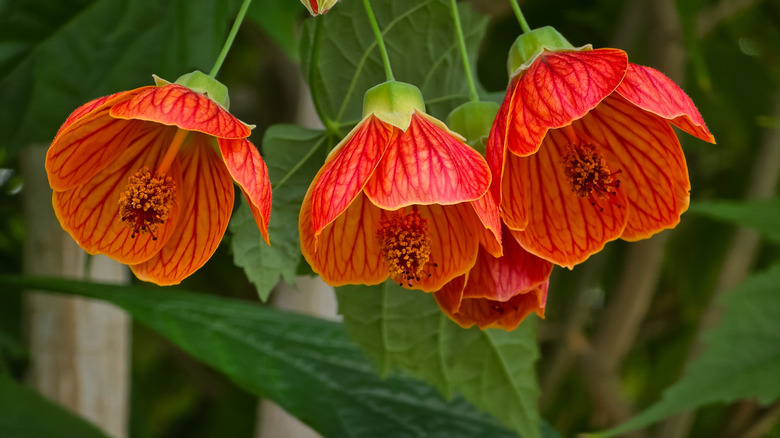
The flowering maple (Abutilon pictum) is a tropical evergreen shrub that's hardy to USDA zones 9 to 12. As a relative of hibiscus, this plant has those long, intriguing stigmas that stick out beyond the petals. However, the flowers are tighter and more cup-shaped than hibiscus blooms. You can find flowering maple in blooms of red, orange, yellow, and pink, with various cultivars and hybrids available. These plants can grow in both full sun and partial shade and are adaptable to a range of soil types. Fast growers, they can also reach over 12 feet in height.
Mexican tulip poppy
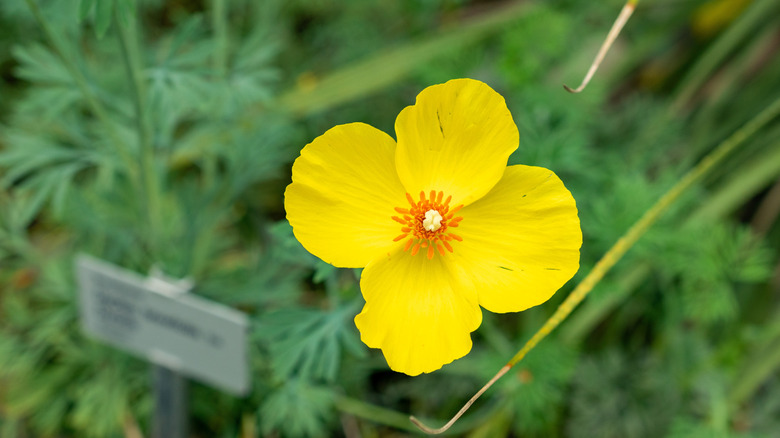
Native to the highlands of Mexico and best grown in USDA zones 8 to 11, the Mexican tulip poppy (Hunnemannia fumariifolia) is a sunny little flower that only reaches around 24 inches in height. However, its beautiful, bright blooms pack a big punch! Usually grown as an annual from seed, the Mexican tulip poppy can be difficult to transplant, so it's best to sow it directly into your garden. It prefers a spot in the full sunshine and can tolerate drought well once established. If you live in a colder climate, ensure it has protection from a south-facing wall.
Petunia
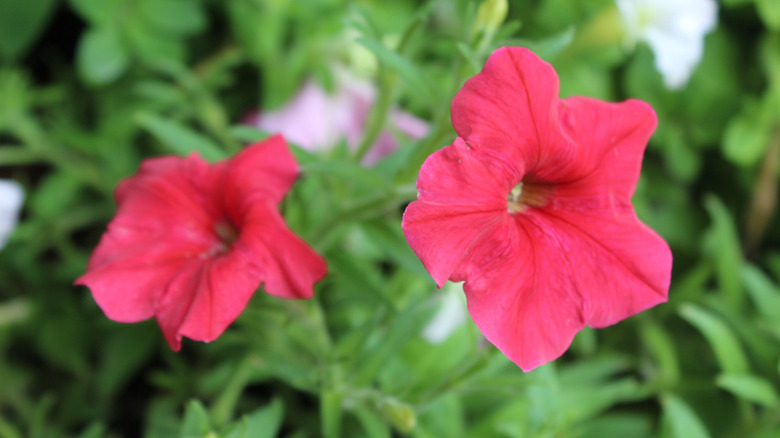
Like hibiscuses, petunias (Petunia spp.) have those striking, trumpet-like blooms and come in a range of bright colors. Hardy in USDA zones 2 to 11, these plants can be kept as low-maintenance annuals that flower nonstop from spring until frost. They're also extremely tolerant of heat and usually don't need that much water. There are many different petunia varieties to pick from, too — from the gothic 'Black Velvet', which produces purple-black blooms, to 'Night Sky,' which showcases stunning spots — meaning that there will always be a flower perfect for your yard. You can also pick from spreading, compact, and large varieties.
Pink pavonia
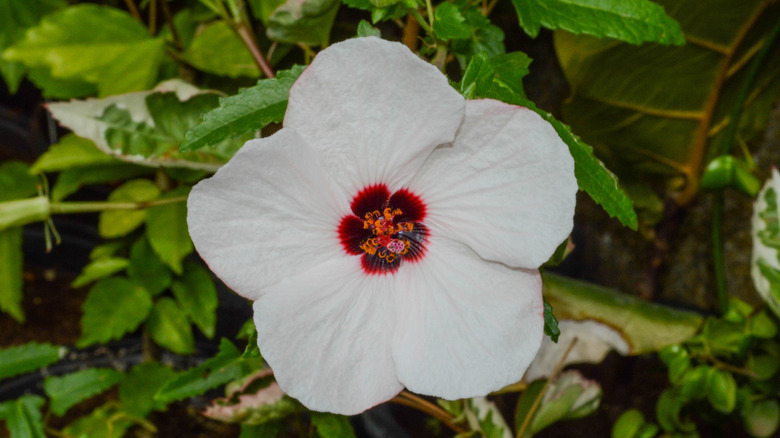
Hardy to USDA zones 8 to 10, the pink pavonia (Pavonia hastata) is native to many countries in South America, including Brazil and Argentina. The hibiscus-like blooms of the pink pavonia are light pink or white, with rich red hues around their throats. These shrubs can grow up to 3 feet in height with a width of around 4 feet. You can plant pink pavonias in both full sun and partial shade, as long as you ensure that the soil is well-draining. They also need to be watered regularly for them to stay happy.
Crossvine
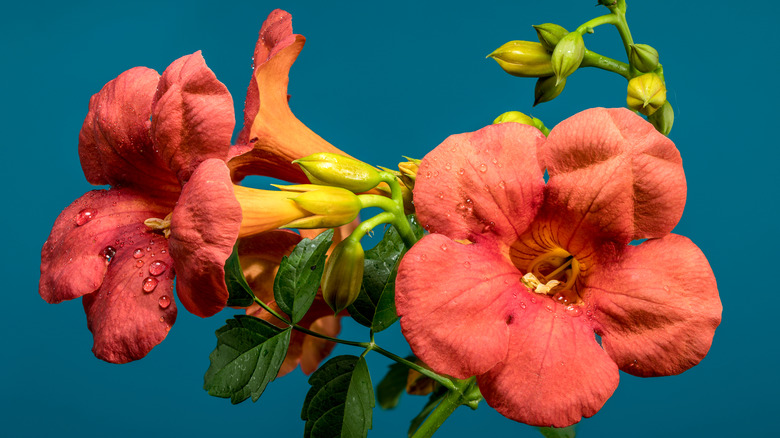
Crossvine (Bignonia capreolata) really has that tropical vibe, with incredible trumpet-shaped blooms that contain hues of red, yellow, and orange. Many of these blooms have a breathtaking ombre effect, making them a real show-stopper addition to your garden. Suitable for USDA hardiness zones 5 to 9, crossvine tolerates a large range of growing conditions and thrive in both shade and full sun. However, more sun does tend to mean more flowers. Crossvine is a vigorous grower and can grow up to 50 feet long. This vine climbs by tendrils, so it usually needs support.
Amaryllis
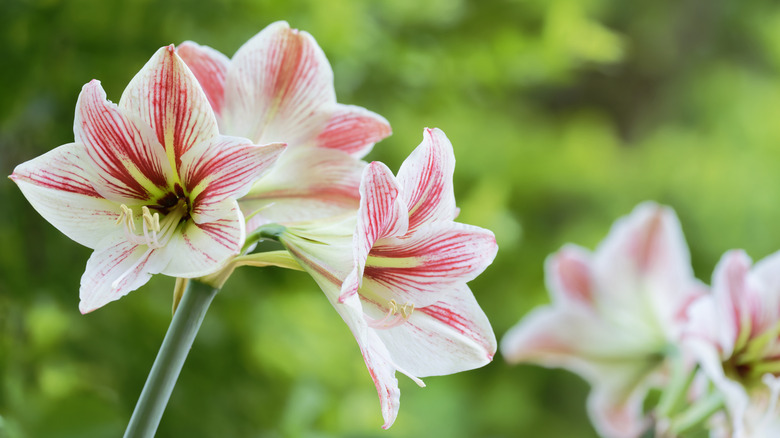
Amaryllis (Hippeastrum) have large flowers and long, prominent stamens, similar to hibiscus. However, they bloom on short, upright, leafless stalks that grow from a bulb and are much happier grown in pots. There are hundreds of species and hybrids of amaryllis available, from trumpet amaryllis, which look much more lily-like, to cybister amaryllis, which have interesting, spider-like flowers. Amaryllises are usually hardy to USDA zones 8 to 10 and are best grown in narrow containers. They're usually grown as houseplants but can be moved outside during the summer to a location that gets full sun.
Tree mallow
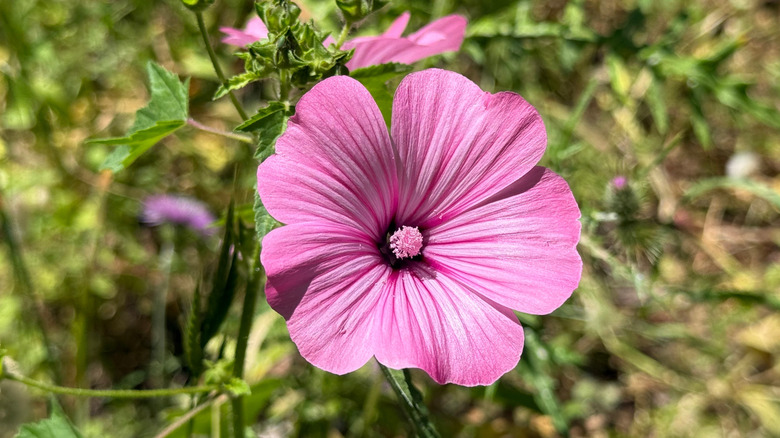
If you are looking for an annual hibiscus dupe, rose mallow (Malva trimestris) is a fantastic option. Grown in USDA zones 2 to 11, its white and pink saucer-shaped blooms really make an impact, covering the shrub from July until September. This plant prefers a spot in the full sun, but it may need afternoon shade if grown in a hotter climate. Sow rose mallow seeds in moist or dry soils that are well drained two weeks before the last frost, and ensure that you are deadheading the plant throughout the season to promote new blooms.
Moonflower
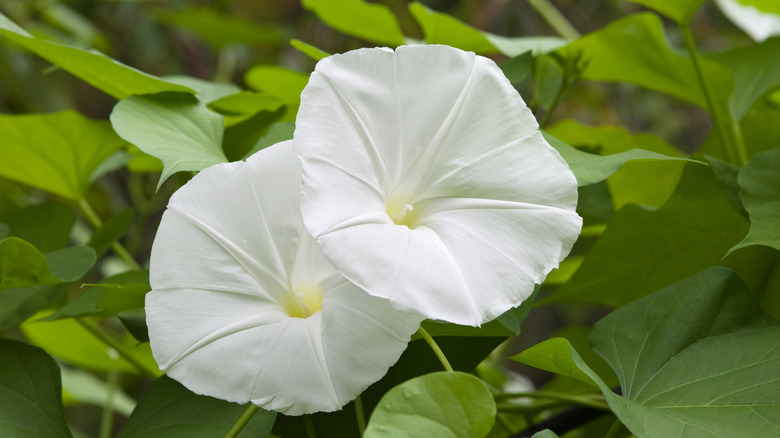
The moonflower (Ipomoea alba) gets its name from the unique way its flowers open at dusk through the summer and fall months. There is something magical about this vine, with its cup-shaped, bright white flowers spreading almost flat, as if it's trying to receive lunar signals from outer space! Although it's a perennial, moonflower is often grown as an annual. Plant moonflowers in clay, loamy, or sandy soil in a spot with full sun. They can grow rapidly in warm weather, reaching 15 feet in height and 6 feet in width. These plants are most often grown in USDA zones 10 to 12.
Yellow bells
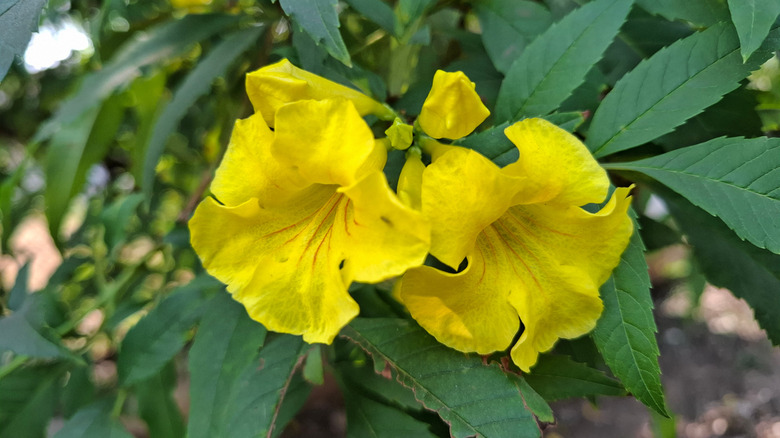
The bright yellow blooms of yellow bells (Tecoma stans) are reminiscent of hibiscus flowers, but this evergreen perennial can get particularly big. Reaching as high as 25 feet tall, you can even grow yellow bells as a tree in the right conditions. Yellow bells are winter hardy in USDA zones 10 and 11 and prefer a spot in full sunshine. They do well in moist, well-drained soil, but it helps to let the soil dry out in between waterings. Make sure you're pruning your yellow bells after flowering to keep them the size and shape you want.
Abutilon suntense
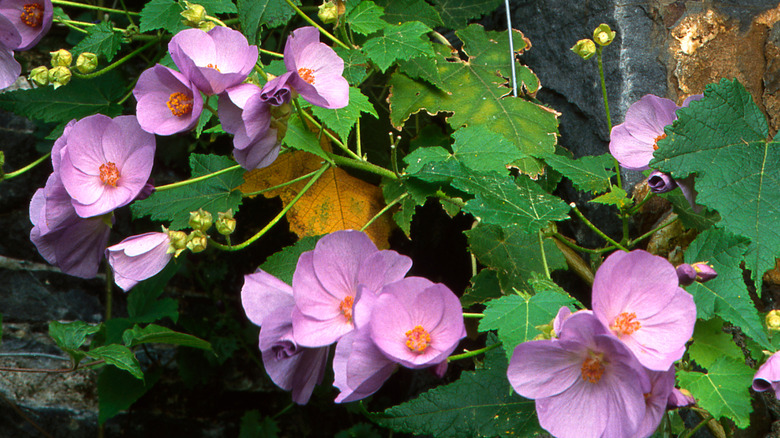
Abutilon suntense (Abutilon x suntense) is a hybrid evergreen shrub that is hardy to USDA zones 7 to 10. It has gorgeous purple blooms that appear in the spring and summer months. You should grow abutilon suntense in partial or full shade in moist soil, and it'll usually be happy in various soil types, including sandy and clay-based soils. This shrub is a fairly fast grower and can reach a height of 26 feet. It may need staking if not grown near a wall, but pruning will keep it more compact and bushy.
Common mallow
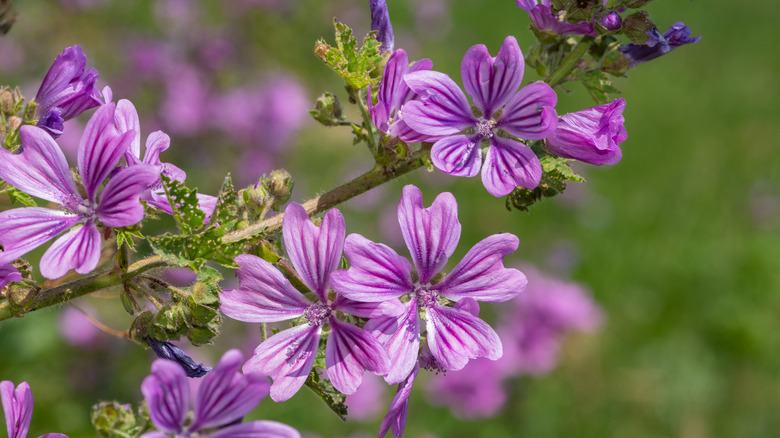
Common mallow (Malva sylvestris) is a beautiful flower that can be grown as both an annual and a perennial. Its purple-pink blooms have intriguing stripes, making the plant really stand out in a garden. Hardy to USDA zones 4 to 8, common mallow can be grown in both full sun and partial shade. It prefers well-drained soil with medium moisture, but tends to be pretty easy to grow in a range of conditions. You can grow these flowers from seed, and they will self-seed in your garden if the environment is right.
Passion flower
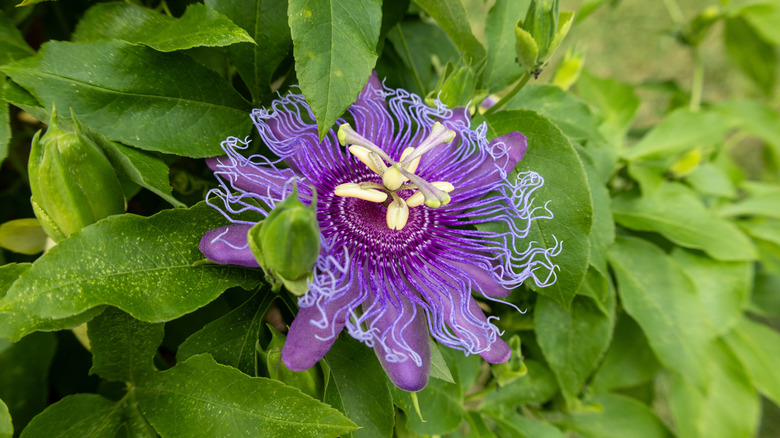
Despite their exotic, tropical look, passion flowers (Passiflora incarnata) are fairly easy to grow, being hardy to USDA zones 7 to 11. These flowers should be planted at the base of a fence or trellis to give them the support they need. Although they can grow happily in some shade, passion flowers prefer a spot in the full sunshine. Once established, they're tolerant of dry conditions and resistant to many common garden pests. You will need to prune your passion flower to manage the plant's size and shape, however.
Meadow cranesbill
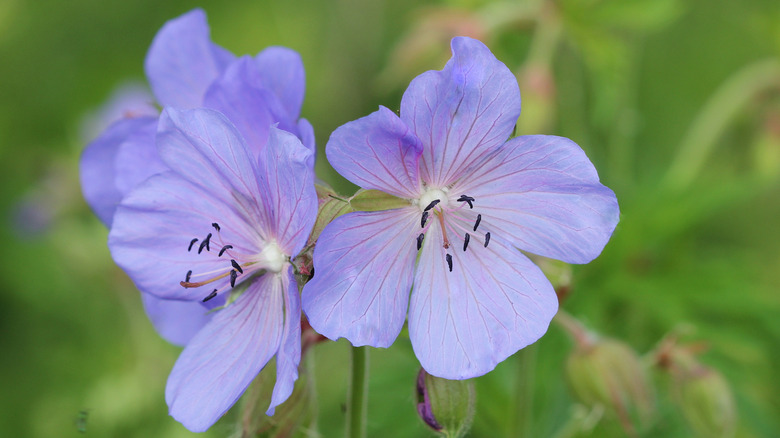
Meadow cranesbill (Geranium pratense) is a sweet and dainty clumping perennial that brings an enchanting cottage garden vibe to your yard. In June and July, blue-purple flowers bloom in clusters amongst the rich, green foliage. Hardy to USDA zones 4 to 8, you can grow meadow cranesbill in both full sun and part shade. It prefers moist, rich soils that are well-draining. Meadow cranesbill can suffer in hot, humid summers, though, so this may not be the right choice for you if you live south of USDA zone 7. It may need staking if it grows tall.
Four o'clock
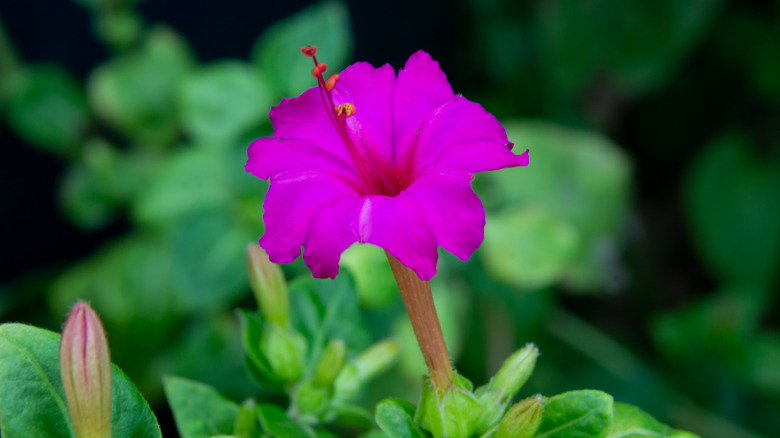
Native to tropical South America, four o'clocks (Mirabilis jalapa) are bright, bold blooms that are hardy to USDA zones 7 through 10. The flowers open up late into the day (hence their name) and come in a range of colors, with variegated and patterned varieties available. Four o'clocks can thrive in most types of soils, but they prefer a spot in the full sun. These tender perennials are often grown as annuals, and you can grow them from seed in the spring once the threat of frost has passed.
Levant cotton
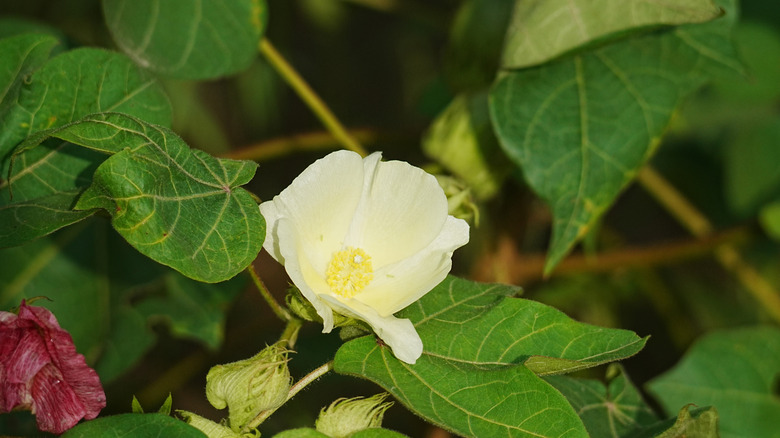
Levant cotton (Gossypium herbaceum) is a species that is grown commercially to produce cotton. However, its attractive, hibiscus-like blooms make it a nice garden addition, too. Its flowers come in hues of white and yellow, with purple markings around the neck. You can grow Levant cotton in USDA hardiness zones 9 to 11, with the plant needing a long, hot summer to really flourish. Plant it in a spot with full sun in moist, well-drained soil. Because it is not frost-hardy, Levant cotton can only be grown as an annual in many U.S. climates.
Island bush poppy
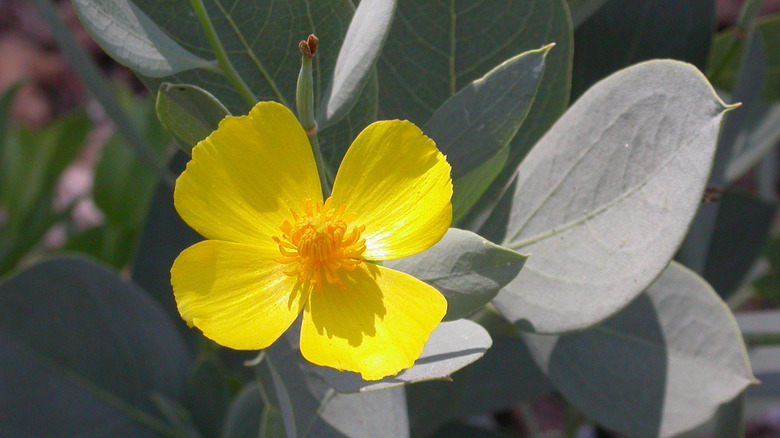
The island bush poppy (Dendromecon harfordii) is a flowering shrub native to the islands of Santa Cruz and Santa Rosa. Bright yellow blooms cover the plant in the winter and spring, although, in some cases, it can flower throughout the year. Hardy to USDA zones 8 to 11, this fast-growing, easy-to-maintain shrub can reach a height and spread of up to 10 feet. You can plant the island bush poppy in both full sun and partial shade, and it can tolerate dry soils once it has settled in. It needs well-draining soil to thrive and can easily handle sand or clay.
Wild petunia
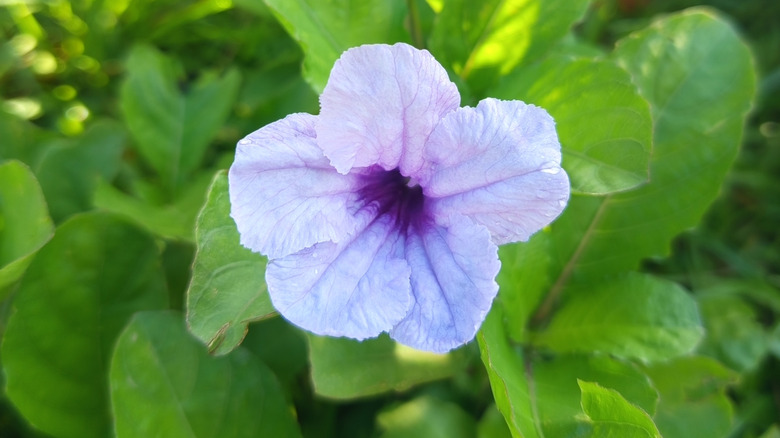
If you want to bring the vibe of a wildflower garden to your yard, the wild petunia (Ruellia nudiflora) may be the perfect hibiscus look-alike for you. Hardy to USDA zones 4 to 9, this small flower only reaches 1 or 2 feet in height – but its blooms are truly lovely. Blooming from April to October, wild petunia is easy to grow and care for, and it can be used as a purple flowering ground cover. It can be grown in shade, partial shade, or full sun, and it doesn't need much watering. It does spread by seed, though, so you may want to keep on top of deadheading.