

The Best Tips For Decluttering Your Garage And Things To Avoid

A lot of people avoid their garages because the clutter stresses them out, but that doesn't need to be the case. You can get your garage in order and stop thinking about it as simply a place to keep junk you barely need. Instead, think of the space in relation to what you could be doing there. A garage is a great place to start a hobby that may enrich your life and the lives of those around you. After all, many of our fondest memories involve sitting in the garage under a warm lamp, learning to paint alongside siblings, or constructing a model train set with a grandparent. Or maybe you just need a place to exercise or park a car.
However you plan to use your garage, first you need to make the space. This might be a daunting process. Many garages are stacked high with boxes and filled with clothing racks, making it hard to even walk through. But chances are, you'll decide you don't need many of those things once you actually start to sort through them. There are also several tips you should keep in mind while reorganizing the space. For instance, you should get rid of things that are broken. Also, if you have any duplicate items, like mini fridges or hydraulic jacks, you can probably take one of them to Goodwill. You'll notice a change once you start to deliberately plan your garage rather than using it as a thoughtless repository for things you may need in the future.
Take everything into the driveway
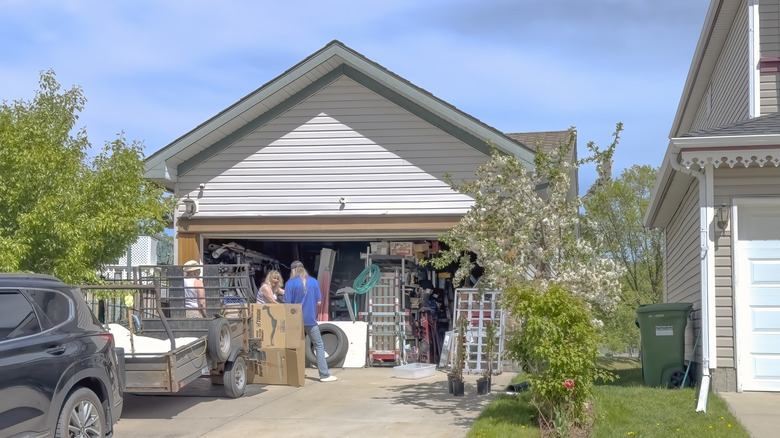
If you want to move your car into the garage, sometimes the first step is to move your junk into the driveway. Once you lay everything out on a flat surface, it will be easy to assess what you need and what you don't need. When you put everything back into the garage, you'll be able to reorganize as well. You can make this method slightly less chaotic by laying things out by category. So tools can go on one part of the driveway, while exercise equipment can go on another.
It's crucial to check the weather before you move stuff out of your garage. You definitely don't want your stuff to get soaked, because not only will it ruin some items, but the process of drying things off will take a lot of time and effort. To keep your items from getting dirty, you should lay down tarps or blankets.
Have a garage sale
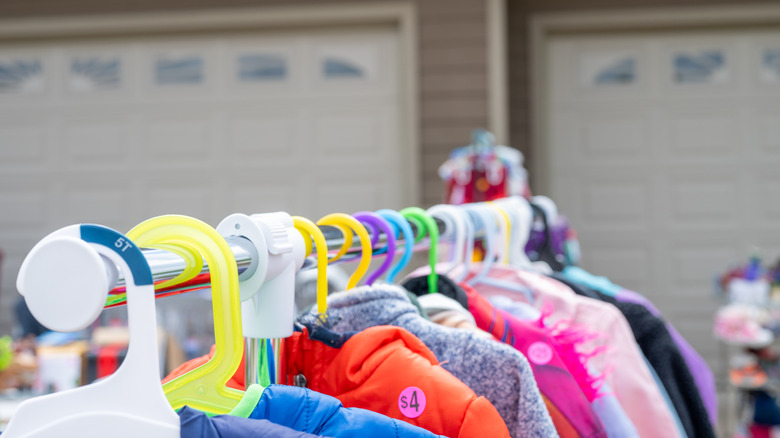
A garage sale is an excellent way to get rid of clutter, but before you start planning, there are a few things you need to check. First, make sure there are no local ordinances prohibiting garage sales on certain days, and second, make sure that your HOA allows it. Some neighborhoods even have garage sale days, which are advantageous because they drive traffic to your neighborhood. The next step is to get the word out. You just need to make a sign advertising the date and location and hang it at the entrance to your neighborhood. You can also use social media apps like Facebook to advertise a yard sale.
You'll need tables to spread out your belongings. Try to avoid purchasing these, because they can add to the clutter. If you or someone in your family is a member of a local organization (e.g., a church), try borrowing some tables from them. You can also put things on a blanket or make tables using sawhorses and plywood. Attach stickers with prices to your items well in advance so you don't have to price things on the spot. When you set prices, remember that the goal of your garage sale should be to unload junk, not to make a ton of money. Also, remember that people don't carry cash as often anymore, so you'll need to download a mobile payment service like Venmo or Zelle. You can also attach a credit card scanner to your phone.
Remove the big things first
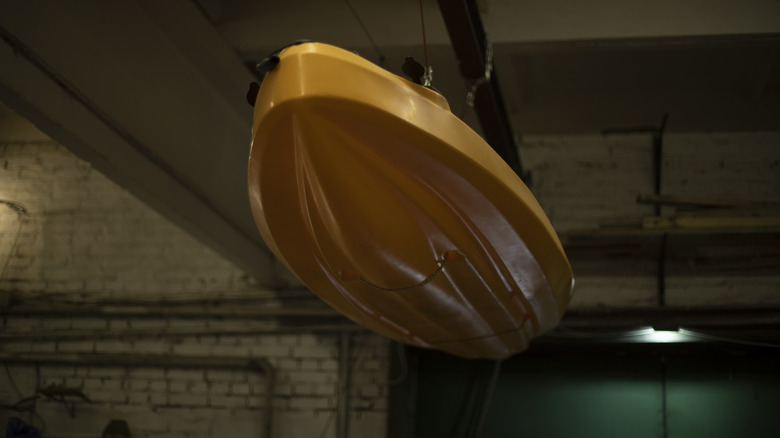
One way to declutter is to move everything out of your garage and move it back in. This will allow you to take account of everything you own and decide what to keep and what to get rid of. But you should start by removing large objects. You will feel that you've made a lot of progress when you see space open up in your garage, and this will encourage you to keep working. Once you take a look at those parts of the floor you haven't laid eyes on in years, you'll be able to imagine your garage when it is fully cleared. This will also give you space to organize the smaller objects in your garage.
When removing large objects, it's important to keep safety in mind. The last thing you need is to throw out your back. Even if you don't hurt yourself, you don't want to exhaust yourself as you're starting. That's why you should always lift from the hips and even enlist the help of a second person when moving couches and canoes. You can also try putting heavy objects on rollers or even using a dolly.
Reduce duplicates
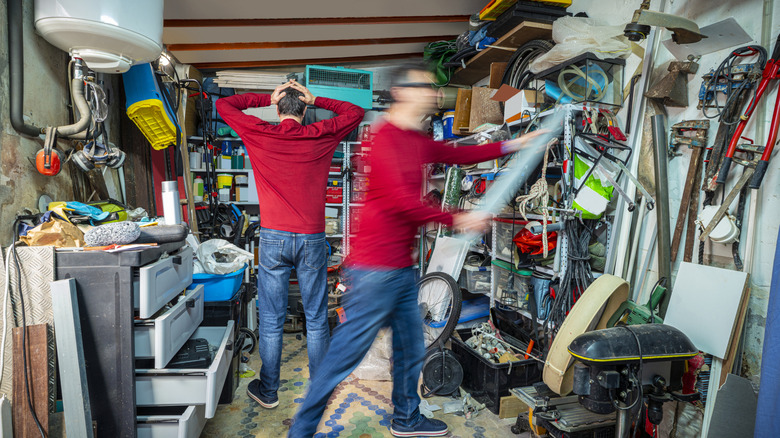
Junk piles up quickly, and it doesn't take long to forget what you have and have what you don't need. For instance, maybe there is an extra leaf blower or a second crowbar hidden behind the jet ski. Most people only need one of these items, because they last for many years and serve a very specific need. These items aren't like an extra pair of boots, which you'll need in a year when your current pair soon wears out. Of course, you can never be sure when you'll need a backup item, and there is a security to owning extras, but there has to be a limit.
It might not always be clear when you have duplicates, especially if your garage has been filled with junk for years. Sometimes you forget you have things, so you purchase a duplicate, or you receive something you already have as a gift or a hand-me-down. That's why the best way to identify duplicates, or even triplicates, or worse, quadruplets, is to organize things into similar piles. All the camping gear goes into one pile, while the cookware goes into another, for instance. Then you can easily pick out what you don't need and haul it to Goodwill.
Get rid of broken things
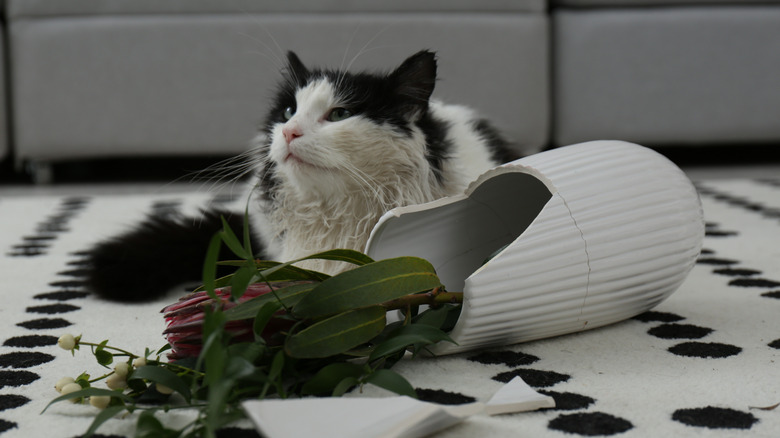
We have a tendency to keep broken things because we hope to one day repair them. But life is short, and sometimes it's hard enough just holding things together as they are. Or maybe you've just been sparing yourself a trip to the dump. Whatever the reason, you should identify the possessions that are no longer serving you and get rid of them. Does that space heater no longer pump out the warmth? Is that old vase cracked for good? Has that kayak sprung a leak? Ask yourself these questions and make a decision about what can stay and what needs to go.
Make your assessments based on the likelihood of whether you will actually be able to repair the item or if it can be cheaply replaced. For instance, any electrical device that isn't working properly can be pretty complicated to repair or even pose a fire hazard, so you should get rid of it. Some things are harder to part ways with than others, but chances are, if you're keeping something in a dusty garage, it doesn't have very much sentimental value.
Toss anything expired
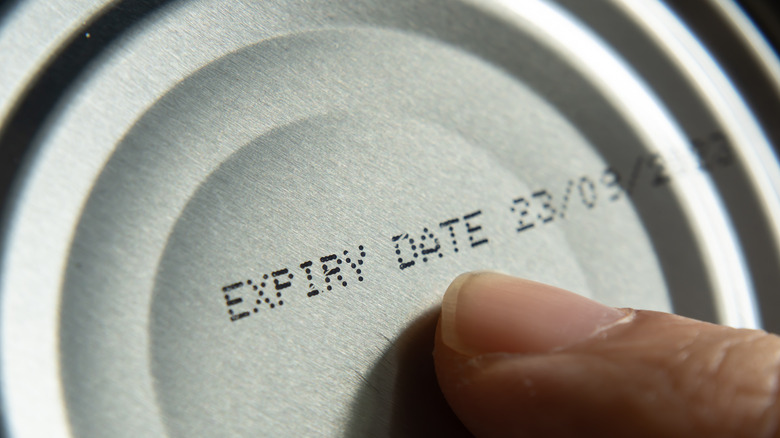
Expired goods don't serve any purpose and also take up space. These items can also pose safety risks. For instance, car seats can expire, so if you're keeping one in your garage, you need to check to see if it's still good. Batteries also expire and leak toxic chemicals, so you need to dispose of them properly. As you declutter your garage, you create space for a mini fridge or freezer, which also requires some upkeep. (That grated cheese in your fridge that's turning green probably needs to go. Also, get rid of that frostbitten venison that's been in your fridge for three years.)
There are a few other things you should check beyond the obvious expirable goods. For instance, maybe you like to prepare for natural disasters, but haven't checked that your canned goods are well past the stamped date. Or maybe you fermented some peaches under the steps last summer; are you sure they aren't tainted with botulism? If you like to backpack, those freeze-dried meals you take with you may last a few years, but they don't last forever.
Redesign the layout
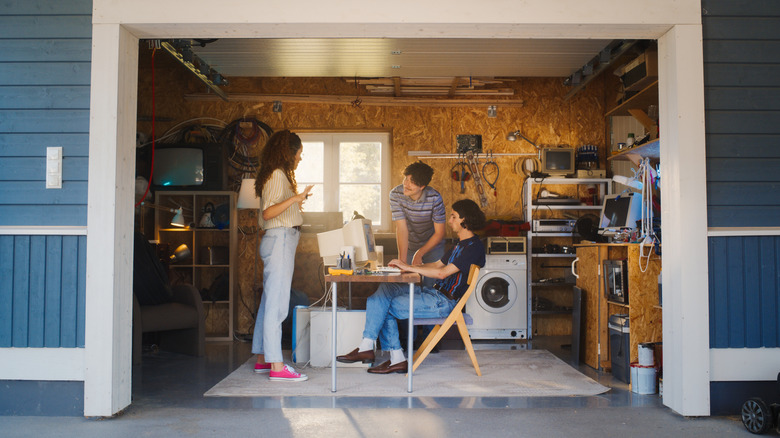
Garages become disorganized over time because things are put away without very much intention. You can change that by designating specific parts of the garage where certain things belong. For instance, sporting equipment can go on one shelf while hedge clippers and bird seed can go on another. If you use something often, make sure it's easy to reach. Any bulky objects need to be well out of the way of doors or pathways. You should make sure to keep safety in mind as well. For instance, don't put heavy objects at the tops of rickety shelves or keep flammable chemicals inside.
Consider drawing a diagram of the space and marking certain locations for certain items. This will allow you to imagine the layout before you get started. Don't just plan the floor space; also plan the wall space. (Here are some of the top ways to reorganize your garage like a professional.) You can also designate space for hooks (an easy and affordable trick to maximize garage space) and space for shelves. Store items you're less likely to need in harder-to-reach spots. Also, make a list of some of the items you have and determine which things should be boxed together. This deliberate planning doesn't need to take a lot of time, and it will ultimately make the reorganization process go by faster.
Consider implementing the 20/20 rule
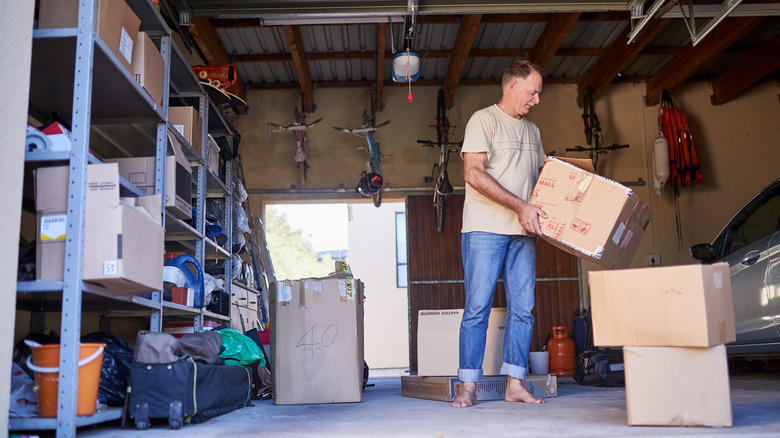
The 20/20 rule is one of the best ways to rid your garage of junk you hardly use. The rule is simple: If you can replace the item in 20 minutes for less than $20, get rid of it. This will keep you from wasting money and time by accidentally getting rid of something that is hard to replace. It will also help you unload items that are really just monopolizing space. Keeping garbage bins in there so you can casually get rid of things throughout the year is a budget-friendly idea to organize your garage. Items you should throw away include half-empty paint cans, tangled cables, and broken lawn chairs. (Tossing these things in fall can help declutter and organize your garage.)
Of course, the 20/20 rule isn't perfect. All rules require exceptions. Apply nuance in instances when you have something that you know you need to use regularly. You might be able to get a new screwdriver in 10 minutes for $15, but obviously it would be absurd to treat tools as disposable goods. The rule applies to things like that roll of plastic wrap that you probably won't use ever again. There's really no risk in getting rid of something like this, because if you ever end up needing some plastic wrap, you can get your hands on it with ease.
Don't keep just-in-case items

Why do people keep things they don't need? There are many reasons, but one of the most common is that sometimes extra stuff provides a sense of security. It's reassuring to know that your home, particularly your garage, is filled with everything you could need for any situation, and that's why it can even be stressful throwing things out. But in the long run, you'll be pleased when the space is orderly again. While it's not necessarily a bad thing to think this way, most things must exist in moderation. That's why you should make sure to get rid of possessions that only serve a remote purpose.
Walk through your garage and scan the shelves and floorspace, and try to identify things that you don't need. For instance, you probably won't need that football uniform, cleats, and pads you wore in high school. When it's time for your class reunion, they aren't gonna ask you to wear it. You also don't need that meat dehydrator and crossbow; after all, if an apocalypse comes, you'll be much better off farming than chasing game.
Don't try to tackle the entire thing in a day
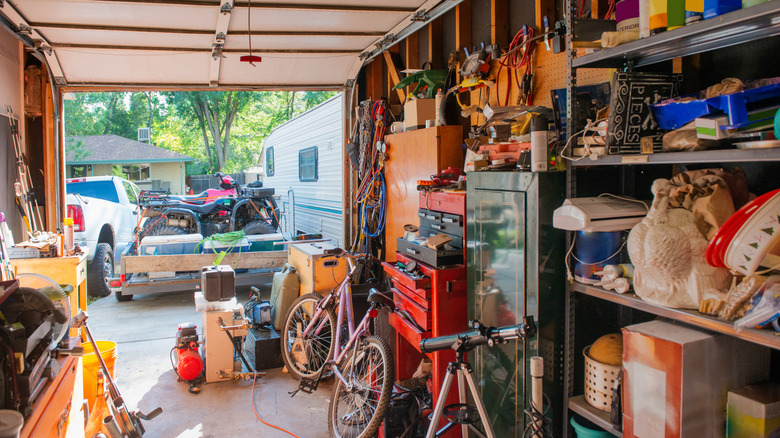
You didn't clutter your garage in a day, and you shouldn't try to declutter it in a day either. Some jobs require a little more time than one afternoon to finish properly. You don't want to bite off more than you can chew and get discouraged. That's why you should break up this process over a few days or even weeks. If you take your time, you'll find that the process can be therapeutic. As you decide what to get rid of and what to keep, the space will change for the better, and satisfaction will follow.
Before you get started, make a schedule. For instance, on Saturday you can clear out the large objects and haul some of them away, and on Sunday you can get rid of duplicates, expired goods, and broken items. You can also assign certain parts of your garage for decluttering on certain days. Reserve a day for decluttering the shelves and another day for decluttering your workbench.
Don't get distracted with projects

It's easy to get distracted when decluttering your garage. You'll comb through hundreds of items, possibly, and it will be tempting to start other projects. After all, one advantage of decluttering is that the process calls your attention to things that you wouldn't have otherwise noticed. For instance, maybe you'll see that rolled-up painting your granddaughter made and decide to drive to the store to look for a frame. Or maybe you'll find that vintage sofa and decide to refurbish it. Chances are, if you abandon one project, you'll abandon the second.
The process of decluttering your garage can be boring, so it's understandable why people get distracted with other projects, but multitasking is never a desirable way to work. While you're decluttering, if you have an idea for a new project, simply write it down and return to it later. Once you have plenty of open space in your garage, it'll be easier to work on that project. You'll also be able to find any tools you need.
Declutter regularly
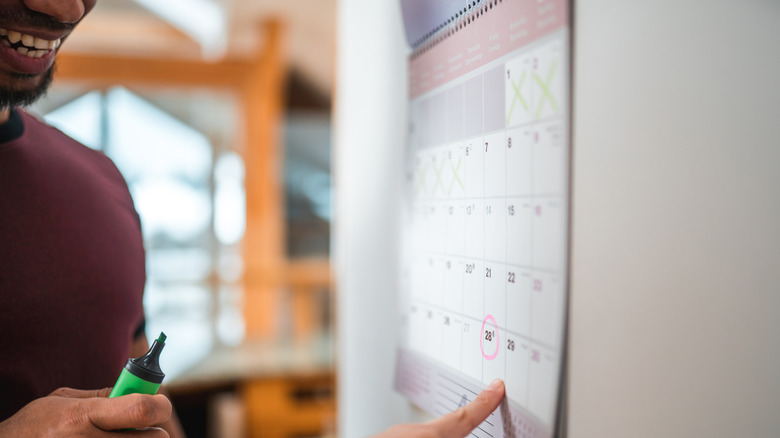
The longer you let things pile up in your garage, the longer it will take to declutter it. But it's understandable that we forget to clean our garages for months or years on end. Garages are like small warehouses, so we don't control their temperature or keep them as clean and organized as we would with other interior spaces. But your garage is no different from your home office or kitchen in that it requires regular decluttering. Don't just clean out your garage in the spring, because you'll have a huge job to complete.
For a clean garage, an essential habit is to establish a cleaning schedule that you can follow out of habit. Put a calendar on the wall and set aside a day each month to sort through what you have and get rid of what you don't need. This will ensure that you never feel overwhelmed by junk. It may sound counterintuitive, but you won't have to spend as much time reorganizing if you do it regularly.