

Move Over, Poinsettias: These Colorful Flowers Last Well Beyond The Holidays
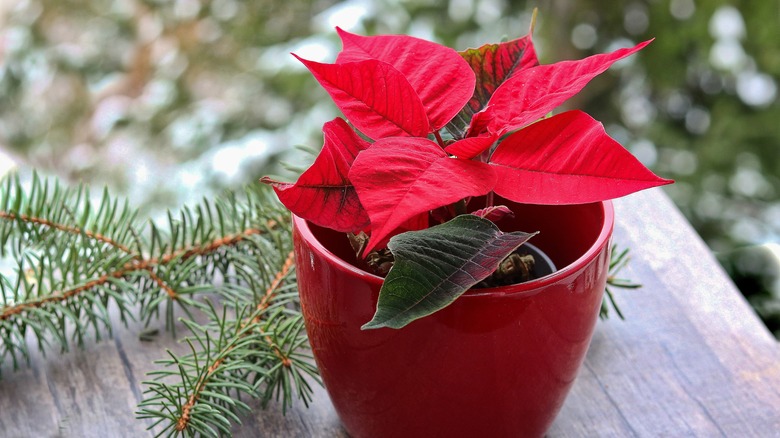
Poinsettias (Euphorbia pulcherrima) dominate as decorative plants during the festive season, with their showy bracts creating bright and vibrant displays in winter. Otherwise known as Christmas flowers, these plants produce colorful cup-shaped flowers throughout the colder season and into spring. Often, though, that color fades when the holidays are over. On top of that, they need plenty of maintenance in the fall and winter, as keeping color from one year to the next requires carefully controlling the plant's light intake in the fall so that new bracts are produced. Many poinsettia plants also need 16 hours of uninterrupted darkness starting in late September, plus specific temperature conditions, which can be difficult to manage.
Being left with a simple, green-leaved plant that blends into surrounding evergreens isn't ideal when you want to keep celebrating the season, but the answer to this problem is simple: Look for flowering plants that retain color and continue blooming into late spring.
Snapdragon
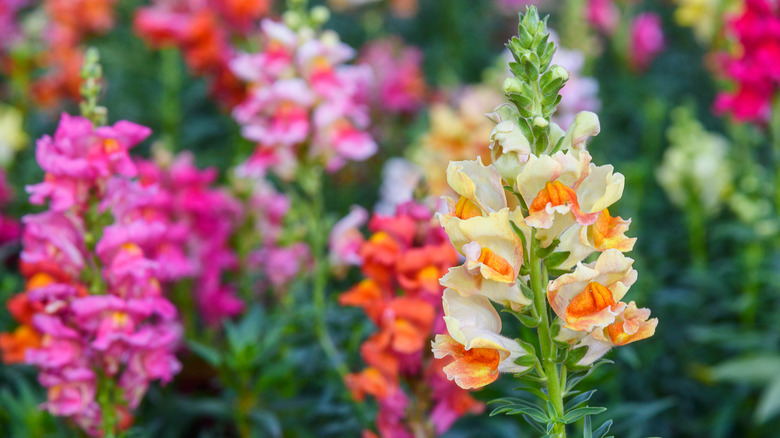
Snapdragons (Antirrhinum majus) are a natural alternative to poinsettias that behave as winter annuals in their native Mediterranean range, germinating in fall and growing steadily through the colder months. Gardeners in milder regions should be able to establish them over winter, enjoying their blooms into and beyond spring. Snapdragons are hardy in USDA zones 7 to 10 and grow 1 to 3 feet tall with a narrow spread, producing upright stems lined with showy blooms. When planted in the winter, colors ranging from white and yellow to pink, red, orange, and peach give brightness from early spring until frost.
Cape mallow
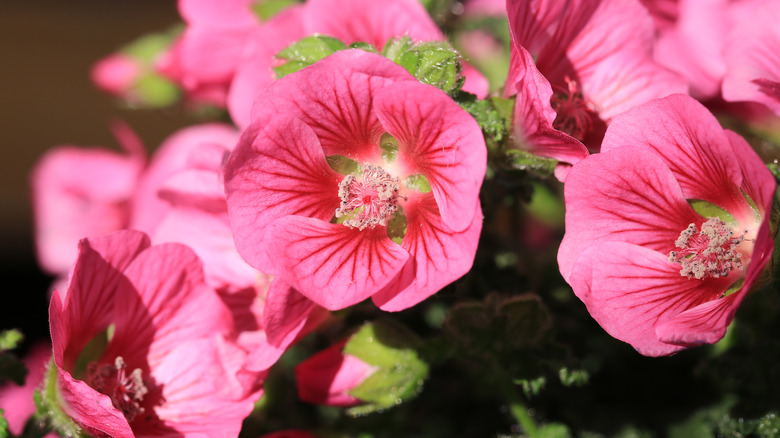
Cape mallows (Anisodontea capensis) are one of the best winter plants for decorating your patio in USDA zones 9 to 11. Their small, hibiscus-like flowers can bloom from spring to fall, but may bloom all year round in warmer climates. These upright evergreen subshrubs require well-draining soil and grow best in full early sun with afternoon shade. The blossoms can emerge alone or in pairs, ranging in color from pale pink to dark purple. Though frost can cause the plant's foliage to droop, it will typically pick back up in spring.
Christmas cactus
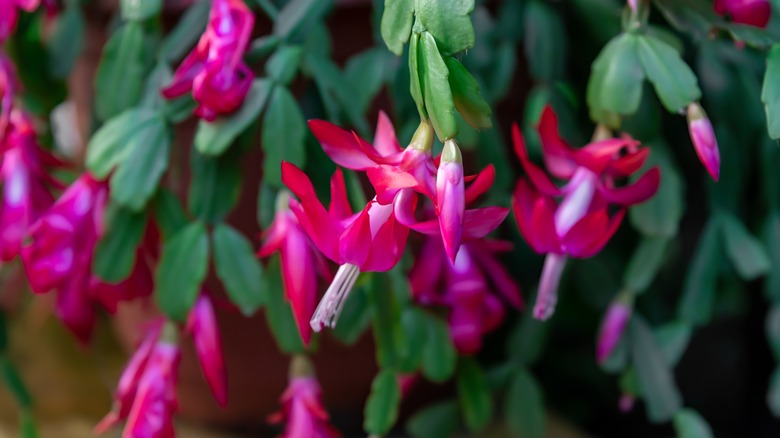
The Christmas cactus (Schlumbergera x buckleyi) blooms from December to February with flowers that are magenta-red to pink. This hybrid is the perfect plant to have indoors in place of poinsettias, although, because of its needs, you may also want to consider other festive plants that make a great alternative to the Christmas cactus. They like to be in areas with higher humidity and need to be planted in moist, well-drained soil where they can get indirect light. Starting in mid-September, Christmas cactuses also need 13 hours of continuous darkness, as well as nighttime temperatures between 55 and 65 degrees Fahrenheit. If grown outside, they'll be hardy to USDA zones 10 through 12.
Paperwhite daffodil
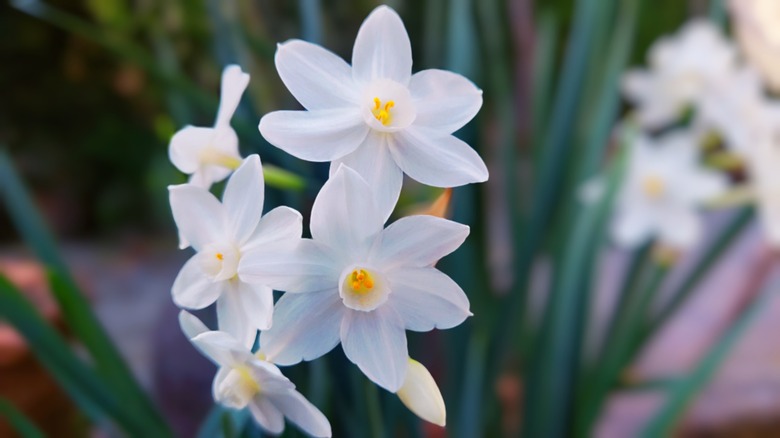
The paperwhite daffodil (Narcissus papyraceus) grows well in USDA zones 8 to 11 and delivers fragrant indoor color when most plants are dormant. These Mediterranean bulbs produce clusters of white, yellow, or orange flowers on 12 to 18-inch stems, and they don't need chilling to bloom. Paperwhites grow well in containers filled with well-drained potting mix, making them a low-maintenance choice for winter displays. Keep planted bulbs in a sunny, cool location to prevent stems from stretching. Their sweet scent can fill a room, especially varieties with yellow blooms, and gardeners can enjoy the flowers from winter into early spring with proper care.
Desert globemallow
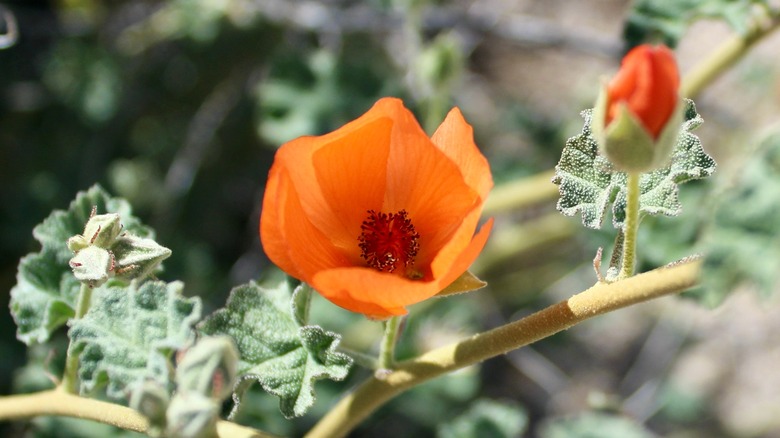
Desert globemallow (Sphaeralcea ambigua) delivers surprising winter color, especially in climates like the low desert of Arizona, where blooms appear from November through May. Elsewhere, it's known to bloom at various points of the year, though it doesn't tolerate wet winters well. This native perennial can easily withstand heat, dryness, and rocky soils, and it grows well in USDA zones 6 to 9. Its multi-branched stems reach 2 to 3 feet tall and carry clusters of cup-shaped flowers in apricot, orange, pink, red, or even white. Although relatively short-lived, it self-seeds readily, helping plants return and extend their floral displays.
Firecracker flower

Firecracker flower (Crossandra infundibuliformis) offers vivid color in USDA zones 10 and 11, where it reaches 1 to 3 feet tall with glossy, dark green leaves up to 5 inches long. This perennial has clusters of tubular blooms that appear freely throughout the year, ranging from apricot and salmon to yellow, red, and bright orange. Firecracker flower prefers part shade and organically rich, well-drained soil with moderate moisture. High humidity helps keep its foliage healthy. In cooler regions, keep it in containers indoors, where its compact, overlapping petals will provide long-lasting interest past winter.
Persian cyclamen
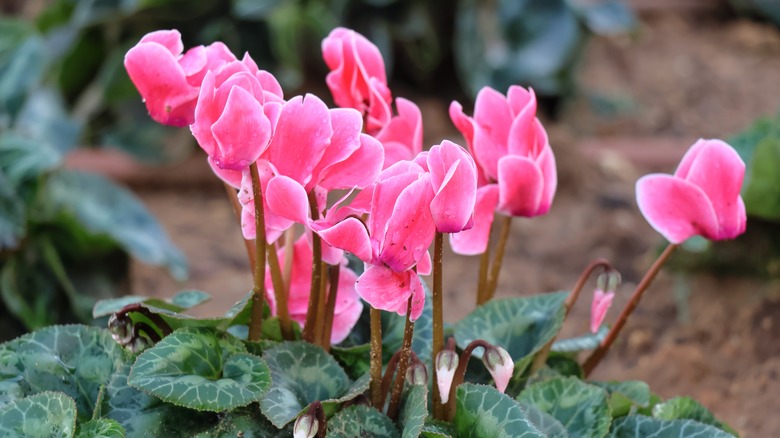
Persian cyclamen (Cyclamen persicum) is a hardy houseplant that doesn't mind a cold winter draft, offering color when other flowers are dormant. This tender perennial blooms from fall through to spring, usually between November and March. The plants are only USDA hardy in zones 9 to 11, so most gardeners keep them indoors in bright, indirect light. Heart-shaped leaves marked with silver patterns support its stems, which carry twisted flowers in white, pink, red, violet, and lavender. Cooler temperatures in fall trigger renewed growth, making cyclamen a dependable seasonal companion year after year.
Boat orchid
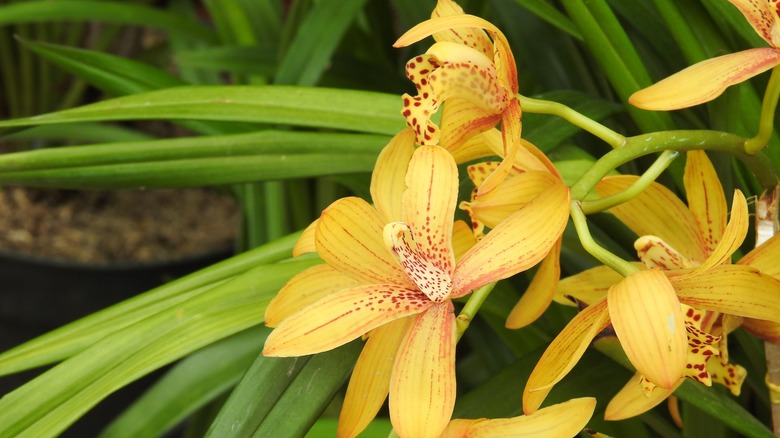
Boat orchids (Cymbidium spp.) grow arching flower spikes from late fall through to early spring in USDA zones 10 to 12. They are not hardy outdoors in freezing conditions, so gardeners typically grow them in containers and move them inside before the first frost. Plants reach 1 to 4 feet tall and carry white, orange, pink, or yellow flowers on spikes with six to 12 blooms. Bright, indirect light and a day–night temperature difference of about 10 to 15 degrees Fahrenheit (75 to 85 during the day, 50 to 60 at night) encourages reliable flowering for these orchids.
Golden shrub daisy
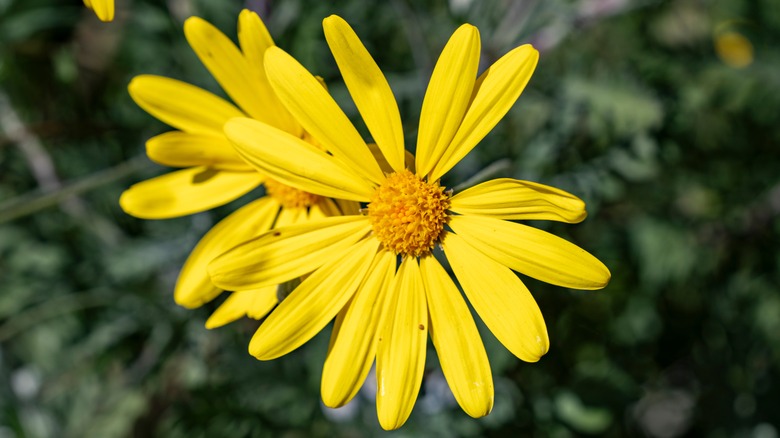
Golden shrub daisy (Euryops pectinatus) thrives in USDA zones 9 to 11 and produces bright yellow, daisy-like flowers on long stalks in mild winter climates, often blooming almost year-round. Plants reach 3 to 6 feet tall and wide with finely divided, gray-green foliage that keeps beds looking lively. Full sun encourages the best flower production from this plant, though it does tolerate light shade. In frost-prone areas, grow it in a sheltered spot with well-drained soil. Once established, your golden shrub daisy only needs to be watered occasionally, and it'll benefit from light pruning to maintain shape and continuous bloom.
Coral plant
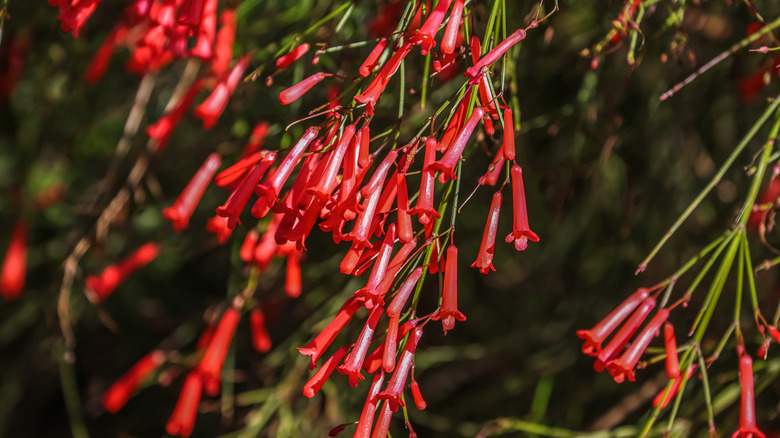
The coral plant (Russelia equisetiformis) delivers a long-running show of scarlet, tubular blooms in gardens. In USDA zones 9 to 11, established plants can flower nearly year-round (especially in warm climates), and when grown as a houseplant, they continue blooming through winter if kept in a warm, sunny spot. The slender, cascading stems reach 4 to 6 feet and spill outward like a living fountain. Give your coral plant full or part sun and well-drained soil, letting the surface dry slightly between waterings. In colder regions, bring it inside before temperatures drop below 41 degrees Fahrenheit.
Pansy
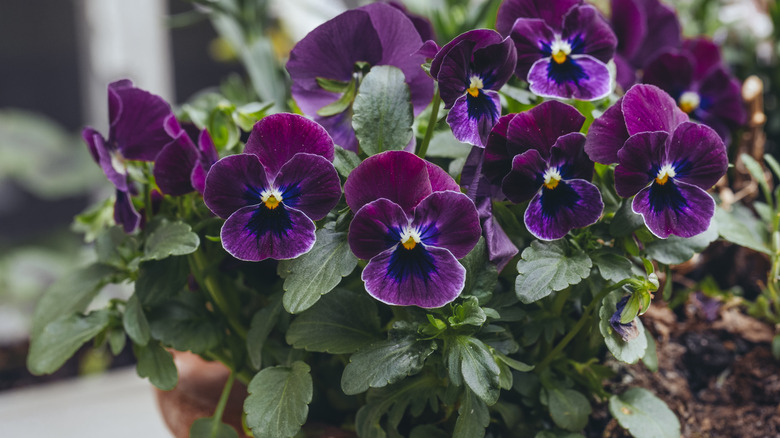
Pansies (Viola x wittrockiana) keep garden beds lively when the temperature dips during winter. In USDA zones 6 to 10, they grow best in full sun or partial shade. They bloom from fall through winter in warmer regions, often into early spring, before the late summer heat ends their show. Plants grow up to 9 inches tall and spread across the ground, producing 1 to 3-inch flowers in bright colors that have patterned "faces." Consistently moist, well-drained soil — as well as deadheading — will support their long bloom period.
Bush lily
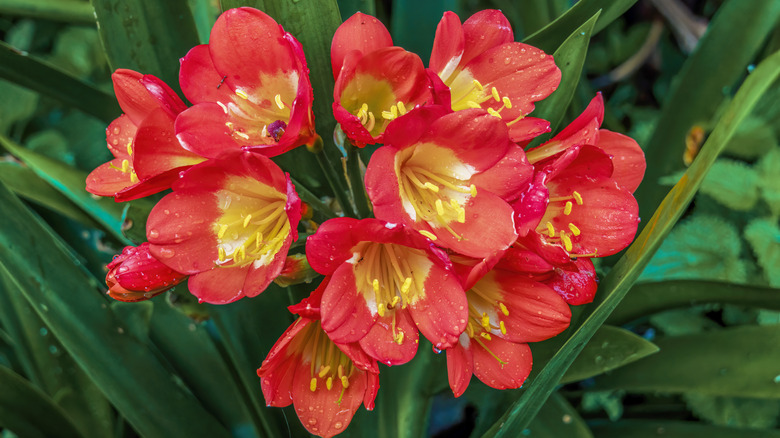
Bush lily (Clivia miniata) adds a little sculptural color to gardens during the cooler parts of the year. In USDA zones 9 to 11, this evergreen perennial sends up thick stems topped with dense clusters of 12 to 20 funnel-shaped orange and yellow blooms from early winter into mid-spring. Plants grow best in partial or dappled shade and tolerate a range of soils as long as drainage is good. Bush lily dislikes freezing temperatures below 30 degrees Fahrenheit, so, in cooler climates, it works better as a container plant that can be sheltered indoors during cold spells.