

7 Clever Ways To Use Cooking Oil In The Garden (And 4 To Avoid)

We may receive a commission on purchases made from links.
Chances are that you have at least one bottle of cooking oil kicking around in your kitchen cupboards, especially if you love to cook. What's more, you may already know that oil can be used for more than just cooking. For example, olive oil is often recommended to loosen earwax and is even touted as a handy, if not the most ideal, alternative to shaving cream. What you may not have known, however, is that cooking oil could also prove helpful in the garden.
For example, there are several surprising uses for olive oil, from combating mosquitoes to freezing an abundance of herbs. It can also be mixed into a homemade insecticide and applied to aphids. If a population of earwigs has gotten out of control and is starting to feed on plants, it can be used to trap them. Pest control aside, cooking oil can help to lubricate metalware, like kids' swings and a gate's rusty hinges. You could even use a few drops to prepare soil for planting.
It's also important to state that while a myriad touted uses for cooking oil are on the web, some are better avoided. A rag soaked with olive oil is unlikely to deter moles from digging away in your garden, for example, and if you try to restore the shine to plants' leaves with cooking oil, you could wind up doing far more harm than good. Don't worry, though. To help avoid confusion, we've pulled together a few nifty ways to get more out of cooking oil, as well as several that should be avoided at all costs.
Use cooking oil to silence squeaky hinges
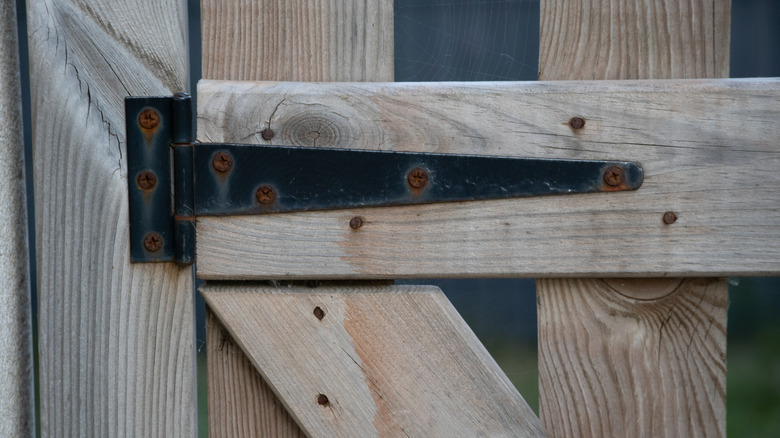
If you don't have a bottle of WD-40 to hand, then it's well worth trying this hack to silence squeaky hinges. It could be that the hinges on your garden gate have seen better days, and you need something to stop them from grinding every time your friends come over to visit. Or perhaps the hinges on your children's favorite swing are screaming for lubrication. Either way, all you need to do is apply a few drops of oil with a pipette to the top and allow it to run into the moving parts. For smaller hinges, dip a Q-tip into your chosen oil and wipe it around the affected area.
Cooking oil works much the same as any other lubricant. Applied, for example, to your gate's hinges, oil adds a slippery film between the metal parts. This reduces the friction between them, which is what causes older, seized parts to squeak and creak.
Use olive oil to stop mosquitoes breeding in standing water

If you frequently spend time in your garden, then the presence of mosquitoes is rather hard to ignore. It can also be something of a head-scratcher to solve, especially if you're unsure of where they're coming from or what's attracting them to your yard. Generally speaking, the most common cause for mosquitoes invading gardens is the presence of standing water. Simply emptying these and preventing future build-ups is one of the best ways to kick mosquitoes out of your yard. If you're unable to do that, or you'd prefer to keep your water features in place, then olive oil could also provide a solution.
The reason this method is so effective is that by applying a few drops of olive oil, for example, to your rainwater barrel, you can reduce the water's surface tension. This makes it impossible for larvae to reach the surface and thus prevents new hatches. Now, there are some water bodies in which you shouldn't use oil to prevent mosquitoes. One such example is your bird bath: Oil can be harmful to birds, clinging to their feathers and disrupting their weatherproofing. But that doesn't mean you can't still use this method.
As an alternative, you can use oil to create a DIY mosquito trap for any bothersome biters. Simply fill a bucket with water and allow it to stand, and apply a few drops of oil. By virtue of it being stagnant, mosquitoes are sure to pay it a visit, but since the water is treated with oil, none of the eggs they lay in it will hatch.
Use small amounts of olive oil to condition your soil

This may seem like a rather expensive way to condition your soil, but all it really requires is a few drops. In fact, using large amounts could have an opposite, harmful effect, adding a barrier to your soil that prevents it from sucking in moisture and much-needed nutrients. However, in small amounts (or diluted into water and used to spray your soil), you may find that the fatty acids contained in olive oil help to break down the organic materials contained within the soil, thus improving its ability to feed.
Looking into the science, studies have shown that a by-product of olive oil production, known as olive cake, can make an effective soil conditioning material, helping it retain moisture better and improve productivity. And while the olive oil in your cupboard is a very different product from the agricultural by-product mentioned above, there is plenty of anecdotal evidence to suggest that a small amount could achieve similar results in your garden. What's more, studies also show that oleic acid (the most abundant fatty acid in olive oil) can also help improve soil quality, helping to reduce pH and improve nutrient uptake.
Use olive oil and soy sauce to trap earwigs
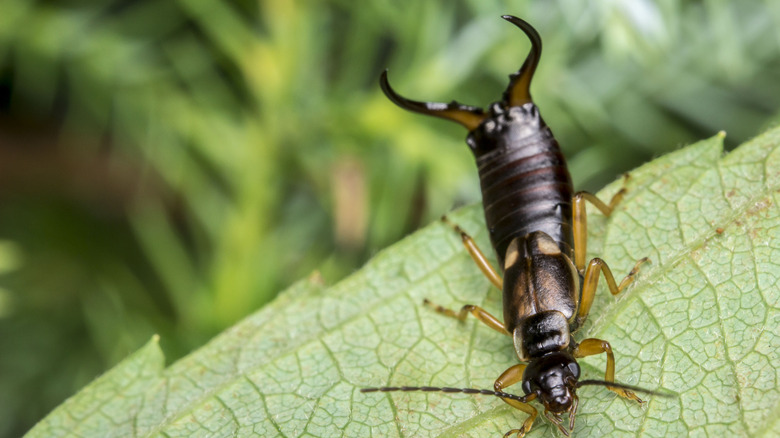
To make this clever DIY trap and keep earwigs out of your garden, all you need is a tub, some olive oil, and a bottle of soy sauce. First, mix equal parts soy sauce and olive oil, then decant it into your chosen container. The container itself needs to be buried in the soil where you've noticed earwigs, so that the opening is flush with the soil's surface. Once it's in place, you may well be surprised by how many of these insects you will trap in a single evening.
Now, it's worth saying that you should only use this method in your garden if you absolutely need to. Earwigs play a crucial role in most gardens' ecosystems: They feed on organic matter, helping dead matter to break down and, in turn, feed your soil. They're also quite happy to feed on aphids, making them a valuable ally to gardeners who suffer from such sap-sucking infestations. However, in some cases, especially if dead matter is in short supply, earwigs will just as readily feed on live plants. If this happens, they can quickly become a pest, at which point an oily, saucy trap can help you minimize damage from earwigs.
Mix oil into a homemade organic insecticide
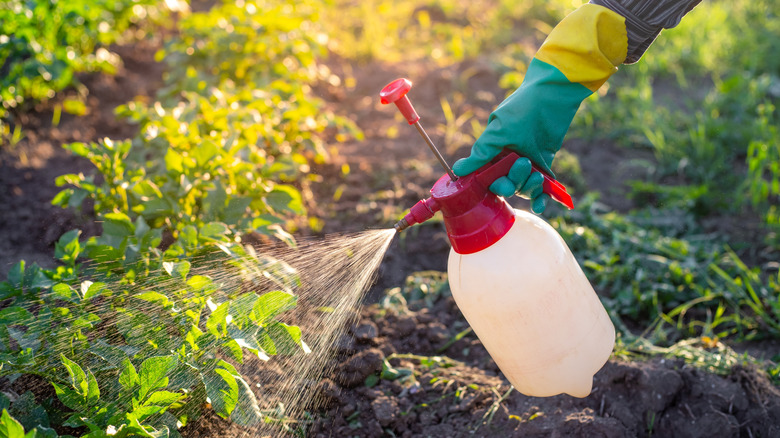
Another little-known way to use cooking oil outside the kitchen is as an insecticide. Both cottonseed and soybean oils are effective; all you need to do is mix them with water, aiming for around 2% dilution. Once decanted into your spray bottle, apply liberally to your affected plants, and allow it to work its magic. Just be careful not to spray any insects on the underside of plants' leaves, as this can clog up their pores and interfere with their ability to photosynthesize.
This method is especially useful for gardeners who don't have a supply of dedicated horticultural oil to hand. It's effective against bugs like aphids, and the reason it works is two-fold. Firstly, the oil makes it difficult for these insects to move and thus inhibits their ability to feed. It also blocks the pores through which they breathe, so that any that come into contact with your spray will eventually suffocate and die. For this method to be truly effective, you may need to spray your plants several times. Since it's best to avoid spraying the underside of the leaves, any that lurk are unlikely to be affected.
Keep herbs fresh by freezing them in olive oil
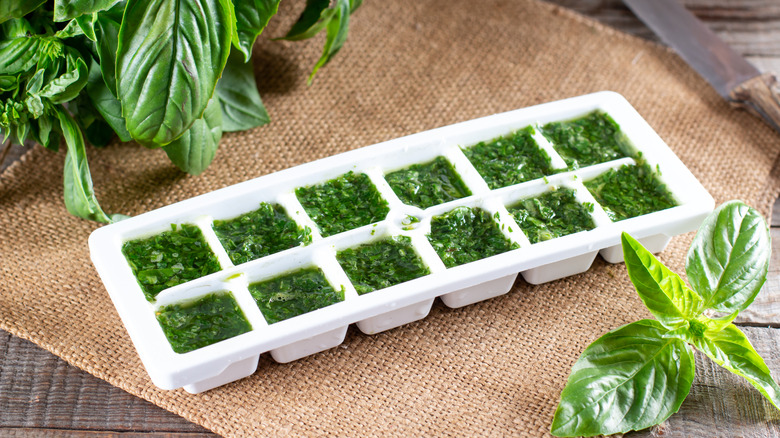
The dream of every kitchen gardener is a bountiful crop. The problem, especially if you've managed to grow more than you ever thought was possible, is that you may not have a plan in place to ensure your harvest doesn't go to waste. Don't worry, though. While you may not have room in your pantry for a bevy of beans or lots of larger legumes, if you have herbs that can be stored in the freezer, then you can easily preserve them with olive oil. The first thing to do is to wash them, before dicing them up nice and fine. With that done, portion your herbs evenly into the cells of an ice cube tray, top each one with olive oil, and then place the tray in the freezer.
It's entirely possible to freeze herbs as they are. However, the benefit of using olive oil is that it contains fats that protect the herbs from freezer burn. It can also help to discourage discoloration, leaving you with vibrant, bright-green ingredients to work with when you remove them from the freezer. And you needn't just use olive oil, either. You could also try freezing your herbs in other cooking oils, like coconut oil. Consider which meals you'd like to use the herbs in, and which oils work best with those flavors.
When it comes to cooking with them, since the herbs are frozen in oil, you'll be able to bust them out of the freezer and add them straight to the pan. Just be sure to label each tray if you're freezing different herbs. Once they're chopped and immersed in oil, green herbs, especially, can be tricky to tell apart.
Combat problem weeds with used cooking oil
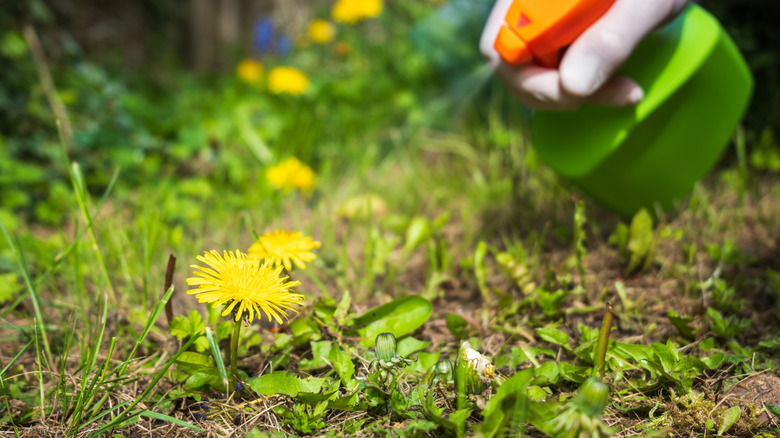
Offering a two-for-one kind of deal, using cooking oil to control weeds is not only organic and environmentally friendly, but it can also save you a few hard-earned dollars compared to paying for a dedicated bottle of weed killer. And since it can be done with both new and used cooking oil, it allows thrifty homemakers to make their kitchen waste work harder. All you need to do is add your oil to a spray bottle, and then completely soak your weeds. Just be sure to allow used oil to cool down first.
As for why it works, scientific studies have shown that culinary oils can, in certain cases, have a detrimental effect on weed growth. It's not a magic solution to weeds, and you should know that, in tests conducted by researchers, only certain plant species were noticed to experience stunted growth after treatment. However, if you have some used cooking oil awaiting disposal (and you've yet to buy that bottle of RoundUp Weed killer that's currently languishing in your basket), then it could be worth trying.
Don't expect to solve your mole problem with cooking oil

Run a quick search online for homemade mole deterrents and, chances are, you'll come across this one. The trick, it seems, is to soak a few rags in olive oil and then place them strategically next to the mole holes in your lawn. It sounds super easy, and if you're tearing your hair out searching for ways to deter moles from your yard, it may well seem like an attractive solution. What's more, there is plenty of anecdotal evidence to support the suggestion that moles dislike the smell of olive oil.
Unfortunately, this method's efficacy as a means of mole control is questionable at best. As frustrating as it is, there isn't always a shortcut to solve annoying issues in the garden, and your mole population is a good example. This is explained by William G. Tyson at the University of Georgia, who says that, in reality, many of the most frequently-touted means of deterring moles, like mint oil, picked onions, and even coffee grounds, have little, if any, effect. The solution? As he explains, "You should get rid of their food source by treating for grubs or mole crickets." He adds that there are various other control methods, including poison baits and traps, and that if all else fails, a resident cat or dog is sure to send these annoying diggers packing.
Don't use cooking oil to treat your outdoor furniture
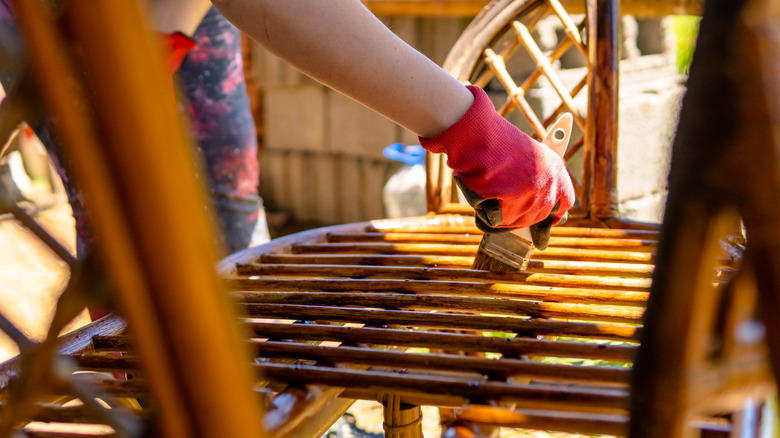
We'll start by saying that it is completely possible to polish your garden furniture with cooking oil. Olive oil and coconut oil, especially, are often used on wood and natural rattan to moisturize and prevent cracking. However, because cooking oils don't dry like dedicated furniture oils, the surface of your furniture is likely to be left wet and tacky if treated with kitchen-grade oils. This may be acceptable indoors, especially if you buff your furniture thoroughly after treatment to minimize the amount of residue left behind. However, for outdoor furniture, it's not the best solution.
Cooking oil is unlikely to protect your furniture for long when exposed to the elements. And since kitchen-grade oils are organic, they're likely to spoil quickly — especially when exposed to sunshine. More than that, being organic, they also support bacterial growth, and if you use your outdoor furniture for dining, then this is probably the last thing you want to happen.
As with your mole problem, it's best to treat outdoor furniture without taking shortcuts. If you have rattan furniture, for example, then boiled linseed oil is generally considered the best treatment to stop it from drying and cracking. For wooden sets, natural teak oil is a superior choice, soaking deep into the material and helping to prevent it from degrading.
Avoid using cooking oil to shine your plants' leaves
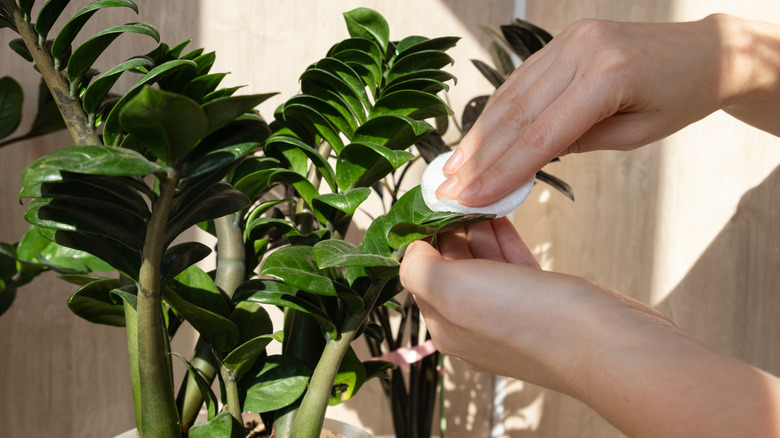
If you have guests visiting for the afternoon and the foliage on your patio plants looks anything but luxuriant, avoid the temptation to restore their shine with cooking oil. It does work, and your friends and family are sure to be impressed by how healthy your plants look. However, if you use cooking oil to clean them, your plants may not remain healthy for long.
The problem with this method is that it risks clogging your plants' pores. With the leaves gorgeously glazed with oil, any dust or debris that comes floating on the breeze is sure to stick to them. While you may not notice it to begin with, in the long term, this could interfere with your plants' ability to photosynthesize, leading to health problems that may not be easy to fix.
The solution? Instead of grabbing your go-to bottle of olive oil, reach under the sink for some detergent-free dish soap. Mix up a teaspoon with around a gallon of water, and then use a cloth to gently wipe down any dull-looking leaves. Give them a final rinse with your hose, then allow them to dry.
Stick to regular lamp oil for your oil-burning lamp

Now, before we go any further, we'll say that it is entirely possible to run an oil-burning lamp with regular vegetable oil. And if you're a curious DIYer in search of a new project, then it could well be worth trying for yourself. However, if you hope to use kitchen-grade oil in a regular, store-bought oil lamp, it's unlikely to work well. This is because most lamps are equipped with a tightly-woven cotton wick. Since lamp oil is thinner than cooking oil, it can soak upward through the wick and continue to feed the flame.
Cooking oils, on the other hand, are much more viscous, meaning they don't soak through standard wicks as efficiently as regular lamp oil. To ensure a bright, long-lasting flame with cooking oil, you would need to retrofit a wick with a much looser weave. One way around this is to mix cooking oil with paraffin-based lamp fuel, creating a thinner solution that'll draw through the wick more easily. However, if your lamp usage is reserved for special occasions, for example, setting the mood on your patio, then it may just be easier to stick with regular lamp oil.