

12 Ways To Clean A Washing Machine Using Common Household Items
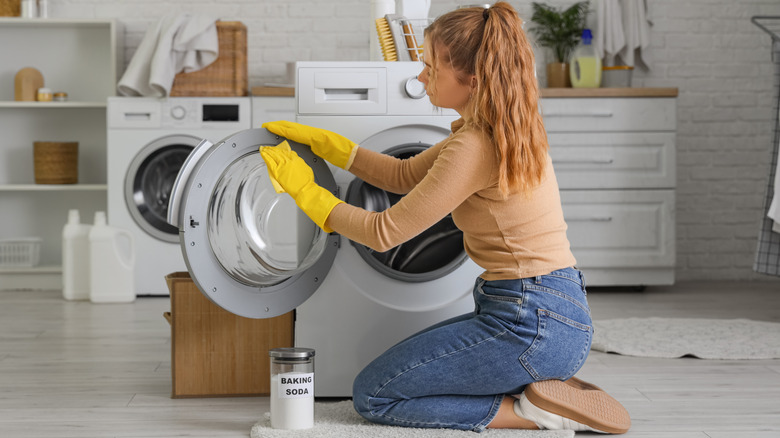
If you're like most people, you probably assume that your washing machine is the cleanest appliance in the house. After all, it spends all of its active time agitating away with hot water and soap! But in fact, it's the inactive time that tends to bring about problems. That's when mold and mildew start to flourish in the enclosed, moist space. Additionally, caked-on detergent and fabric softener start to crust up, drawing in debris and dirt.
And of course, that's also when you may start to notice that your clothes don't leave the laundry room smelling as fresh as they once did. Or when your machine may start developing problems, such as the detergent, bleach, or fabric softener not leaving their trays and entering the drum.
Before calling a repair person or purchasing expensive cleaning products, take a look around the house. Chances are, you have all the ingredients and equipment you need to give your washing machine the deep clean that will remove odors and improve its function. In some cases, the ways to tackle front-loading and top-loading models may differ, but ultimately, there's a way to use common household products for both types of washing machines.
Fresh air prevents moldy buildup inside your machine
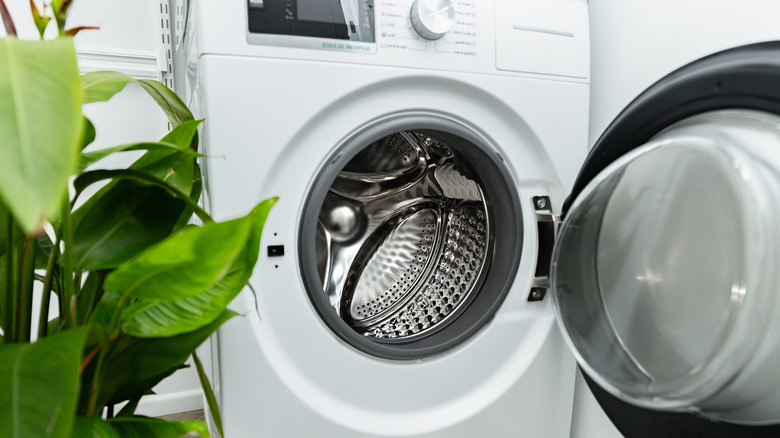
When your washing machine begins to smell musty and unpleasant, it passes the smell on to the fabric you're laundering. Most likely, the smell comes from mold and mildew. These types of fungi thrive in moist, closed conditions. A closed washing machine makes for an ideal breeding ground after a wash because the leftover water droplets don't have a way to evaporate.
That's why the most obvious "tool" you have in your house is literal oxygen. Keeping the lid of your top-loader (or door of your front-loader) open between uses ensures that mold has less of a chance to thrive in a closed, damp environment. Make sure to quickly move your clothes from the washing machine to the dryer, or clothesline, as soon as the cycle is complete. Once you've done that, don't close the door or lid. Instead, leave it propped open so that the circulating air helps combat the residual moisture.
Of course, curious pets or small children have a way of getting themselves into trouble, especially with front-loading machines. Make sure to keep your laundry room locked. If the machine is in an easily accessible area, check your manual for common safety features. These features typically include commands that can keep a machine from starting. Failing that, consider turning off the water valve that feeds into the washing machine so that it can't start until an adult turns it back to the on position.
Boiling water cleans out your washer's removable compartments

Plain old water is another underrated tool in a home's potential bag of tricks when it comes to cleaning hacks for your washing machine. That's because some of the more overlooked, grungy parts of your washing machine are the removable components. One of the biggest culprits is the detergent tray. Because it's already filled with dried, soapy residue, the last thing you probably need to do is add more soap in order to clean it. Boiling water, or very hot water, is often key to getting this stubborn grime to give up its grip.
In fact, many of the removable compartments of the washing machine probably have some form of caked-on cleaning product, including the fabric softener. (For a top-loading machine, gently pull up on the agitator at the drum's center to remove the fabric softener dispenser. Otherwise, remove the fabric softener drawer from your top-loader.) Pour hot or even boiling water over the removable compartments. If desired, add a bit of vinegar or lemon juice to the soaking water to cut through grime and residue. After letting them soak, scrub the loosened material with a rag or old toothbrush to remove the remaining grime. Then dry these trays and return them to the washing machine.
Bleach sanitizes your washing machine tub
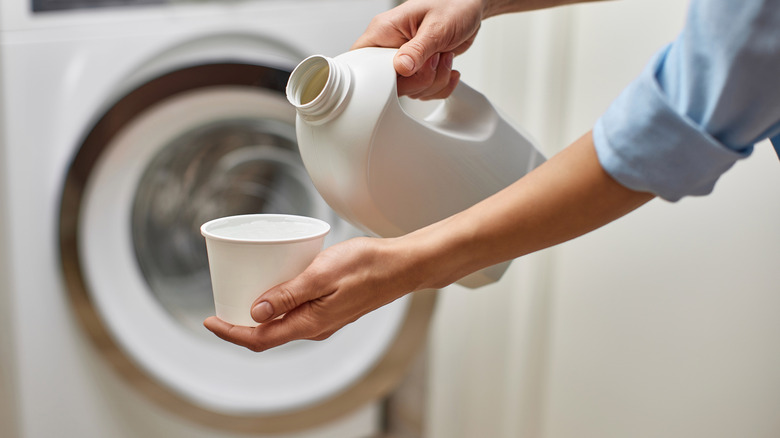
Just as it does for the clothes and linens you put in your washing machine, bleach super-cleans the inside of your washing machine. This is especially important during cold and flu season, when germs can be passed from an unclean machine to clothes that are being processed in that washer. But it's not enough to just run a load of laundry using bleach. Instead, you'll want to supersaturate the machine's interior by running the machine without a load. Make sure to use the hottest water possible – ideally about 140 degrees Fahrenheit.
If you have a front-loading machine, pour ¾ cup of bleach into the detergent tray, and select the hottest, longest cycle that your machine has. For a top-loader, put the same amount of bleach into the drum and let the water fill the interior. Stop the cycle and let the bleach and water sit for an hour before allowing the cycle to complete. For both types of machines, sponging the exterior of the machine, including gaskets, with a water-bleach mixture is also important.
Some organizations, including the Center for Environmental Health, recommend non-chlorinated bleach as a healthier alternative to traditional bleach. But choose whichever type works best for your situation. If you are worried about wasting water and electricity on an empty machine, consider running a load of white underwear with bleach. This shortcut should help disinfect the machine before you move on to your regular loads of dark and colored laundry.
Distilled white vinegar cleans the entire machine
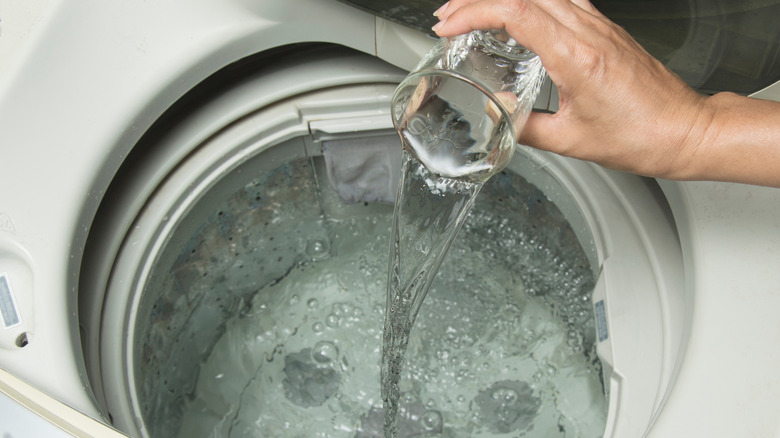
Vinegar is, of course, a time-honored cleaning agent. And it's probably already in your kitchen cabinet! For washing machines, vinegar's advantages include its anti-bacterial properties, as well as its ability to dissolve mineral deposits and grime. One warning to keep in mind, however — vinegar should be used sparingly and carefully. Like other acid-based ingredients, it can potentially eat into the machine's components, wearing them out prematurely. These include rubber and plastic components like trays and hoses. Be careful not to use this machine-cleaning method too frequently. In addition, avoid pouring the liquid directly into an empty machine.
To harness vinegar's power for a top-loader, start the hottest cycle on an empty machine. Push the "stop button" when the machine is filled, then add 4 cups of distilled white vinegar to the water-filled drum. Let the diluted vinegar mixture sit in the machine for about an hour, then continue the cycle as usual. For a front-loader, run a long, hot cycle after putting 2 cups of distilled white vinegar into the machine, and proceed as if you were running a full load. In both cases, taking the time to wipe down lids, doors, seals, and exterior components with a mixture of hot water and vinegar will complete the deep-cleaning task. Make sure to dry the machine thoroughly after the cycle has finished.
Baking soda helps rid the washing machine of unwanted smells
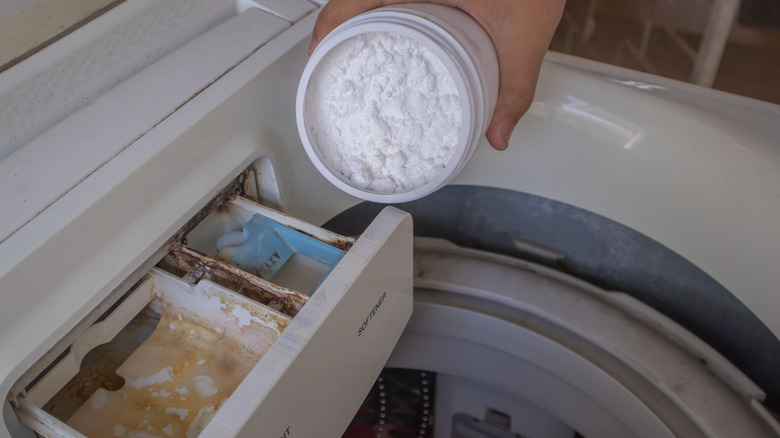
It's no secret that baking soda is a great laundry hack, achieving everything from softening fabric to dispatching heavy smells. Not surprisingly, baking soda is also an effective treatment for cleaning your washing machine. In fact, baking soda holds double-duty powers. On the one hand, sodium bicarbonate (baking soda's scientific name) is known as a deodorizer. It handily tackles those musty smells that laundry centers tend to take on after months of dealing with hot air, moisture, and dingy fabrics. In addition, baking soda's texture acts as a gentle abrasive, helping to de-grime the inside of the washing machine's drum.
To clean your washing machine with baking soda, run an empty load with baking soda. Use the hottest water setting and the longest cycle. Set 3 to 4 tablespoons of the baking soda in the detergent tray before turning it on. (If the tray is designed for liquid detergent only, mix the baking soda with water.) If your top-loader doesn't have a detergent tray, add the baking soda once the drum is at least partially filled with water. Before or after doing this, consider mixing some baking soda with water, wiping down seals and trays, then drying with a clean cloth. One final tip: After you do your regular loads, sprinkle a bit of baking soda into the machine to continue to combat odors.
Lemon juice cuts through gunk and grime on gaskets and seals
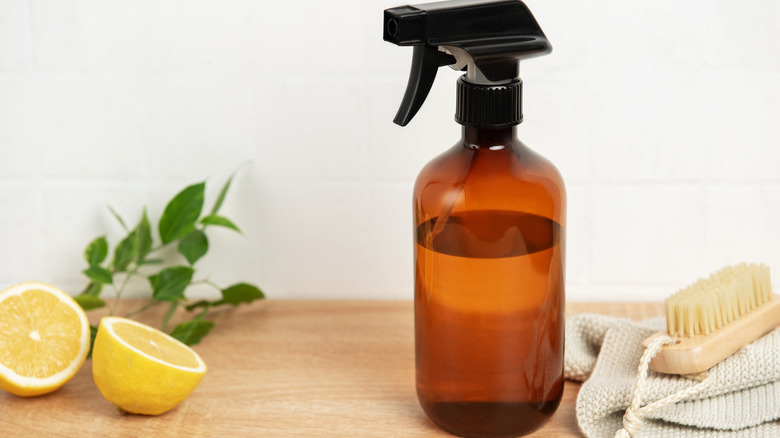
Lemon juice makes for an effective, cheap, and great-smelling household cleaner that also has antibacterial and anti-mildew properties — exactly the kind of firepower most people are looking for when it comes to those not-quite-pristine washing machines. It's useful for tackling the exterior parts of the machine, which get grimy and dirty. As with vinegar, however, lemon juice shouldn't be used as often as other methods. Like other acidic cleaners, lemon juice has the potential to eat away at some of your machine's components if not used sparingly.
The gasket around your machine's drum can collect grime that's hard to remove, resulting in a machine that's less efficient. Cut through it with lemon juice, which naturally deodorizes. Squeeze a lemon into a spray bottle to collect the juices. Then, moisten a clean cloth or old toothbrush with the lemon juice. Wipe the rubber seals around the machine's drum. Make sure to pull the gasket to one side, where most of the dark grime tends to accumulate. You may need to scrub with the toothbrush, then with a cloth, to get all of it. If old spills and grime are also lingering on the top and sides of the machine, wipe these with lemon juice as well. Of course, you can also add lemon juice to water or to a non-toxic cleaner if you're finding that the straight lemon juice is a bit sticky.
Hydrogen peroxide works to speedily dissolve dirt and grime
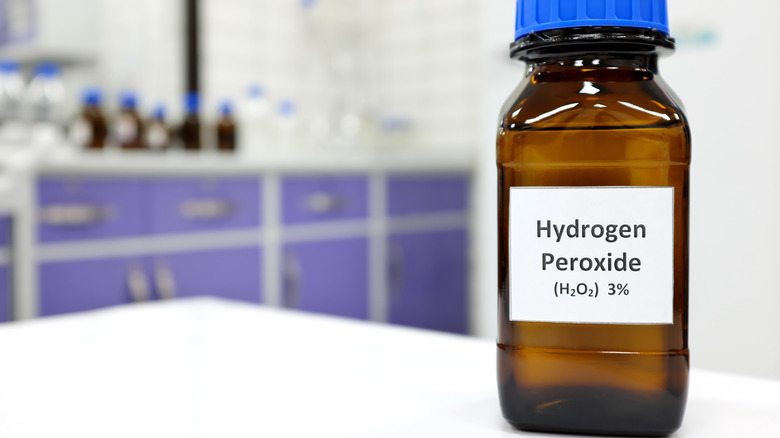
Although it might seem almost suspiciously powerful, hydrogen peroxide is literally water with an extra oxygen molecule. It can be found in natural substances like rainwater, but not in great enough amounts to be harvested naturally. Yet the ingredient is strong enough to be routinely used in hospitals for disinfecting equipment. You are likely to have this inexpensive household staple on hand for everything from a bleach alternative to treating a wound. If you haven't already taken down that familiar brown bottle to sterilize large appliances, such as your washing machine, consider doing so next time you're deep-cleaning your laundry area.
To use hydrogen peroxide to clean the drum of the machine, fill your empty machine with hot water. Add 2 cups of hydrogen peroxide to the machine. Do this by either pouring it into the detergent dispenser or directly into the drum, depending on your machine type. Run an empty load on hot water at the longest cycle. To clean the outside of the washer, fill a spray bottle with equal parts hydrogen peroxide and water. Spray it on the lid, gasket, and other exterior parts. Let this mixture sit for about 15 minutes. Then swipe these areas with a wet, soapy rag, followed by a go-over with a dry cloth.
Washing soda effectively cleans both your laundry and your machine
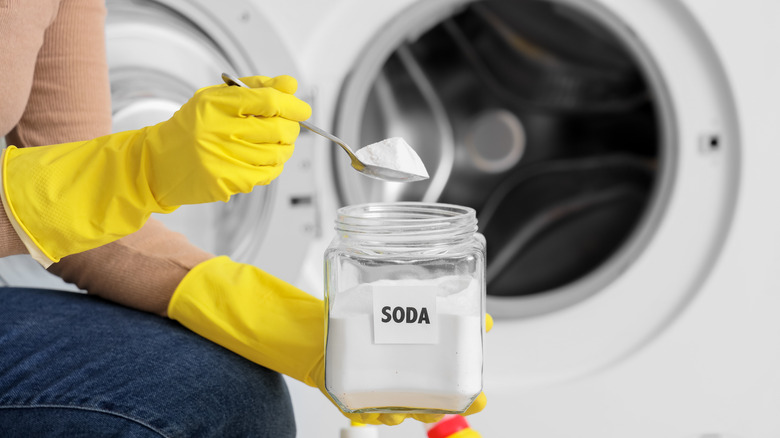
What exactly is washing soda? Like its "cousin" baking soda, washing soda is an inexpensive, nontoxic compound that you'll find in most supermarkets. The cleaning compound, also known as sodium carbonate, can be either mined or created by combining lime and sodium chloride. Many people still use washing soda as a laundry additive, especially if they have hard water. But the powdered ingredient can also help clean the machine itself. That's because it's an effective tool for deodorizing, degreasing, and dealing with hard water. In fact, it's considered even stronger than baking soda as a cleaner.
Use about 2 cups of washing soda to clean the drum of your washing machine. Pour it directly into the drum and then run an empty load with hot water. Of course, you'll want to set the machine for the hottest water and longest cycle. This method works for both top- and front-loading washing machines. Either before or after you run the washing soda cycle, add a spoonful or so of washing soda to a container of hot water and mix it thoroughly. Use a rag or toothbrush dipped in the liquid to clean out the seal around the drum of the washing machine.
Wash your towels with essential oils and clean out your machine, too

You've probably already experimented with adding essential oils to DIY products. These small vials of naturally extracted botanicals are rightly prized to add both cleaning power and to make your home smell amazing. Those hacks can also work for cleaning your washing machine's components, although it's important to choose the right ones. Always read your manufacturer's instructions carefully, keeping in mind that acidic ingredients like lemon essential oil probably shouldn't be used frequently because acids can eat into plastic and rubber.
Tea tree oil is known as an effective agent that targets bacteria, mildew, and mold. One easy way to disinfect both moldy towels and the mildewed washing machine in one fell swoop is to launder the towels with tea tree oil. (Of course, you don't have to limit yourself to towels. Sheets from a sick patient or other dirty fabrics can also benefit from tea tree oil.) Wait until the rinse cycle, then add 3 to 5 drops, depending on the size of the load, into the machine. To clean the seal itself, dilute a couple of drops of essential oil in either vinegar or water. Pour this mixture around the seal before scrubbing with a cloth or old toothbrush. Great essential oils to try for their anti-mold and anti-grime capabilities include tea tree, lemon, and eucalyptus.
Citric acid and baking soda layers clean and descale your machine
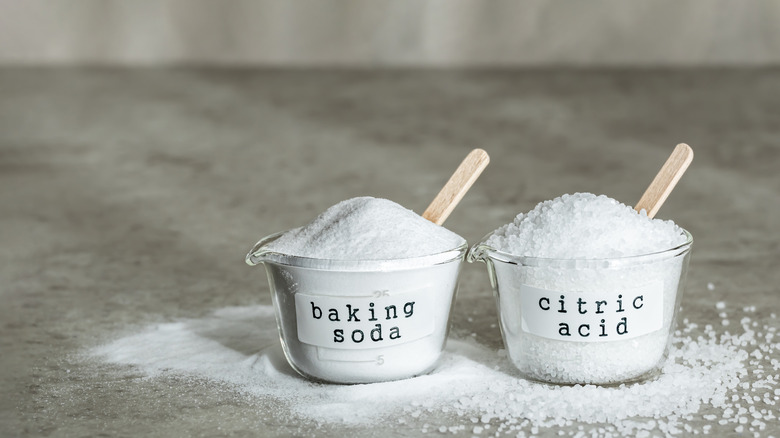
Citric acid is sold in supermarkets and drug stores for everything from canning tomatoes to making bath products. But it's also an underutilized cleaning agent! Citric acid's famous fizzing action efficiently cuts through grime, potentially even helping to dissolve virus proteins and deal with mineral deposits in the machine. Combining citric acid with the deodorizing, gently abrasive properties of baking soda is a winning combination for cleaning a washing machine, as well as for descaling any mineral deposits that have built up.
To utilize the two powdery substances together, put 1 cup of citric acid into the detergent tray, followed by ½ cup of baking soda. Run the empty machine on the longest, hottest cycle available. You can do this step by itself or after a vinegar cycle. Then run the machine while empty, using hot water. The citric acid also helps remove limescale from the machine's interior. Alternatively, pour citric acid into the drum itself and then run the machine on a long cycle with hot water.
Basic kitchen products deep-clean the machine's exterior components
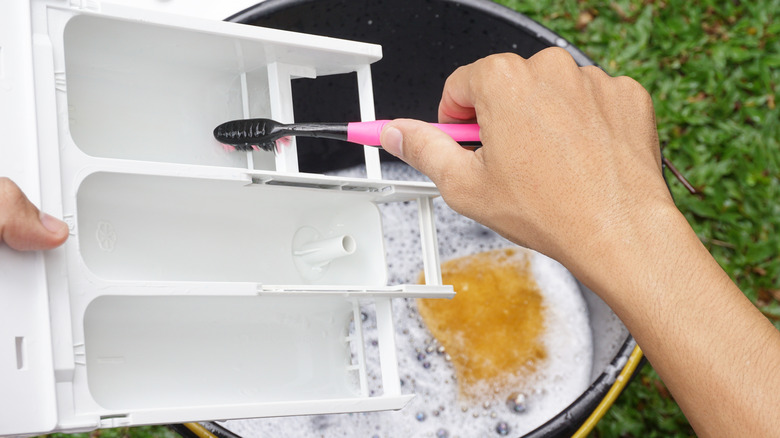
Your washing machine's detergent tray? It's the moldy, dirty spot that's easy to forget about when cleaning the rest of the machine. The same holds true for other components like fabric softener drawers, bleach trays, and even lint filters. Your model may not have every single one of these compartments, but odds are, at least one of them is in dire need of cleaning. Because many of them are removable, the most efficient way to clean one is to take it off the machine and clean it in your kitchen, using the cleaners you have on hand.
A washing machine filter, if it has one, can usually be cleaned effectively by just removing it, running the filter under tap water, drying it, and replacing it. For detergent and/or bleach trays as well as removable fabric softener dispensers, start by carefully taking them out of the machine. Soak them in hot water with a degreasing dish soap for a few minutes. Then, scrub these trays well with a cloth or toothbrush to remove any remaining residue. Blast them with your faucet's spray attachment to really get at the nooks and crannies of these plastic compartments. After drying and replacing these compartments, finish by cleaning the exterior of your front- or top-loader. Use your preferred glass or counter cleaner to wipe down the exterior parts of your machine, including the door or lid as well as the sides.
A microfiber cloth is your best friend for fighting moisture and germs
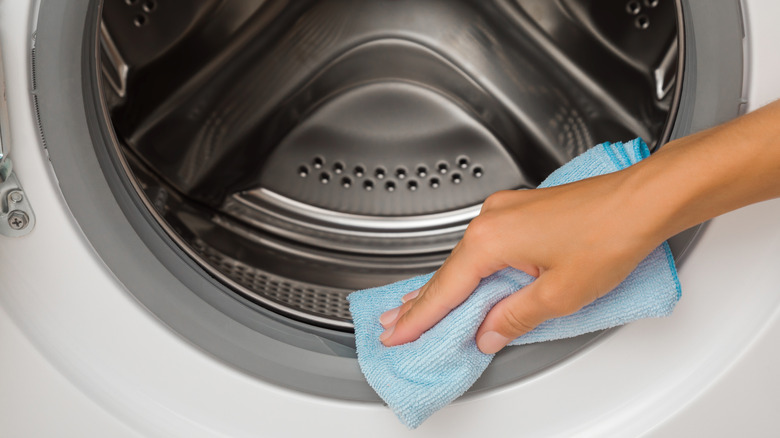
Just as you can get great results from simple household ingredients to deep-clean your washing machine, you can turn basic materials into machine-cleaning "equipment." For example, dipping an old toothbrush into vinegar cleans out the gasket. But perhaps the biggest weapons to have in your laundry room arsenal are microfiber cloths. These relatively new additions to the cleaning aisle are made of thousands of tiny, charged fibers that super-clean surfaces, tackling tough issues like spores and lint.
In fact, a microfiber cloth can be your best friend in the laundry room for both its drying and cleaning properties. These cloths or dusters are known for being super absorbent. After you transfer your clothes from the washer to the dryer, take the time to wipe down the inside of the door or lid, as well as the gasket. It's not a bad idea to give the drum a quick swipe, too! Again, if possible, be sure to leave the door open to continue allowing the air to circulate. Even more importantly, microfibers are designed so that they are positively-charged, meaning that they attract and pick up negatively-charged grime and debris. That greatly reduces the amount of toxic, expensive cleaners you'd otherwise need to use. Use a clean microfiber cloth to dry out moist machines after a load, or pair them with vinegar or other household ingredients to de-gunk and sanitize the machine.