

Are Reversible Comforters Actually Worth It Or Just A Gimmick?
We may receive a commission on purchases made from links.
A good-quality comforter can last for several years, especially when you wash it properly. Not only will a well-cared-for comforter live up to its name, but it can also serve as a focal piece in your overall bedroom theme and décor. This is one of the reasons why some people prefer choosing a comforter over a duvet. Of course, prices can add up quickly if you want to switch between various designs. That's where a reversible comforter can be worth the investment — there's no need to buy and store multiple bedding sets, plus you can frequently refresh your bedroom with a simple flip. While this product isn't a gimmick, you'll still need to consider the overall cost versus quality before making the change to a reversible comforter.
Even so, having a reversible comforter can be a fun way to mix up the look of your bedroom, considering each side features a completely different design and color. The benefits go beyond design, though. Some reversible comforters even have different weights on each side due to a combination of materials. This means one side can feel heavier for colder months, while the other feels lighter and better suited for summer. With these features in mind, the two-sided nature of reversible comforters can be appealing, but there are also some reasons not to jump on this trend without further research first.
How to decide if a reversible comforter is right for you
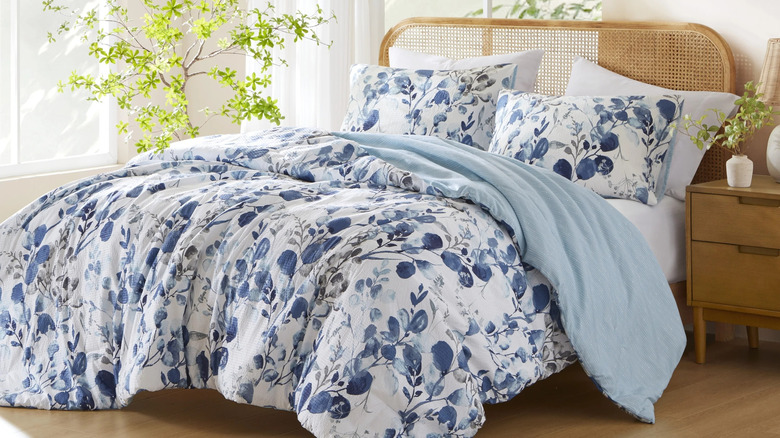
One thing to keep in mind is that many reversible comforters are made with synthetic materials compared with their one-sided counterparts. This might not bother everyone, as these can be just as comfortable as non-synthetic materials. However, this feature could be a deal breaker if you're trying to avoid certain bedding materials for better sleep quality and prefer natural fibers such as cotton instead of polyester. Therefore, read all product descriptions carefully before buying any reversible comforter, especially if you're looking for natural or synthetic fibers exclusively.
Another possible issue with a reversible comforter is its longevity (or lack thereof). While finding this product at a good price could conceivably save you money from buying two separate comforters, you might find yourself needing to replace it sooner if it's not of good quality. Look for thread counts between 300 and 600, as these tend to indicate better quality without the higher price tag.
In terms of care, reversible comforters require more than occasional washing. To prevent uneven wear and tear, you'll need to use both sides of the comforter for roughly the same number of nights throughout the year. Following a seasonal schedule can help protect this versatile bedding investment for many years, if you choose to do so. Luckily, many reversible comforters are machine washable – though be sure to follow the care labels before you throw yours in the wash on a regular bedding cycle. In case the comforter is too big for your washer, you'll have to find alternative care methods.