

The Mopping Habit That Will Keep Your Home Clean And Tidy
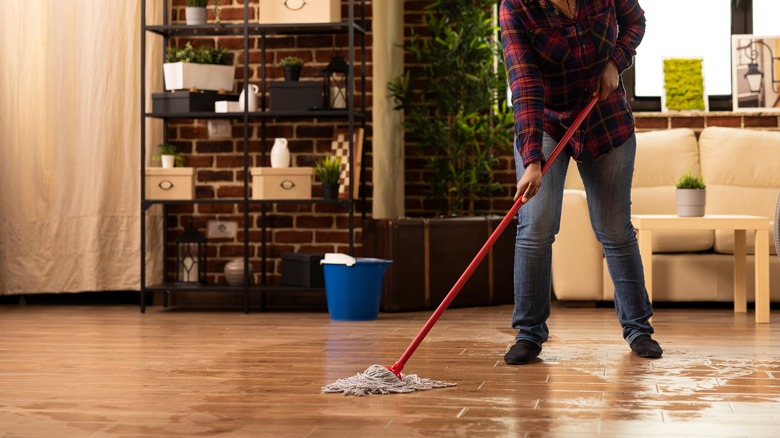
Decluttering and cleaning your home can have huge mental health benefits, including relieving anxiety and helping improve your focus. However, cleaning your entire house every time you want to recenter yourself and get back to work is a daunting, time-consuming task. Having a cleaning schedule that regularly spaces out those chores is a good way to efficiently tackle a Sisyphean reality, but you can break things down even more piecemeal than that. For example: mopping. Rather than frequently washing the whole floor, it's likely better for your time — and your home's upkeep — to pick up spot mopping as a cleaning habit.
Spot mopping is just what it sounds like; if you track dirt in the house or accidentally spill something, try to mop that particular spot right away so there isn't a snowball of messes to clean down the line. This means you might have to pull the mop and bucket out of storage more often, but it also means those resources will last longer on average. Dirty mop water should be replaced frequently to avoid recontaminating your floors (every 100 to 200 square feet or so), and string mops need to be replaced every 2 or 3 months, depending on usage. Spot mopping means you use your materials less actively in each cleaning session, and likely not long enough to need many water replacements. It's one of many simple cleaning hacks you can use to keep your home tidy, but one that will only be useful to folks with hardwood floors.
Damp spot mopping will be healthier for you and your floors than traditional mopping
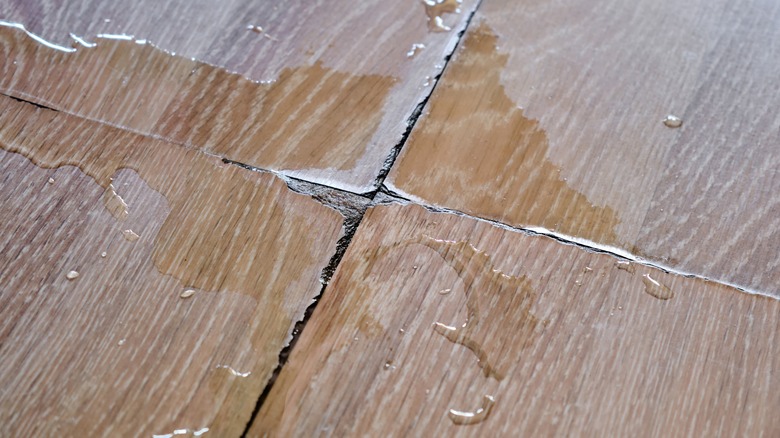
Cleaning hardwood surfaces can be a Goldilocks endeavor. On one hand, if you mop too little, you're likely to build up a crust on the floor in frequently trafficked areas that will be harder to clean. On the other hand, traditional wet mopping — especially on unfinished wood floors — can cause water damage if it's left too long. It's not recommended to even do a damp cleaning very often, especially given you can raise the humidity in a confined space and cause additional structural damage as a result. Spot mopping immediate spills is likely the best route to take if you want mopping tips to help your home look good as new, as it means you still clean often enough to avoid hazardous messes while not risking the problems of frequent, heavier cleans.
Spot mopping isn't just a useful habit for hardwood floors. One big mistake that people make when mopping and maintaining tile floors is just getting a surface-level clean that leaves grime in the grouting between tiles. If you turn your attention to spot mopping, that makes it much easier to hone in on a mess so you can clean the tiles and then get down to scrub the spaces in-between, too. Spot mopping may not even involve a literal mop; if the idea is just to clean one particular mess, you can accomplish this with a bucket of soapy water and a cleaning cloth or a microfiber rag. This will be less work than lugging all of the mopping equipment around every time, and let you get down closer to the mess so you're sure to get every nook and cranny.