

What's The Fastest Way To Grow A Snake Plant? Follow These Tips
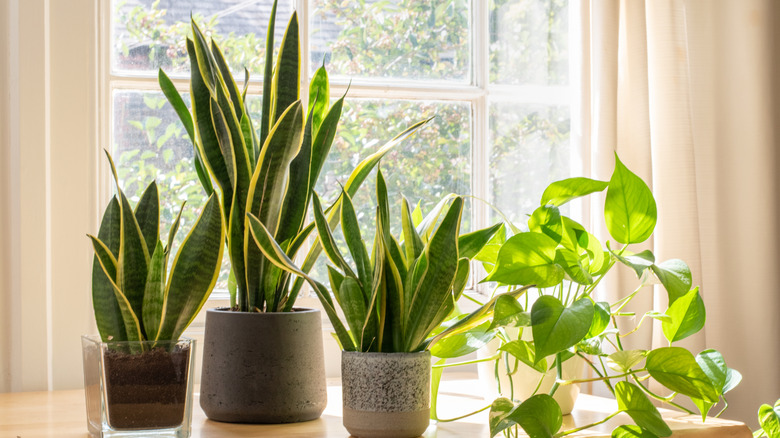
Snake plants (Dracaena trifasciata) are touted as one of the easiest houseplants anyone can keep alive, often labelled as indestructible by many garden centers and websites. It can tolerate low light, low humidity, and low temperatures, making it a favorite plant for many people who aren't that green-thumbed. But just because it is surviving, it doesn't mean that it is thriving. If you have a snake plant that seems to have stayed the same size for years, you may just think that it is a slow grower. However, this just isn't true. Snake plants have a medium growth rate, and by making a few changes, your plant can flourish. So, what is the fastest way to grow a snake plant? You first need to reconsider the low-maintenance, low-lighting, and indestructible advice.
While it is true that snake plants do tolerate low light, they don't actually like being in a dim, dark place, and they will not grow without enough sun. These plants are native to West and West Central Africa, thriving in rocky, dry climates under the heat of the full sun. In their natural environment, these plants can grow up to 6 feet tall, and to help yours grow quickly, you need to ensure it is getting the same amount of sun as it would in the wild. Place it in a location where it receives plenty of sunlight. You can even place it on a south-facing window to help it grow. A good rule of thumb when it comes to caring for snake plants is to put them somewhere where they can see the sky. This means that they will be getting the sunlight they need. Moreover, it's vital to avoid overwatering.
Water your snake plant correctly
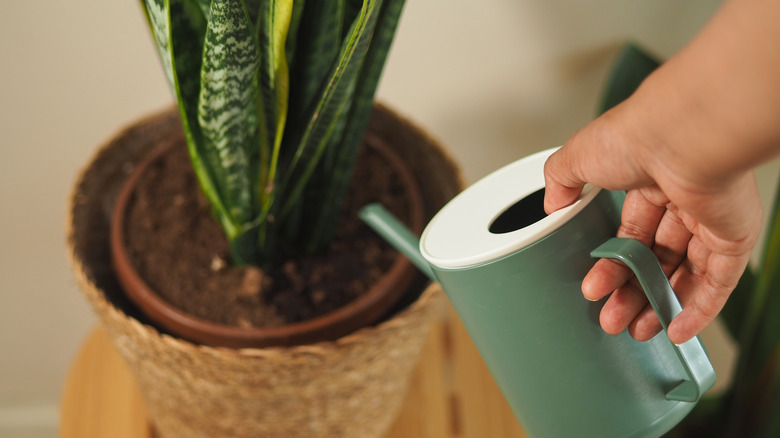
Snake plants are sensitive to overwatering and can suffer from root rot. However, they still need water, and watering them correctly will help them grow quickly. Some people who have snake plants only give them small amounts of water every so often, but this may not mean the plant is getting what it needs. Of course, this seems logical. Too much water is a risk. However, overwatering is usually less about the amount of water and more about how often you are watering the plant. Instead of only giving your snake plant a little bit of water, it is useful to thoroughly soak the soil and then remove any excess that has gathered in the outer pot or run-off dish. It does need watering regularly in the summer months, but less so in the winter. Make sure the potting mix has completely dried out between waterings, and pour the water onto the soil, not the plant.
The overwatering issues that can occur in snake plants are not just down to the amount of water you are providing them with. The type of soil and its drainage are huge factors when it comes to root rot and other problems. To ensure you are able to correctly water your snake plant and not cause damage or disease, you need to plant it in well-draining soil. Cactus mixes or potting mixes with perlite are the best soils for a snake plant. By repotting your snake plant with the right soil, keeping on top of watering, and moving it to a sunny location, it will hopefully burst into life and grow quickly.