

How To Update A Wood-Burning Fireplace To Gas And Why You'd Want To
If you have a wood fireplace, you might be tired of collecting firewood, the inefficient burning method, and the hassles of cleaning ashes. One option is to show off your DIY design chops and decorate the fireplace like a professional while creating a faux fireplace. However, if you prefer the coziness and warmth that a real fire produces, you might consider a conversion instead.
In a case like this, comparing the advantages of a gas vs. wood-burning fireplace and doing a conversion to natural gas is worth considering. Why would you want to make the switch? Using natural gas is typically more convenient. You flip a switch or press a remote control button to start the fire. You don't have to constantly tend it when using natural gas, which is necessary when burning wood. Maintenance is less intensive with a gas-fueled unit, as the combustion process doesn't create ash. Gas fireplaces are generally safer than wood, as they don't create smoke or soot, keeping your indoor air cleaner. Additionally, environmental regulations in some regions are limiting the ability to use wood-burning fireplaces, necessitating a switch to gas.
You'll have several choices for installing an insert that matches the existing fireplace structure. If you're concerned about the hassles of converting a gas fireplace to wood, you'll find that the process is typically less complicated than expected. However, the conversion is not simple enough that most homeowners can do it as a weekend DIY project. It requires precise work best left to a trained professional.
Steps necessary to convert a fireplace to gas
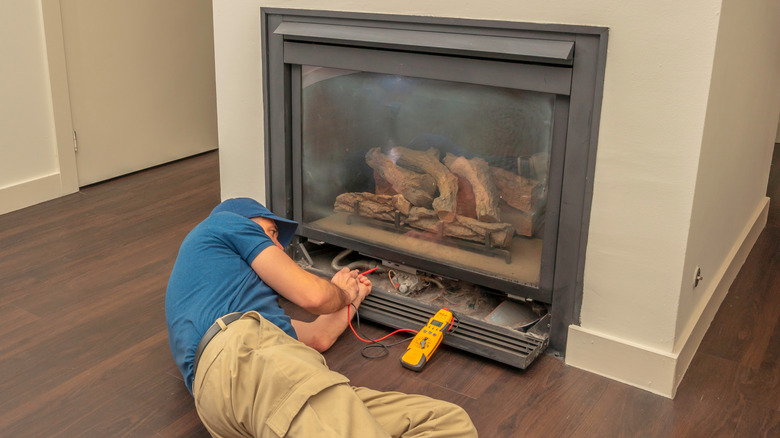
One important thing to know before you buy a gas fireplace insert is that you'll need to run a gas line to the location. This is a challenging job that requires significant skill and know-how. Many building codes require homeowners to hire a licensed professional to install the new gas line. You might need to obtain permits to remain in compliance with local building codes, too. A licensed contractor can plan for the most direct layout for the new gas line while safely installing all pipes, fittings, and valves.
Once the line is in place, you'll need to clean the existing fireplace and chimney to prepare to use the natural gas system. A chimney sweep can clean your chimney properly and ensure it's safe to use for either wood or gas fireplaces.
After all the prep work, you can select the type of insert you want to use. You have multiple design options, heat output settings, and sizes to pick from. A professional can help you decide if you're unsure. Once you're ready to install the gas insert and system, you'll again need the help of a professional who can connect the gas line and electrical wiring to the insert, so you can safely start and stop the combustion process. In many locations, homeowners must hire licensed professionals for this step. After installation, the professional will test the fireplace's operation for safety and efficiency.
Other things to consider before converting your fireplace
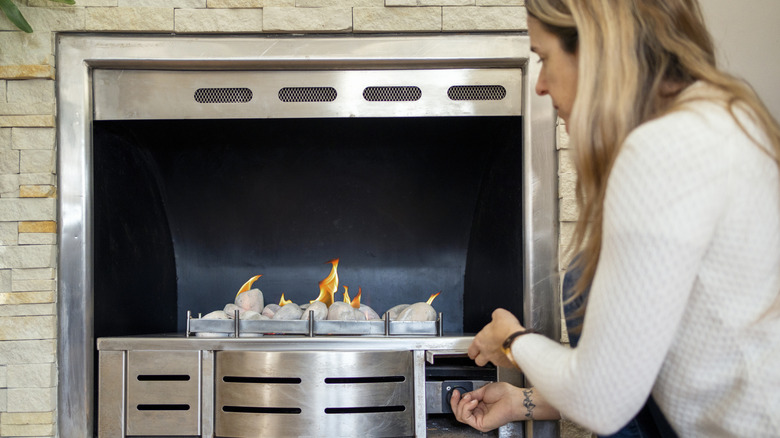
Although converting a fireplace from wood to natural gas offers a lot of advantages, you should understand a few other things before you choose to take this step. It can be an expensive process to make the switch. The job typically costs between $500 and $5,500, although some conversions can reach $12,000. However, it can be cheaper to do the conversion than to completely remove an old wood fireplace, which can cost $3,000 to $6,000.
Although gas-burning fireplaces are generally considered safer than wood-burning ones, they are not without risk. A chimney that was originally designed for use with wood burning has a risk of becoming corroded from the vapors and gases generated while burning natural gas, called spalling. Such issues can increase the risk of carbon monoxide exposure inside the home. You'll still need to hire a chimney sweep for an annual inspection of the chimney after switching to a gas fireplace.
Finally, people who are used to the crackle and warmth of a wood-burning fire might be disappointed in the aesthetic of a gas fireplace. Burning natural gas in a fireplace can feel less authentic, even with realistic faux logs.