

The Accessory That Prevents Gutters From Clogging & Freezing In The Winter
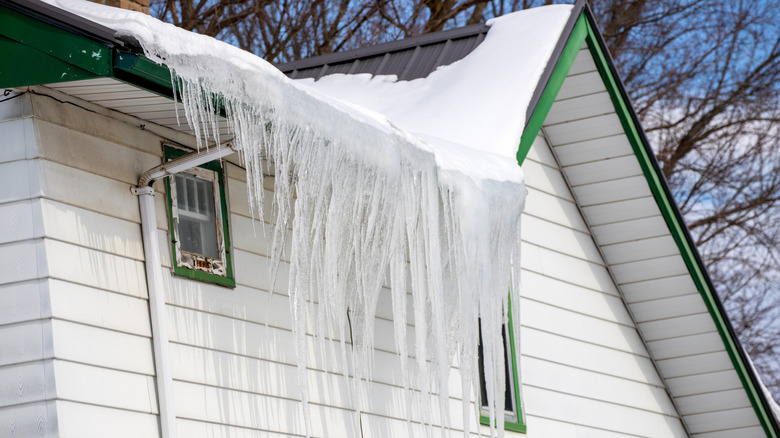
Winters can arrive with a lot of headaches and it is best to be prepared, especially once it begins to snow. For instance, it is not unusual to come outside after a bout of snow and see a 6-inch-long ridge of ice hanging down the gutter of your roof. Freezing of gutters is a major issue in the cold season that can damage your roofs, cause leaks and overflow, and also ruin the walls and foundations of your house. In fact, the icicles hanging from your gutter can also pose a serious threat of physical injury. Using heat cables for your roofs and gutters is a sure shot way to avoid ice dams on your roof and keep your gutters from freezing this winter.
Although keeping debris out of your gutter is a big step towards preparing your house for good drainage in the cold, one of the biggest causes of clogged gutters is the formation of ice dams. Ice dams can form even if your gutter is clear of clogged up leaves and debris, due to fluctuations in temperature and repeated freeze-thaw cycles of water. This is why, apart from installing heat cables, you should also focus on better insulation in your house to keep the roof surface temperature constant. Although you can set up the heat cables up yourself with some DIY skills, you should hire a professional contractor for the job for more safety and better installation.
Heat cables can prevent the formation of ice dams in gutters

To understand how heat cables work, it is important to know exactly how ice dams get formed on the roof in the first place. When the fallen snow on your roof begins to melt –often due to the heat loss from inside the house, through the attic to the roof — water starts flowing underneath the blanket of snow toward the end of the eaves and gutters. These spots are way colder in comparison to the roof, which causes the water to freeze and form ice ridges. Any excess water that flows downwards from the roof from here on (whether it is due to more snow melting or rain), gets obstructed by the ridge, freezes, and the dam gets even bigger. Soon enough, the entire drainage system gets clogged and the excess water starts backing up to the shingles. Once the water finds a way to get underneath the shingles, it starts rotting the roof, leaking into your house, and damaging the ceilings.
Heat cables or heat-deicing cables can prevent the freezing of gutters by creating channels for the melted snow to pass through. Heat cables are wires that heat up electrically and raise temperatures around them just enough to prevent any formation of ice. Water can drain to the gutters via these channels and run down their normal uninterrupted course. Keep in mind that you should have these cables installed and switched on before heavy snowfall warnings. Once the snow melts and turns into ice, it is far more difficult for heat cables to melt them. Furthermore, heat cables do not start working instantly, either — you should always turn them up to two hours before the snowfall is expected.
Things to keep in mind when installing heat cables
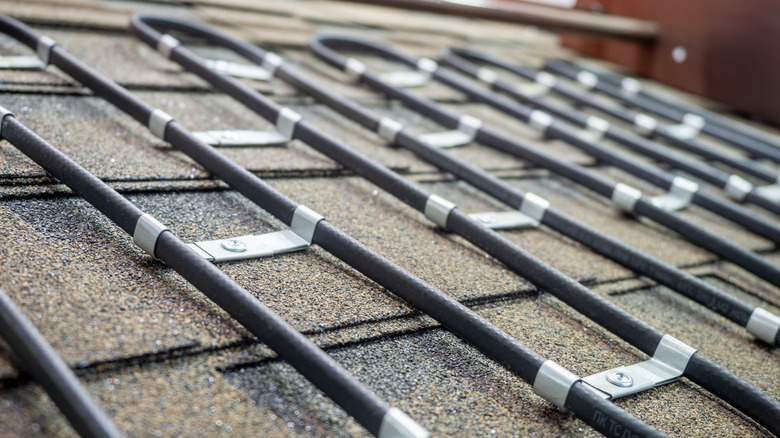
Usually, heat cables are installed on the edge of the roof in a zig-zag pattern to cover a large surface area. However, these cables can also run down the gutters and even the downspouts to prevent water from freezing. In fact, it is crucial to have these cables installed in the gutters, since any melted snow from the roof has to eventually fall to the gutter. If the gutter does not stay heated up, ice dams would still build up around them. Although heat cables can do an excellent job of improving drainage and preventing winter damage, they are not cheap and installing them takes some skill. Since the cables generate heat on electricity, you would also have to be ready to shell out some dollars to avoid larger expenses later on house damage.
There is also a slight distinction between installing heat cables and putting heat tapes in your gutter that also work on the same principle. Although the terms are sometimes used interchangeably, heat cables are more sophisticated than heat tapes. They are less flexible, more robust, and better equipped for outer environments.
A lot of heat cables also come with an auto-regulation feature, which means that they can adjust the amount of heat generated depending on outside temperatures. These cables can switch on and off according to the intensity of the cold to keep it easy on your bills. Such cables are also better equipped to handle more harsh climates, in comparison to constant-wattage cables, that only work on a fixed temperature. These features also make such kind of heat cables more expensive than constant-wattage heat cables.